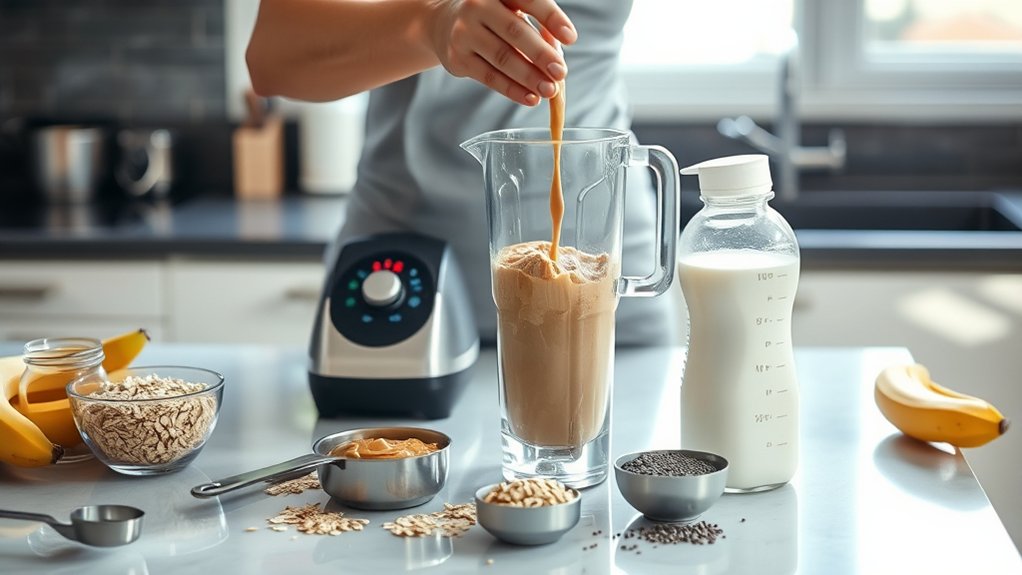
How To Make Your Own Protein Supplement ? What You Need to Know
To make your own protein supplement, start by selecting high-protein seeds like chia, hemp, or pumpkin. You can combine these with pea protein or almond flour to boost nutrition. Grind them finely with a spice or coffee grinder, but be careful not to overprocess or you’ll end up with seed butter.
It’s a good idea to balance your mix by adding complex carbs like oats for sustained energy. Store your blend airtight in a cool place to keep it fresh.
Keep going to discover tips on customizing flavors, precise ratios, and best practices for long-lasting quality. You’ll find it’s easier than you might think!
What Ingredients Do You Need for Homemade Protein Powder?
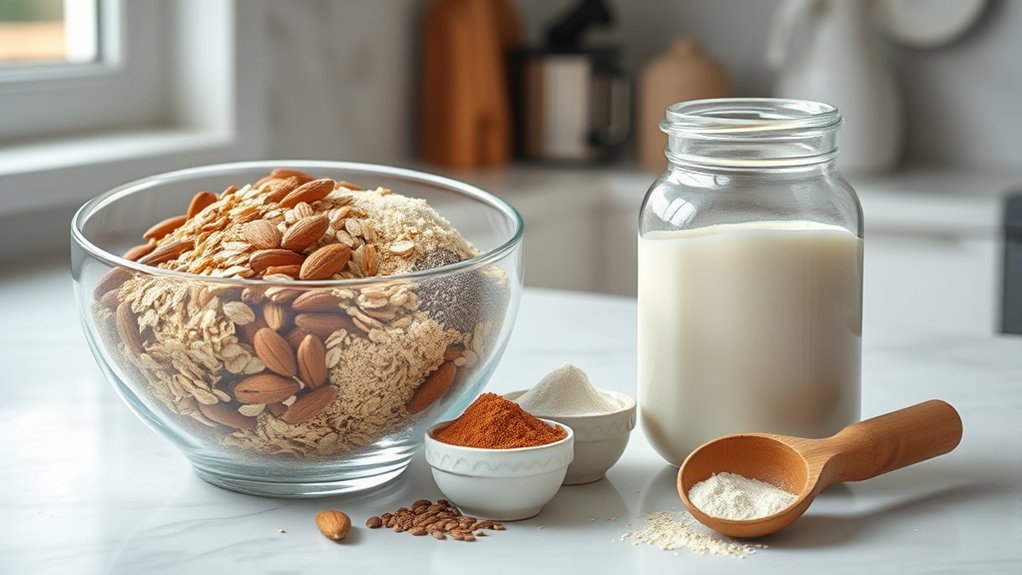
Wondering which ingredients you need to make an effective homemade protein powder? Start with chia seeds. They provide nearly 5 grams of protein per ounce along with omega-3 fatty acids and fiber.
Plus, they add a smooth texture to your blend.
Hemp seeds are a standout. They offer about 9.48 grams of protein per 30-gram serving and contain all nine essential amino acids.
This makes your plant-based protein powder complete.
Pumpkin seeds contribute around 8.5 grams of protein per ounce and are packed with magnesium, zinc, and antioxidants.
These nutrients really boost the overall nutrition of your mix.
Almond flour adds nearly 4 grams of protein per 15 grams.
It also enhances the flavor and texture of your protein powder.
Together, these ingredients form a balanced homemade protein powder recipe.
They combine protein quantity, quality, and essential nutrients to support your fitness and health goals.
Choosing Seeds and Protein Bases for Homemade Protein Powder
When you’re picking seeds and protein bases for your homemade protein powder, it’s a good idea to think about their nutritional benefits.
For example, hemp and pumpkin seeds don’t just pack a lot of protein—they’re also loaded with important nutrients like magnesium and zinc.
If you want to add a plant-based protein boost, pea protein is a solid choice.
It gives you a good amount of protein and iron, which makes it really versatile and great for supporting your dietary needs.
Seed Nutritional Profiles
Seeds serve as powerful protein bases for your homemade supplement, each offering unique nutritional benefits that can enhance your blend.
Chia seeds provide about 4.7 grams of protein per ounce, plus omega-3 fatty acids and fiber to support digestion and satiety.
Hemp seeds deliver roughly 9.48 grams of protein per 30 grams, with a complete amino acid profile ideal for muscle recovery.
Pumpkin seeds offer 8.5 grams of protein per ounce, along with magnesium and antioxidants for muscle function and overall health.
Ground flaxseeds add omega-3s and lignans, supporting cardiovascular health and hormone balance.
Furthermore, pea protein stands out with over 21 grams of protein per serving and high iron content, making it an excellent plant-based option.
These nutrient profiles help you tailor your protein powder to your health goals.
So, whether you want to boost muscle recovery, improve digestion, or support heart health, there’s a seed that fits your needs perfectly.
Mixing and matching these ingredients can create a blend that works just right for you.
Protein Base Options
To create a homemade protein powder tailored to your needs, selecting the right protein bases is key. You can make your own protein blend using options like chia and hemp seeds.
Chia offers about 5 grams of protein per ounce and is rich in omega-3 fatty acids, which support heart health.
Hemp seeds provide 9.48 grams of protein per 30 grams and deliver a complete amino acid profile. That’s essential for muscle recovery.
For higher protein content, pea protein supplies over 21 grams per serving and is a great vegan alternative.
Pumpkin seeds and almond flour add extra nutrients and protein per serving, rounding out the blend.
Choosing these bases guarantees a balanced mix of protein and essential nutrients when you make your own protein supplement. It’s a smart way to customize your nutrition exactly how you want it.
Balancing Protein and Carbs for Endurance Athletes
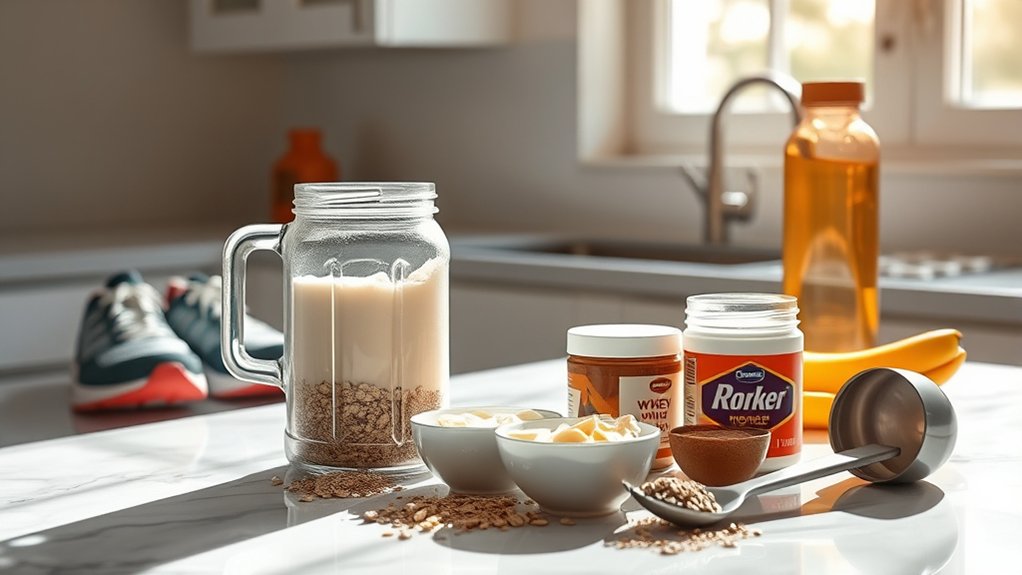
To fuel your endurance activities effectively, aim for a carbohydrate-to-protein ratio of about 3:1 or 4:1. This helps support both your energy levels and muscle recovery.
Try to consume 30 to 60 grams of carbs every hour during exercise — it really helps keep your performance steady and delays fatigue.
Also, timing matters. When you pair high-quality protein with complex carbs, you’re setting yourself up for sustained energy and the best possible muscle repair after those long sessions.
Optimal Carb-Protein Ratios
Although protein plays an essential role in muscle repair, you need to balance it with carbohydrates to sustain energy during endurance activities. Aim for a carbohydrate-to-protein ratio of 3:1 or 4:1, meaning for every 20-25 grams of protein, consume 60-100 grams of carbohydrates.
Using protein powders combined with whole food sources like oats and fruits helps you reach this balance while adding vital vitamins and minerals.
Pay attention to serving size to meet your specific training demands. Including omega-3 and omega-6 fatty acids from whole foods further supports recovery and overall health.
This balance guarantees your muscles repair effectively without sacrificing glycogen replenishment, optimizing endurance performance and recovery.
Adjust your carb-protein ratio based on workout intensity for best results. It’s all about finding what works best for your body and your training goals.
Keep experimenting and listening to how you feel!
Endurance Nutrient Timing
Balancing protein and carbohydrates at the right times can really boost your endurance performance and recovery. Aim for a carbohydrate-to-protein ratio of 3:1 or 4:1 to get the best energy replenishment and muscle repair during and after long exercise sessions.
Try to consume 20-30 grams of protein within 30 minutes after your workout. This timing can seriously help with muscle recovery.
Before you start exercising, focus on easy-to-digest carbs. Eating 1-4 grams per kilogram of your body weight will fuel your endurance activities well.
Adding homemade protein-rich snacks like bars or smoothies during training can keep your energy up and reduce muscle breakdown.
Timing your protein intake around workouts, both before and after exercise, is key to maximizing your energy reserves and supporting endurance.
This smart nutrient timing helps you train harder and bounce back faster. Give it a try and see the difference it makes!
Best Equipment for Grinding Homemade Protein Powder
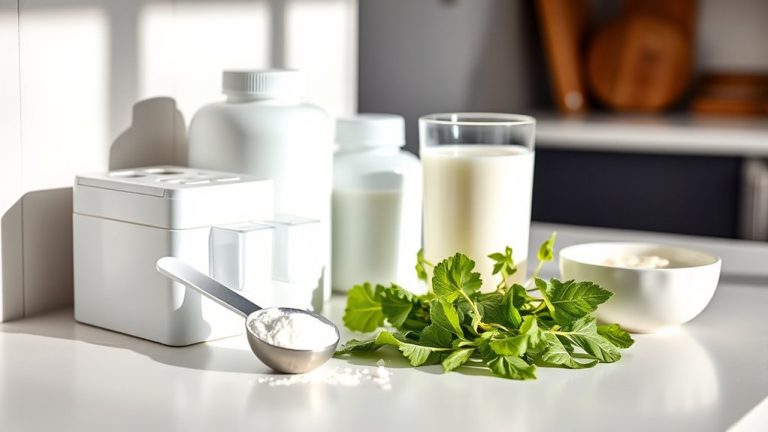
When grinding seeds for your homemade protein powder, choosing the right equipment makes a big difference in texture and consistency. A spice grinder or a clean coffee grinder is perfect for producing a fine powder and ensuring an even texture.
Selecting the right grinder is key to achieving a smooth, consistent homemade protein powder every time.
Just make sure the equipment is completely dry to prevent chia seeds from gelling and clumping.
Pulse the seeds in small batches, shaking the grinder between pulses to grind the seeds evenly without over-processing. You can also use a high-speed blender, but blend in short bursts to avoid turning the seeds into butter.
A high-quality food processor works too, though it usually gives you a coarser powder compared to spice or coffee grinders.
Picking the right tool really helps you get that perfect homemade protein powder texture every time. It’s all about finding what works best for you and your kitchen setup.
Grinding Seeds Without Turning Them Into Butter
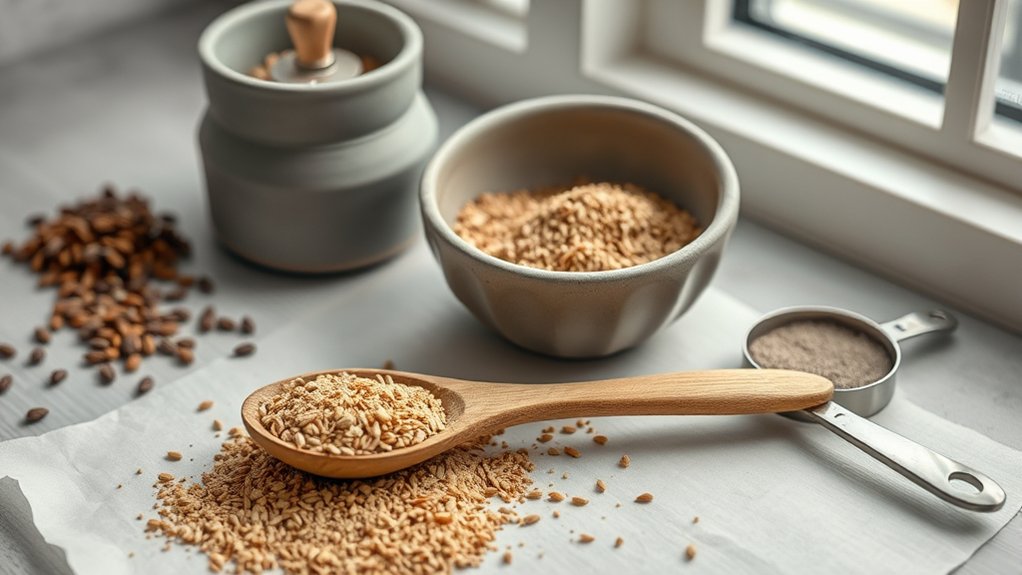
Mastering the technique of grinding seeds without turning them into butter guarantees you get a fine, powdery protein supplement every time. Use a spice or coffee grinder and grind seeds in small batches. Pulse for 10-15 seconds, shake the grinder, and check the texture frequently.
If you use a high-speed blender, blend at low speed and stop as soon as the seeds reach a powder form. This prevents clumping and butter formation, keeping the protein powder dry and fine.
| Step | Tool | Action |
|---|---|---|
| 1 | Spice grinder | Add small seed batches |
| 2 | Pulse button | Grind 10-15 seconds |
| 3 | Shake grinder | Guarantee even grinding |
| 4 | Texture check | Stop when powdery |
| 5 | High-speed blender | Blend low speed, monitor closely |
Customizing Homemade Protein Powder for Flavor and Nutrition
You can easily customize your homemade protein powder by adding flavor enhancers like cocoa or vanilla. This way, you improve the taste without sacrificing nutrition.
If you want to adjust the carbohydrate-to-protein ratio, try adding oats or dried fruits. This helps meet your specific energy needs, especially if you’re an endurance athlete.
Also, consider incorporating spices like turmeric or superfood powders like spirulina. These not only boost the nutritional profile but also support recovery.
Flavor Enhancements
How can you transform a basic homemade protein powder into a flavorful, nutritious supplement? Enhancing the flavor profile is key to making your protein supplement enjoyable and healthful. Here are three evidence-based ways to do it:
Add cocoa powder or spices like cinnamon and turmeric for rich taste and anti-inflammatory benefits. You can use natural sweeteners such as monk fruit or stevia to provide sweetness without extra calories or sugar crashes.
Also, try incorporating freeze-dried fruit powders like strawberry or blueberry for fruity flavor and extra vitamins without moisture.
For added creaminess and aroma, blend in a small amount of almond extract after grinding your ingredients.
These flavor enhancements create a balanced, delicious protein powder tailored to your preferences and nutritional goals. Give these a try and see how much better your protein supplement can taste!
Nutritional Adjustments
Although flavor enhancements make your homemade protein powder enjoyable, tailoring its nutritional profile guarantees it meets your specific health and fitness needs.
To make a balanced supplement, add whey protein isolate for a high absorption rate and complete amino acids.
Incorporate seeds like flaxseeds for healthy fats and fiber, which aid digestion.
Boost vitamin C by adding powdered fruits; this supports immunity and enhances protein absorption.
You can also adjust carbs with oats or dried fruits to match your energy requirements.
It’s all about customizing your mix so it works best for you.
How to Use Your Homemade Protein Powder in Smoothies and Baking
When you add 2-3 tablespoons of your homemade protein powder to smoothies, you increase the protein content by about 7 grams per serving. This helps with muscle recovery and keeps you feeling full longer.
To get the most out of your high-quality protein powder, try these simple tips:
To get the most from your protein powder, try these easy, tasty tips for everyday meals and snacks.
- Add a scoop of homemade protein powder to your smoothie recipes. Blend it well with ingredients like ground flax for extra fiber and omega-3s.
- Substitute 1/4 cup of flour in baking recipes like muffins or pancakes with your protein powder. This boosts protein without changing the texture.
- Mix protein powder into oatmeal or yogurt bowls evenly to avoid clumps. This makes a tasty, protein-rich meal or snack.
Using your protein powder this way means you’ll get all the benefits while enjoying a variety of delicious meals.
Give it a try—you might be surprised how easy and tasty it is!
Storing Homemade Protein Powder Safely for Freshness
Proper storage plays an essential role in maintaining the freshness and effectiveness of your homemade protein powder. Unlike many store-bought powders, your homemade protein powder requires careful handling. Always store it in an airtight container to prevent moisture from compromising its quality.
At room temperature, it stays fresh for up to 2 weeks, but refrigerating it extends that freshness up to 2 months. For even longer storage, freezing is an option, preserving quality for up to 6 months.
Use a wide-mouth mason jar for easy access and make certain the container remains dry to avoid ingredient clumping.
Don’t forget to label and date your container so you can track freshness effectively and consume the powder within recommended time frames. This way, you keep your supplement safe and potent. It’s a simple step that makes a big difference!
Benefits of Homemade vs. Store-Bought Protein Powder
Storing your homemade protein powder correctly guarantees it stays fresh and effective, but the advantages don’t stop there.
Choosing homemade protein powder gives you clear benefits over store-bought options. You get:
1. Control over ingredients
You avoid artificial additives, gums, and fillers common in commercial powders, ensuring a cleaner, healthier product.
2. Customizable recipes
You can tailor your protein blend to meet specific dietary needs, flavor preferences, and nutritional goals. This even means adding plant-based sources rich in fiber and omega-3 fatty acids.
3. Cost efficiency and nutrition
Homemade protein powder is an excellent source of essential nutrients and omega-3 fatty acids. It often costs less than half of store-bought varieties while promoting better digestion and satiety.
Troubleshooting Common Problems When Making Homemade Protein Powder
Many homemade protein powder makers encounter issues like gritty texture, clumping, or poor mixing. When troubleshooting, remember that seeds contain oils that can cause clumps if exposed to moisture. So, store your high-quality powder in a dry, airtight container.
To avoid gritty texture, use a spice grinder instead of a high-speed blender for a finer powder form without turning seeds into paste. Pulse in small batches and check texture often.
If your powder doesn’t mix well in liquids, try blending it into smoothies or oatmeal rather than plain water. Homemade powders can still provide all nine essential amino acids when made correctly, ensuring a balanced, nutritious supplement.
Adding cocoa or cinnamon after grinding can improve flavor without compromising quality. It’s an easy way to make your protein powder taste better without much extra effort.
Frequently Asked Questions
Can I Add Sweeteners to My Homemade Protein Powder?
You can definitely add natural sweeteners like monk fruit or stevia to your homemade protein powder for flavor enhancement without extra calories.
Avoid artificial sweeteners if you prefer cleaner ingredients. Start with small sweetener ratios and adjust to taste, ensuring you maintain the health benefits and keep calorie considerations in mind.
Balancing sweetness prevents overpowering your powder’s natural flavors while supporting your nutritional goals effectively.
Just take it slow and find the right amount that works for you. That way, you get a tasty boost without losing what makes your protein powder healthy.
How Long Does Homemade Protein Powder Last Unopened?
Think of homemade protein powder as a delicate treasure. Its shelf life depends on how you guard it. Unopened, it can last up to two weeks at room temperature if sealed well.
But refrigeration extends freshness to two months. Freezing pushes it to six months. Your storage conditions, ingredient freshness, and packaging options matter a lot.
Keep moisture exposure minimal to avoid spoilage signs like clumping or off smells.
This way, you can ensure excellent quality over time.
Is Homemade Protein Powder Suitable for People With Allergies?
Yes, homemade protein powder can suit you if you have allergies. You get to control allergen sources by choosing protein alternatives like hemp or pumpkin seeds. This helps reduce the risks of cross contamination.
It’s important to prioritize ingredient safety by researching each component and consulting a healthcare professional.
You can also explore flavor options that fit your diet while keeping the nutritional balance.
This tailored approach lets you avoid allergens without sacrificing taste or nutrition. It’s all about making it work for you in a way that feels good and keeps you healthy.
Can I Use Homemade Protein Powder for Meal Replacement?
Yes, you can use homemade protein powder for meal replacement. Just make sure to focus on nutritional balance by adding carbs, healthy fats, and fiber to support digestion and keep things running smoothly.
Also, pay attention to when you eat your meals to help optimize energy levels and muscle recovery. It really makes a difference.
Choose quality ingredients to guarantee safety and get the most nutrients out of your powder. And don’t be afraid to experiment with different flavors to keep your meals enjoyable.
Finally, practice portion control so you meet your dietary needs without overeating or missing out on important nutrients. It’s all about finding what works best for you.
How Do I Calculate the Protein Content in My Blend?
To calculate protein content, start by identifying each protein source’s amount using nutritional labels or databases.
Multiply the weight of each ingredient by its protein content, then sum these totals for your blend’s overall protein. Divide by serving sizes to find per-serving protein.
Make sure to use precise blending techniques and think about flavor combinations to keep your blend tasty and balanced.
Also, store your blend properly to preserve its quality and keep the protein content accurate over time.
Conclusion
Now that you’ve mastered making your own protein powder, you’re basically a nutrition superhero. You’re saving money, customizing your fuel, and avoiding mystery ingredients like a pro.
With the right seeds, equipment, and storage, you’ll have a fresh, powerful supplement that outperforms store-bought options every time. Remember, balancing carbs and protein is key, especially for endurance athletes.
Homemade protein powder isn’t just smart. It’s a game-changer for your health and performance.