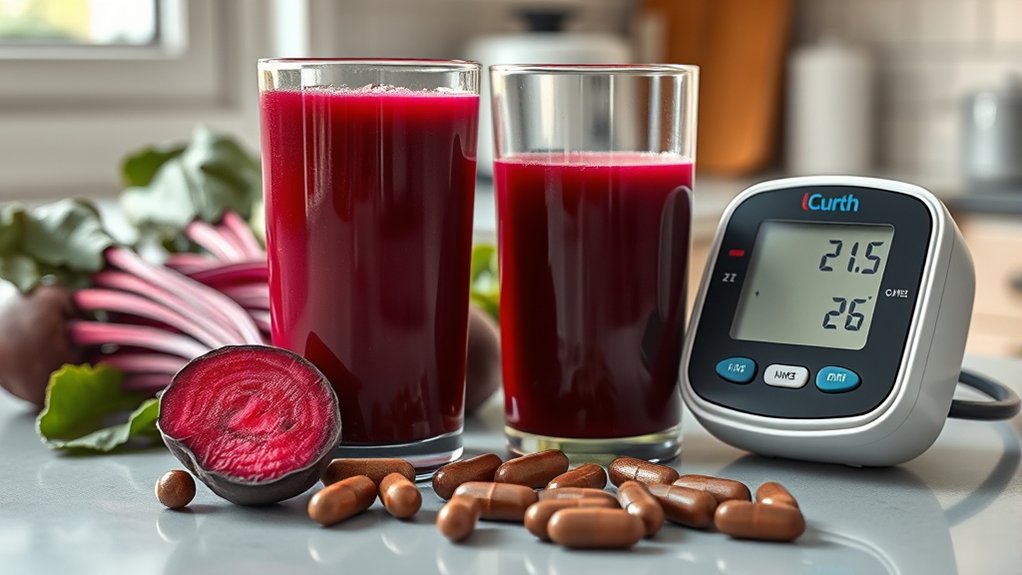
Does Beetroot Supplement Lower Blood Pressure? Benefits Risks and Facts
You can lower your systolic blood pressure with beetroot supplements, but only if they contain enough nitrates, ideally 300 to 500 mg per serving. Nitrates convert to nitric oxide, which helps dilate blood vessels and improve blood flow. This mainly lowers systolic pressure.
Supplements often have less nitrate than juice or whole beets, so they might not work as well unless you choose them carefully. It’s also important to combine supplements with lifestyle changes for better results. Understanding these differences and how to use beetroot properly can help you manage your blood pressure more effectively.
Do Beetroot Supplements Lower Blood Pressure?

How exactly do beetroot supplements impact blood pressure? Research shows that beetroot juice, rich in nitrate, plays a key role in lowering systolic blood pressure.
When you consume beetroot juice, the nitrate converts to nitric oxide, which induces vasodilation, enhancing blood flow and reducing vascular resistance.
In overweight older adults, daily intake of beetroot juice lowers systolic blood pressure by an average of 7.3 mm Hg after just three weeks. This effect peaks around three hours post-consumption.
However, beetroot juice’s influence on diastolic blood pressure remains inconsistent.
To maintain these benefits, you need continuous intake, as short breaks can negate the blood pressure-lowering effects.
How Do Beetroot Supplements Compare to Whole Beets and Juice?
You’ll notice that beetroot supplements usually have much lower nitrate levels compared to whole beets or beet juice. This difference can affect how well your body absorbs them and their impact on blood pressure.
Whole beets also come with extra fiber, which is great for digestion, while beet juice tends to have higher nitrate concentrations.
However, drinking the juice might also mean you’re taking in more sugar.
When you think about how efficiently your body absorbs these forms and how easy they’re to consume, juice and whole beets typically offer better cardiovascular benefits than supplements do.
Nutrient Differences Explained
Although beetroot supplements are popular for convenience, they typically contain much lower nitrate levels, around 5 to 10 milligrams, compared to beetroot juice, which can deliver between 230 to 1,000 milligrams per serving. This significant difference in nitrate levels is critical because effective dosages for blood pressure regulation generally range from 300 to 500 milligrams.
Whole beets, while lower in nitrates than juice, provide essential dietary fiber that’s absent in most supplements. This fiber supports digestive health.
Beetroot juice not only offers higher nitrate content but also tends to be more cost-effective and nutritionally potent than powdered supplements.
These nutrient disparities explain why beetroot juice more reliably influences blood pressure regulation. Supplements may fall short due to limited nitrate concentration and the absence of complementary nutrients found in whole beets and juice.
Bioavailability And Absorption
Because beetroot juice contains markedly higher nitrate levels and exists in a liquid form, your body absorbs nitrates from it more rapidly and efficiently than from whole beets or supplements.
The nitrates found in beetroot juice range from 230 to 1,000 milligrams per serving, considerably exceeding the 5 to 10 milligrams typically present in supplements. This higher concentration, combined with enhanced bioavailability due to its liquid state, facilitates quicker plasma nitrate elevation, boosting nitric oxide production essential for vasodilation and blood pressure reduction.
Whole beets, while lower in nitrate bioavailability due to required digestion, provide additional nutrients and fiber that support cardiovascular health.
In contrast, beetroot supplements deliver minimal nitrates and lack these complementary compounds.
Practical Consumption Considerations
When evaluating beetroot supplements against whole beets and juice, you should consider nitrate content, bioavailability, and additional nutrients.
Beetroot juice typically delivers 230 to 1,000 mg of nitrates per serving, far exceeding the 5 to 10 mg provided by supplements. Effective nitrate dosages to lower blood pressure generally range from 300 to 500 mg, achievable via whole beets or juice, not supplements.
Whole beets also supply dietary fiber and micronutrients absent in supplementation. In addition, plasma nitrate bioavailability is superior with whole beets and juice, enhancing cardiovascular effects.
Homemade beetroot juice can be cost-effective but watch for added sugars in commercial products.
Therefore, for clinically meaningful blood pressure reduction, beetroot juice or whole beet consumption offers a more potent and nutritionally complete approach than standard beetroot supplementation.
It just makes sense to go with the option that gives you more bang for your buck and better health benefits.
How Nitrates in Beetroot Naturally Lower Blood Pressure
Since nitrates in beetroot convert to nitric oxide through a biochemical pathway involving nitrites, you can directly influence vascular function by consuming beetroot supplements.
Nitrates first reduce to nitrites via oral bacteria, then further convert to nitric oxide, a potent vasodilator that relaxes blood vessels, thereby lowering blood pressure.
Clinical studies reveal that beetroot juice supplementation can reduce systolic blood pressure by an average of 7.3 mm Hg in older overweight adults after three weeks.
Peak effects typically occur approximately three hours post-ingestion, correlating with maximal nitric oxide bioavailability.
Beetroot juice servings contain 230 to 1,000 mg of nitrates, substantially impacting vascular tone and cardiovascular health.
This nitrate-nitric oxide pathway provides a mechanistic basis for beetroot’s antihypertensive properties, supporting its role in regulating blood pressure through endogenous nitric oxide production.
Why Beetroot Supplements May Have Limited Nitrate Content
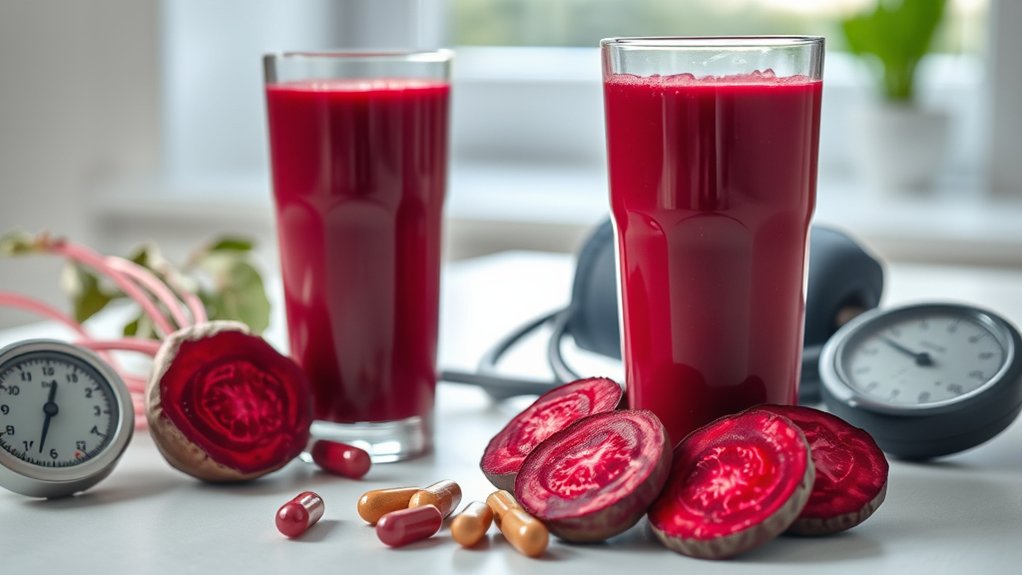
You’ll notice that nitrate levels in beetroot supplements can vary a lot because of how they’re processed.
Some methods can actually break down or lower the nitrate content. Plus, the labels don’t always show the real amount of nitrate you’re getting, which makes it tricky to know how effective the supplement might be for controlling blood pressure.
Variability In Nitrate Levels
Although beetroot supplements are popular for their potential health benefits, their nitrate content often falls short compared to whole beetroot juice. The juice can contain between 230 to 1,000 milligrams of nitrates per serving.
Beetroot supplements typically provide only 5 to 10 milligrams, which is usually not enough for meaningful blood pressure reduction.
This variability in nitrate levels comes from factors like soil quality, growing conditions, and the beetroot variety. These things cause inconsistent nitrate concentrations in the raw materials.
Unlike whole juice, supplements don’t have the natural mix of nitrate sources, which limits the total intake.
Clinical evidence suggests that effective doses range from 300 to 500 milligrams.
Processing Effects On Nitrates
When processing beetroot into supplements, the methods used drastically influence nitrate retention. This often results in markedly lower concentrations than those found in fresh beet juice.
You’ll find that beetroot supplements typically contain only 5 to 10 mg of nitrate, far less than the 300 to 500 mg in effective doses of freshly made beet juice.
Cooking whole beets reduces nitrate content by up to 25%. Additives in commercial juices dilute nitrates even further.
Labeling And Dosage Accuracy
Lower nitrate levels in beetroot supplements aren’t just a result of processing methods. They also stem from labeling and dosage challenges.
You’ll find that nitrate content in beetroot supplements varies widely, often ranging from 5 to 10 milligrams per serving. This is far below the 230 to 1,000 milligrams in fresh beetroot juice.
Many products lack standardization for nitrate content, which complicates dosage accuracy. This makes it hard for you to assess their effectiveness for blood pressure management.
Without proper labeling, you can’t reliably determine if a supplement provides enough nitrates to achieve therapeutic effects.
To avoid this, look for quality assurance certifications like NSF or USP. These verify nitrate content and product purity.
Just keep in mind, the dosage needed to notably lower blood pressure usually exceeds what most beetroot supplements provide.
Does Daily Beetroot Supplement Use Effectively Lower Blood Pressure?
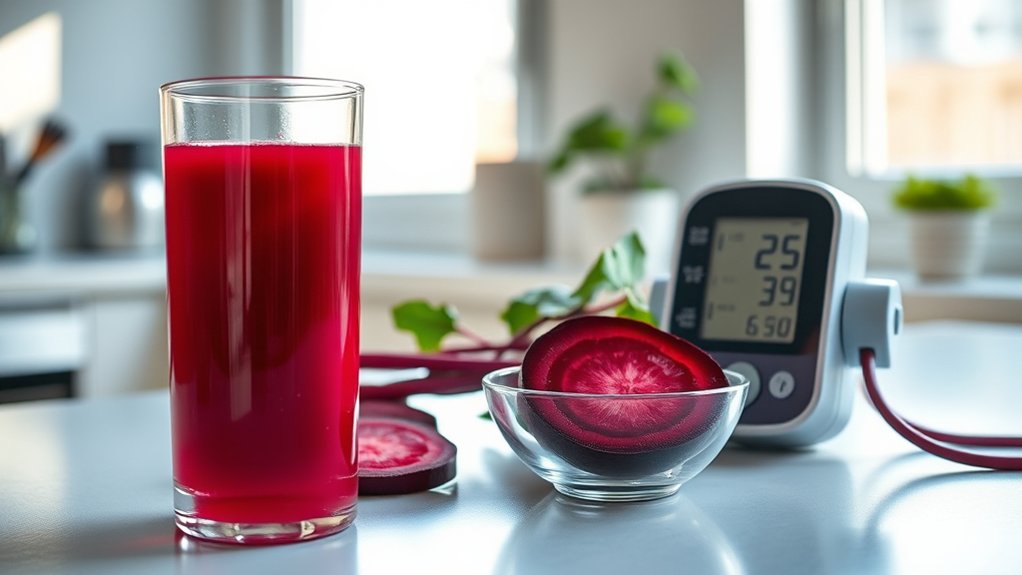
How effectively does daily beetroot supplementation reduce blood pressure? Research shows that daily intake of beetroot juice lowers systolic blood pressure by an average of 7.3 mm Hg in overweight older adults after three weeks. The nitrate content in beetroot juice converts to nitric oxide, promoting vasodilation and thereby reducing blood pressure.
These effects peak approximately three hours after ingestion and diminish after about ten hours, indicating the importance of consistent daily consumption. Importantly, the blood pressure-lowering benefits aren’t sustained following even a one-week interruption in beetroot juice intake. So, to keep your systolic blood pressure down, daily supplementation is necessary.
You should also consider your overall diet and talk to healthcare providers, especially if you’re on antihypertensive medications. This is important to avoid any potential interactions and make sure beetroot juice is safe for you.
Side Effects and Risks of Beetroot Supplements for Blood Pressure
While daily beetroot supplementation has demonstrated measurable reductions in systolic blood pressure, it’s important to recognize potential side effects and risks associated with its use.
You should be aware that beetroot juice consumption can lead to gastrointestinal side effects such as bloating or diarrhea in sensitive individuals. It can also cause urine discoloration, which is harmless but can be surprising.
People with kidney disease should be cautious because of the high nitrate content in beetroot.
Also, beetroot might interact with medications metabolized by the liver, potentially altering how effective or safe those drugs are. Because of these factors, it’s really important to talk with a healthcare professional before starting beetroot supplements, especially if you’re already on antihypertensive medications.
These points highlight why medical guidance is key before you begin using beetroot supplements. That way, you can stay safe and get the best results in managing your blood pressure.
When Not to Replace Blood Pressure Medication With Beetroot Supplements
You shouldn’t replace your prescribed blood pressure medication with beetroot supplements without first talking to your healthcare provider.
There’s a chance the supplements could interact with your medication in ways that might be harmful.
It’s really important to keep a close eye on your blood pressure if you’re combining treatments.
You want to avoid things like low blood pressure or your hypertension getting out of control.
So, always make sure to get professional advice.
That way, you can manage your heart health safely and effectively.
Medication Interaction Risks
Although beetroot supplements can modestly reduce systolic blood pressure, you shouldn’t replace prescribed antihypertensive medications with them. Medication interaction risks are significant, especially when combining beetroot juice with blood pressure drugs. You must consult your healthcare provider before adding beetroot supplements to avoid adverse effects.
Here are some key considerations: Beetroot juice contains nitrates that enhance vasodilation, which can potentially amplify blood pressure-lowering effects.
Combining supplements with medications may cause hypotension, leading to dizziness or fainting. Also, the blood pressure reduction from beetroot is transient and not a substitute for long-term medication.
Medication interaction can alter drug efficacy, so dosage adjustments might be necessary. Continuous monitoring is essential if you want to safely integrate beetroot supplements into your hypertension management plan.
Always prioritize prescribed medications and discuss any supplement use with your doctor. It’s better to be safe and informed when managing your health.
Blood Pressure Monitoring
Effective blood pressure monitoring is essential when considering beetroot supplements as an adjunct to hypertension management, but it’s important not to replace prescribed medications with them.
While beetroot juice supplementation can modestly reduce systolic blood pressure, around 7.3 mm Hg in some studies, these effects vary and often don’t sustain without continuous intake.
You should regularly take accurate blood pressure readings to assess any changes and avoid discontinuing medication without medical advice.
Since individual responses differ and diastolic pressure may remain unchanged, relying solely on beetroot supplements can risk inadequate control.
Always check with your doctor before modifying your regimen.
Abrupt cessation of medication or unmonitored self-adjustment can lead to dangerous blood pressure fluctuations despite any benefits from beetroot juice supplementation.
Consult Healthcare Providers
Maintaining accurate blood pressure monitoring highlights the need to consult healthcare providers before incorporating beetroot supplements into your regimen.
While beetroot supplementation lowers daily systolic blood pressure modestly, it should never replace prescribed antihypertensive medications.
You need to consult healthcare providers because beetroot effects may vary and aren’t sustained after interruption.
Potential interactions with blood pressure medications can cause excessive hypotension.
Also, the daily sugar content (around 10g) impacts diabetic and other at-risk individuals.
Long-term safety and efficacy remain unestablished.
Personalized management strategies require professional oversight.
Always discuss beetroot supplementation with your healthcare provider to integrate it safely and effectively without compromising your prescribed treatment plan.
Choosing the Right Beetroot Supplement for Blood Pressure Support
Selecting the right beetroot supplement for blood pressure support requires careful attention to nitrate content. Ideally, you want a range between 300 to 500 milligrams per serving based on clinical evidence.
It’s best to prioritize beetroot juice or powder over capsules. Juice typically contains 230 to 1,000 milligrams of nitrates per serving, so it usually offers a more potent nitrate boost to help lower blood pressure.
Also, watch out for products with added sugars or unnecessary additives. These can actually cancel out the cardiovascular benefits you’re aiming for.
Make sure to look for quality certifications like NSF Certified or USP Verified. These help guarantee purity and confirm that the nitrate levels match what’s on the label.
And of course, always check with your healthcare provider before you start any supplementation. This is especially important if you’re already on antihypertensive medications, so you can avoid any potential interactions and keep your blood pressure management safe and effective.
Combining Beetroot Supplements With Lifestyle Changes for Better Control
Integrating beetroot supplements with consistent lifestyle modifications can markedly enhance blood pressure regulation. Beetroot juice provides dietary nitrates that work together with lifestyle changes to optimize blood pressure-lowering effects.
Combining beetroot supplements with lifestyle changes significantly improves blood pressure control and cardiovascular health.
To get the most benefit, consider these evidence-based strategies:
- Consume about 150ml of beetroot juice daily to meet nitrate intake recommendations.
- Engage in regular physical activity to boost nitric oxide bioavailability and improve vascular function.
- Adopt a balanced diet rich in fruits and vegetables to support your cardiovascular health.
Also, try practicing stress-reduction techniques like mindfulness or yoga to reduce sympathetic activation.
It’s a good idea to monitor your blood pressure routinely, especially if you’re using antihypertensive medications, to prevent hypotension.
Combining these interventions creates a thorough and effective approach to managing hypertension with beetroot supplementation.
What to Discuss With Your Healthcare Provider Before Starting Supplements
Before adding beetroot supplements to your routine, it’s important to discuss your current blood pressure levels and any medications with your healthcare provider. Beetroot supplements can interact with antihypertensive drugs, potentially amplifying their effects.
Make sure to inform your healthcare provider about any underlying conditions, such as kidney disease. Excessive nitrate intake from beetroot might worsen these issues.
Also, share your dietary habits and blood pressure management goals to ensure the supplements fit well with your overall lifestyle.
Ask about the appropriate dosage since effective nitrate levels typically range from 300 to 500 milligrams daily.
It’s a good idea to check about potential side effects, including gastrointestinal discomfort and interactions with medications that are metabolized by the liver.
Having this thorough discussion helps you use beetroot supplements safely and effectively under medical guidance. It’s always better to be on the safe side when starting something new in your health routine.
Frequently Asked Questions
How Long Does It Take for Beetroot Supplements to Affect Blood Pressure?
You’ll notice beetroot dosage effects on blood pressure within 2 to 3 hours after taking the supplement. This timing benefits vascular relaxation, as nitrates convert to nitric oxide, lowering blood pressure.
However, blood pressure variability means responses differ individually, so consistent intake and monitoring are essential.
Regular supplementation maximizes cumulative benefits, while interruptions reduce effects. Tracking your blood pressure helps you understand how beetroot impacts your cardiovascular health over time.
Can Beetroot Supplements Interact With Other Common Medications?
Yes, beetroot supplements can interact with common medications, especially those metabolized by CYP3A4 and CYP1A2 enzymes.
You should prioritize beetroot safety by discussing your medication regimen with your healthcare provider before starting supplements.
These interactions may amplify blood pressure-lowering effects, so diligent blood pressure monitoring is vital to avoid hypotension.
Evidence suggests careful management is essential to balance benefits and risks when combining beetroot with other drugs.
Are Beetroot Supplements Safe for Pregnant or Breastfeeding Women?
Beetroot safety during pregnancy and breastfeeding remains uncertain due to limited research on pregnancy effects and breastfeeding concerns.
You should limit beetroot supplements to food amounts, as high doses lack sufficient safety data.
Excessive intake might pose risks, especially if you have pre-existing kidney issues. So, it’s really important to always check with your healthcare provider before using beetroot supplements. This way, you can make sure it’s safe for you and avoid any potential adverse effects.
Also, keep in mind that beetroot might interact with medications you’re taking. Talking to your doctor helps you consider all these factors and stay on the safe side.
Do Beetroot Supplements Affect Blood Pressure Differently in Men and Women?
Of course, beetroot’s effect on blood pressure cares deeply about gender differences because nitric oxide production obviously moonlights differently in men and women.
In reality, men often show greater reductions, likely due to hormonal influences and vascular responsiveness.
But don’t ignore lifestyle factors; they modulate outcomes considerably.
What Is the Recommended Daily Dosage of Beetroot Supplements for Heart Health?
You should aim for a daily dosage of beetroot supplements providing 300 to 500 mg of nitrates to optimize beetroot extract benefits for heart health.
Dosage variations depend on the supplement form. About 500 ml of beetroot juice or 5-10 grams of beetroot powder typically deliver this range.
This dosage effectively impacts blood pressure and cardiovascular function.
But you should consult your healthcare provider to tailor intake based on your specific health needs and medications.
Conclusion
You might feel like you’ve found a natural “magic bullet” in beetroot supplements, but remember, science shows their nitrate content can vary and may not replace prescribed meds.
Like the steady rhythm of a well-tuned heart, effective blood pressure control relies on consistent, evidence-based strategies. Pair supplements with lifestyle changes, and always consult your healthcare provider to guarantee safe, personalized care that truly keeps your numbers and your health in balance.