
Is Creatine Supplement Safe? A Complete Beginner’s Guide
You can safely use creatine supplements by sticking to recommended doses of 3 to 5 grams daily and choosing high-quality creatine monohydrate products. It’s generally safe for most people, though you should check with your healthcare provider if you have kidney issues, certain medical conditions, or are pregnant.
Mild side effects like bloating or weight gain from water retention are possible but usually temporary. To understand precautions, benefits, and how to select the right supplement, keep exploring these key points.
What Is Creatine and How Does It Work in the Body?
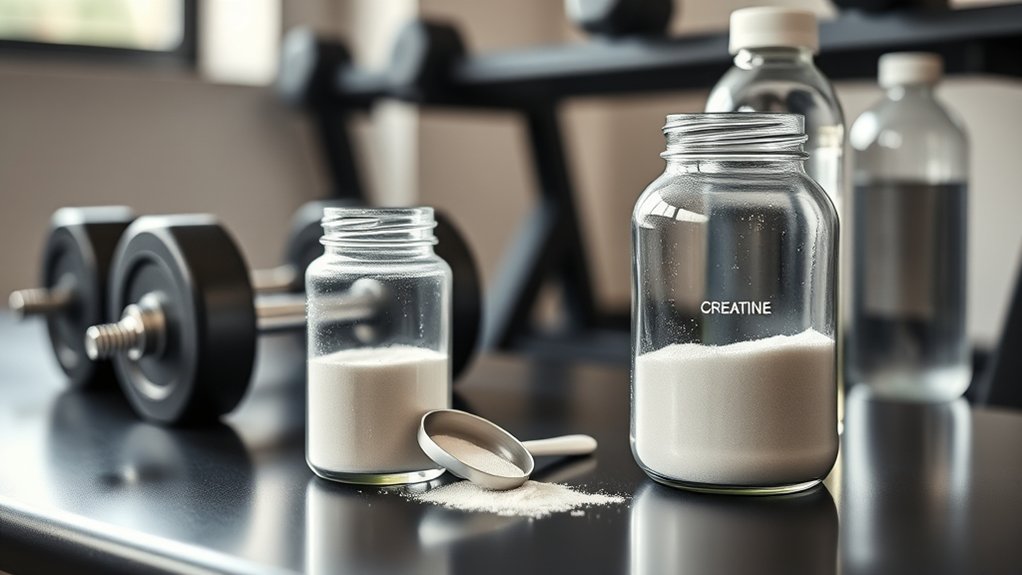
Creatine is a naturally occurring compound your body synthesizes from amino acids like arginine, glycine, and methionine, primarily in the liver, kidneys, and pancreas.
About 95% of creatine is stored in your skeletal muscles, where it plays an essential role in energy production.
During high-intensity exercise, creatine helps replenish adenosine triphosphate (ATP), the primary energy carrier in your cells. This replenishment enables you to sustain short bursts of power and strength more effectively.
While your body produces 1-3 grams of creatine daily and obtains some from dietary sources, supplementation can increase muscle creatine stores.
This increase enhances athletic performance, muscle mass, and recovery, making creatine a well-researched supplement for those engaging in intense physical activities.
Who Should Consider Taking Creatine Supplements?
If you’re involved in activities that demand quick bursts of energy or are looking to improve muscle strength and recovery, supplementing with creatine might be worth considering.
Creatine supplementation offers athletic benefits and can be helpful in various situations.
Creatine supplementation provides valuable support for athletic performance and muscle recovery in diverse scenarios.
You should consider it if you:
- Are an athlete engaged in high-intensity sports seeking performance and recovery improvements.
- Are an older adult aiming to counteract muscle loss and boost strength with resistance training.
- Follow a vegetarian or vegan diet, as you may have lower dietary creatine levels.
- Have certain medical conditions, after consulting healthcare providers to guarantee safety, especially if you have kidney disease.
Always consult with healthcare providers before starting creatine to confirm it’s safe for you.
What Are Safe and Effective Creatine Dosages?

Although many believe in high loading doses, you don’t need to start with a loading phase to benefit from creatine supplementation. The recommended doses typically range from 3 to 5 grams a day, or about 0.1 grams per kilogram of body weight.
Sticking to these amounts guarantees you maintain muscle creatine levels effectively without unnecessary excess.
Creatine monohydrate, the most studied form, is safe for many people when taken at these doses. Avoid exceeding 5 grams daily, as higher doses don’t improve results and may stress your kidneys, especially if you have a pre-existing kidney condition.
To maximize safety, choose high-quality creatine products that undergo third-party testing.
Following these guidelines aids you supplement creatine safely and effectively over time. So, you can get the benefits without worrying about overdoing it.
Just keep it simple and consistent!
Can Creatine Cause Dehydration, Muscle Cramps, or Weight Gain?
How often have you heard that creatine causes dehydration or muscle cramps? The evidence says otherwise.
Studies show no notable link between creatine supplementation and dehydration or muscle cramps. Some even report fewer cramps among users.
Research finds no connection between creatine and dehydration or cramps; some experience fewer cramps.
Regarding weight gain, here’s what you should know: Weight gain primarily results from water retention in muscles during the initial weeks.
Total body water doesn’t notably change, so dehydration isn’t a concern.
Creatine doesn’t impair hydration status, even during intense training.
Increased creatinine levels reflect muscle metabolism, not kidney dysfunction.
Can Creatine Harm Your Kidneys or Liver?
You might be wondering if creatine could harm your kidneys or liver, especially since people often worry about elevated creatinine levels when they start supplementing.
The good news is that research shows creatine doesn’t damage kidney function in healthy individuals. Plus, the liver seems to handle typical doses just fine.
That said, if you already have kidney or liver problems, it’s really important to check with your healthcare provider before you begin taking creatine.
Better safe than sorry!
Kidney Health Concerns
Can creatine supplementation harm your kidneys or liver? When it comes to kidney health, evidence shows creatine is generally safe for healthy individuals at recommended doses (3-5 grams daily). Here’s what you should know:
Creatinine levels may rise with creatine use but often reflect increased muscle metabolism, not kidney damage. Extensive studies show no consistent kidney impairment in healthy users taking creatine supplementation responsibly.
If you have pre-existing kidney disease, consult your healthcare provider before starting to avoid potential risks. The European Food Safety Authority confirms daily intake up to 3 grams of high-purity creatine is unlikely to harm kidney health.
While long-term data beyond three years is limited, current research supports creatine’s safety for kidney function in healthy people.
Liver Safety Evidence
Although concerns about liver damage often come up with supplement use, research consistently shows that creatine supplementation at recommended doses (3-5 grams daily) doesn’t impair liver function in healthy individuals.
Long-term studies have reinforced creatine’s safety profile, finding no consistent evidence of harm to liver function or kidney function.
While creatine may raise blood creatinine levels, this doesn’t mean your kidneys are impaired. If you have pre-existing kidney issues, it’s important to talk to a healthcare professional before starting creatine.
Monitoring kidney function through alternative tests like cystatin C can give you a clearer picture if you’re worried.
Overall, creatine supplementation has a strong safety profile when it comes to both liver and kidney health—especially when used responsibly within the recommended doses.
Is Creatine Safe for Children, Older Adults, and Kidney Patients?
How safe is creatine for children, older adults, and those with kidney issues? Here’s what you need to know about safety and efficacy:
1. Children: Research is limited, and long-term effects are unclear, so caution is advised.
Is creatine safe for children? Currently, evidence suggests avoiding use without medical guidance.
2. Older Adults: Creatine may improve strength during resistance training, but more studies are needed to confirm its safety and efficacy in this group.
3. Kidney Disease: If you have kidney disease, consult your healthcare provider first, as potential risks exist and evidence is insufficient.
4. General Advice: Those with pre-existing health conditions should always seek personalized medical advice before starting creatine supplementation.
Understanding potential risks related to your health conditions is essential to using creatine safely.
How Does Caffeine Interact With Creatine?
While caffeine and creatine are both popular supplements for boosting athletic performance, their interaction can affect how well creatine works for you.
Studies show that caffeine might reduce the benefits of creatine, especially when it comes to improving muscle strength and performance during high-intensity exercise. This happens because they work in opposite ways, so using them together mightn’t give you extra performance gains.
That said, research is still ongoing, and people respond differently. So, it’s a good idea to pay attention to how your body reacts when you take both.
Also, consuming a lot of caffeine—more than 300 mg a day—could be risky for some, like those who are prone to Parkinson’s disease, as it may speed up its progression.
Knowing how caffeine and creatine interact can help you make smarter choices about your supplements. That way, you can get the benefits safely and effectively.
How Do I Choose a High-Quality Creatine Supplement?
What should you look for when selecting a creatine supplement? Start by choosing creatine monohydrate, the most studied form proven effective for performance and muscle growth.
Next, prioritize products with third-party testing to confirm quality and purity. This helps avoid contaminants and mislabeling.
Verify the supplement includes a Certificate of Analysis (COA) to confirm its content and safety compliance.
Finally, pick supplements with minimal additional ingredients. This reduces exposure to unnecessary additives and potential allergens.
Also, opt for brands transparent about their sourcing and manufacturing practices. Make sure they adhere to good manufacturing practices (GMP) for consistency and safety.
Following these steps ensures you select a high-quality creatine supplement that supports your health and fitness goals effectively.
When Should I Consult a Healthcare Provider About Creatine?
When should you check with a healthcare provider before starting creatine? You should consult a healthcare provider if you have pre-existing kidney conditions, as the impact of creatine supplementation on kidney function isn’t well understood.
Consult a healthcare provider before starting creatine if you have pre-existing kidney conditions due to uncertain effects.
It’s also important to seek medical advice if you’re pregnant, breastfeeding, or have diabetes, since safety data in these groups is limited.
If you have a history of bipolar disorder, creatine may increase the risk of manic episodes, so discussing use with your doctor is vital.
Furthermore, if you take other medications or supplements, a healthcare provider can help prevent potential interactions.
Always consult a healthcare provider if you experience any unusual side effects or health concerns while using creatine supplementation to guarantee safe and effective use.
What Are the Common Side Effects of Creatine Supplementation?
You might notice some mild side effects like bloating or cramping, especially when you first start taking creatine.
It’s pretty common to gain a bit of weight, but that’s usually because your muscles are holding onto more water—not because you’re putting on fat.
Creatine is generally safe for most people, but if you have any kidney problems, it’s a good idea to chat with your healthcare provider before you begin using it.
Typical Mild Reactions
How often do mild side effects appear when you start taking creatine supplements? Generally, creatine supplementation is safe for healthy individuals, but some mild reactions may occur, especially at the beginning.
The most common side effects include:
- Weight gain due to increased water retention in muscles, which is typically temporary and not harmful.
- Mild gastrointestinal discomfort, such as bloating or cramping, often during the initial loading phase.
- Temporary fluid retention within the first week, which usually subsides.
- No evidence links creatine use at recommended doses to impaired kidney function in healthy individuals.
These side effects are usually mild and short-lived. If you have pre-existing kidney issues, it’s a good idea to consult a healthcare professional before use.
For most people, creatine’s benefits outweigh these minor side effects when taken responsibly.
Weight Changes Explained
Beyond the mild reactions discussed earlier, weight changes are among the most commonly reported effects of creatine supplementation. When you start using creatine supplements, you might notice weight gain of 1-3 kg (2-6 lbs) within the first week. This gain is mainly due to water retention in muscle cells rather than an immediate increase in muscle mass.
This initial weight gain typically stabilizes after the first week. Over time, any additional weight gain is more gradual and linked to muscle mass growth. This happens when you support it with consistent exercise and proper nutrition.
Importantly, creatine supplementation doesn’t increase fat mass. While concerns about kidney function do exist, they mainly arise with excessive doses or pre-existing kidney conditions, not typical use.
Kidney Health Considerations
What impact does creatine supplementation have on kidney health? Research shows that for healthy individuals, creatine supplementation at recommended doses (3-5 grams daily) doesn’t cause kidney damage or impair kidney function.
However, you should be aware of several important considerations. Elevated creatinine levels can occur but often reflect normal muscle metabolism, not kidney dysfunction.
Individuals with pre-existing kidney conditions should consult a healthcare professional before use due to limited safety data.
Quality control in supplement manufacturing is critical to avoid contaminants that may risk kidney health.
Monitoring kidney function periodically can help maintain safety during long-term creatine supplementation.
It’s always a good idea to keep an eye on how your body is responding if you decide to use creatine regularly.
Frequently Asked Questions
Can Creatine Supplementation Improve Cognitive Function?
Yes, creatine supplementation can support cognitive enhancement by improving brain health and memory improvement, especially during mental fatigue.
It helps boost brain energy metabolism, which may reduce cognitive decline and offer neuroprotective effects.
While it’s well-known for enhancing exercise performance, creatine’s benefits extend to cognitive function, particularly in high-demand situations.
However, more robust clinical trials are needed to fully confirm these effects across different populations.
Does Creatine Affect Hormonal Levels or Testosterone?
Back in the days of the Renaissance, alchemists sought secrets like creatine metabolism reveals today.
You won’t see creatine messing with your hormonal balance or testosterone levels when you stick to recommended dosage effects. Studies confirm supplement timing doesn’t alter these hormones either.
Long term safety data shows creatine supports energy without hormonal disruption. This lets you focus on performance without worrying about hormone swings or steroid-like effects.
How Long Does Creatine Stay in the Body After Stopping?
After stopping creatine, you’ll find its metabolism effects cause muscle stores to gradually deplete over 4 to 6 weeks.
Excretion rates increase as your body clears excess creatine, normalizing naturally.
Long-term use shows no adverse withdrawal symptoms. Following dosage recommendations helps maintain safety profiles.
Overall, creatine stays in your system briefly after cessation, with no harmful effects during clearance.
This makes it a safe supplement when used responsibly.
Are There Any Dietary Restrictions When Taking Creatine?
You don’t need strict dietary restrictions when taking creatine, but consider creatine sources.
Vegetarians may benefit more since their diets lack meat-based creatine.
Make sure to follow dosage guidelines carefully and pay attention to hydration needs to support kidney function.
Timing strategies, like taking creatine post-workout with carbs, can help enhance absorption.
Age factors matter too.
Younger adults generally tolerate creatine well, but older individuals should consult a healthcare provider before starting supplementation.
Can Creatine Supplementation Impact Sleep Quality?
Think of creatine metabolism as a finely tuned engine that can subtly shift your sleep patterns.
Creatine supplementation may improve athletic performance and recovery, which can indirectly benefit your sleep quality. But remember, everyone reacts differently.
Make sure to follow dosage recommendations and timing strategies carefully. Taking creatine too close to bedtime might disrupt your rest.
So, keep an eye on how your body responds.
Finding the right balance is key—it should support both your performance and restful sleep.
Just listen to your body and adjust as needed.
Conclusion
You can safely use creatine supplements if you follow recommended dosages and choose high-quality products. For example, Sarah, a recreational athlete, improved her strength without side effects by taking 5 grams daily and staying hydrated. Just avoid excessive caffeine and watch for any unusual symptoms.
If you have kidney or liver concerns, check with your healthcare provider first. Creatine is effective and generally safe when used responsibly and with proper guidance. So, as long as you’re careful, it can be a great addition to your routine.