How To Make Protein Supplement Everything You Should Know
To make your own protein supplement, start by selecting diverse plant-based proteins like hemp, chia, and pumpkin seeds for a complete amino acid profile. Accurately measure each ingredient, then grind them into a fine, uniform powder using a spice grinder.
Add flavor enhancers such as cocoa or cinnamon to boost taste and nutrition. Store your blend airtight in a cool place, and mix with liquids like almond or oat milk.
Keep exploring to optimize texture, storage, and usage tips. It’s all about finding what works best for you and your taste buds!
Choose the Right Ingredients for Homemade Protein Powder
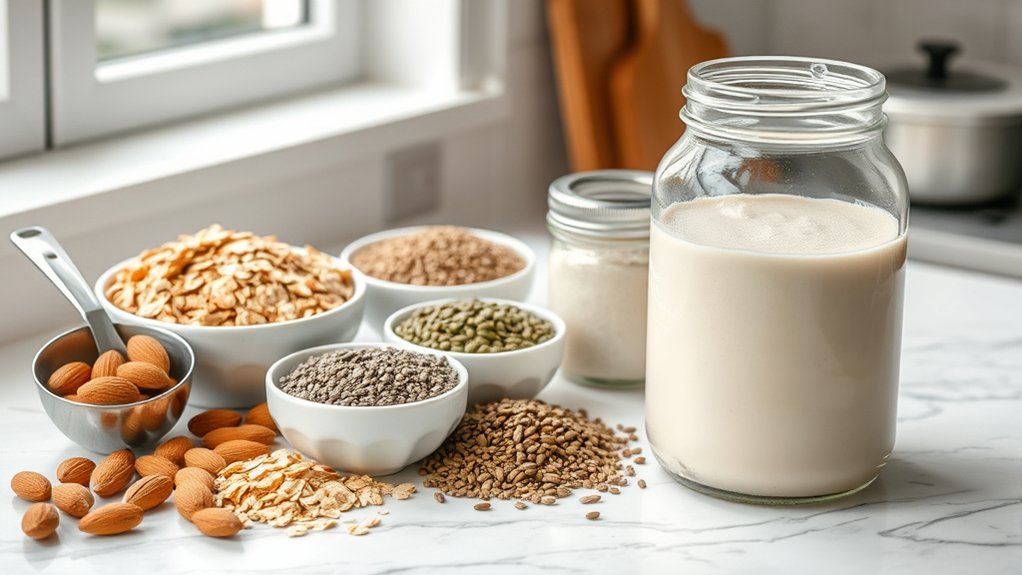
To create an effective homemade protein powder, start by selecting a variety of protein sources that provide a complete amino acid profile. Combining plant-based protein powder ingredients like hemp seeds, chia seeds, and pumpkin seeds guarantees you obtain all nine essential amino acids, delivering complete proteins.
Start your homemade protein powder with hemp, chia, and pumpkin seeds for a complete amino acid profile.
Incorporate healthy fats by adding almond flour and flax seeds. These enhance the powder’s nutritional benefits with essential fatty acids, vitamins, and minerals.
Including fiber-rich components such as gluten-free oats and chia seeds supports digestive health and prolongs satiety.
For added nutritional benefits and flavor, consider natural additives like cocoa powder or cinnamon. They offer antioxidant and anti-inflammatory properties.
Measure and Prepare Your Protein Ingredients
Begin by accurately measuring your protein ingredients using a kitchen scale to guarantee each component contributes its intended nutritional value. Measure 1 cup each of chia seeds and hemp seeds, and ¼ cup of raw pepitas to maximize protein and healthy fat content. Precise measurement guarantees your homemade protein powder delivers consistent quality.
| Ingredient | Amount | Purpose |
|---|---|---|
| Chia Seeds | 1 cup | Rich in omega-3 |
| Hemp Seeds | 1 cup | Complete protein |
| Pepitas | ¼ cup | Healthy fats & minerals |
Prepare each element carefully, maintaining accuracy to enhance the protein powder’s nutritional profile. This foundation sets the stage for effective blending and ideal supplementation. Just take your time with measuring—it really makes a difference!
How to Grind and Mix Homemade Protein Powder
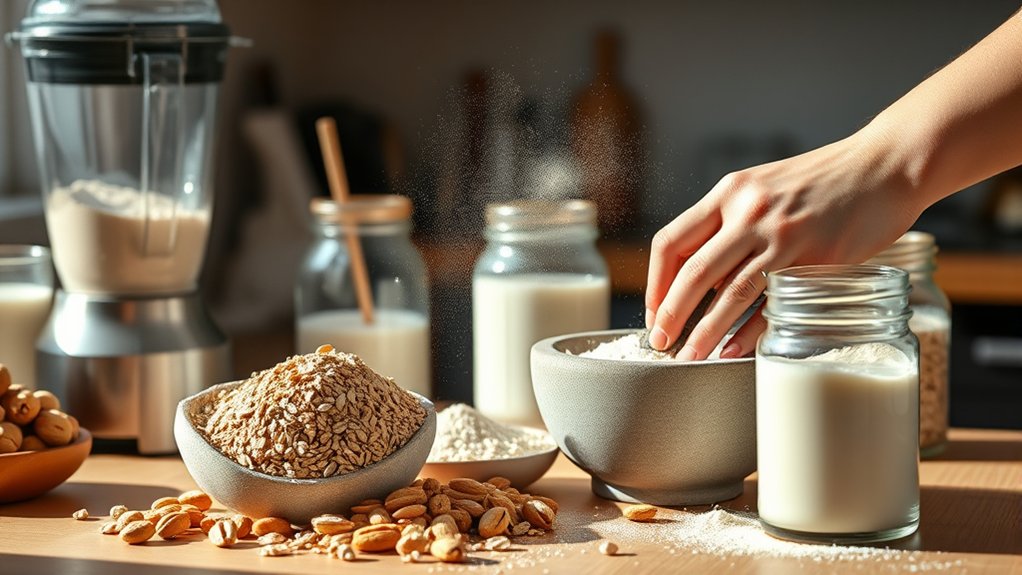
You’ll want to grind your protein ingredients in small batches using a spice grinder. This helps you get a fine, uniform texture without turning it into a paste.
Once everything’s ground, mix the powders well so they’re evenly distributed and don’t clump together.
Then, store your blend in an airtight container to keep it fresh. You can keep it at room temperature for up to two weeks, or pop it in the fridge if you want it to last even longer.
Grinding Techniques
A fine powder consistency is essential for creating a high-quality homemade protein supplement. Using a spice grinder or a clean coffee grinder helps achieve this texture efficiently. When applying grinding techniques, process ingredients in small batches to avoid over-blending, which can cause a paste-like texture.
Grind chia and hemp seeds separately to preserve their nutritional value. After grinding, stir thoroughly to prevent clumping. Finally, store the blended protein powder in an airtight container to maintain freshness and moisture protection.
| Step | Importance | Result |
|---|---|---|
| Use spice grinder | Guarantees fine texture | Smooth, mixable powder |
| Small batches | Prevents over-blending | Maintains powder form |
| Proper storage | Preserves nutrients | Long-lasting freshness |
Mixing Ingredients Evenly
Achieve an even mix by grinding your ingredients in small batches using a spice or clean coffee grinder. This helps secure a fine, consistent texture. It also prevents clumping and stops chia seeds, pumpkin seeds, and other components from turning into a paste.
After grinding, make sure to thoroughly stir the protein powder. This distributes all the particles evenly, so you get uniform protein content in each serving. Properly mixing ingredients is key for maintaining consistent nutritional value and texture.
If you want, you can add flavor enhancers like cocoa powder or cinnamon after grinding. Keeping the base plain makes it more versatile for different uses.
Storage And Freshness
Proper storage plays an essential role in preserving the freshness and nutrient quality of your homemade protein powder. After grinding ingredients finely using a spice or coffee grinder, transfer the powder into an airtight container to prevent moisture and contaminants from degrading the mix.
Store the container at room temperature if you plan to use the powder within two weeks. To extend freshness, refrigerate the powder. This can preserve nutrient integrity for up to two months.
For longer storage, freeze portions in sealed containers. This method maintains ideal nutrient content for up to six months.
Always process ingredients in small batches and stir thoroughly to guarantee even mixing before storage.
Following these storage guidelines helps maintain the potency and consistency of your homemade protein supplement. It’s definitely worth the extra effort!
Add Flavor and Nutritional Boosters to Your Protein Powder
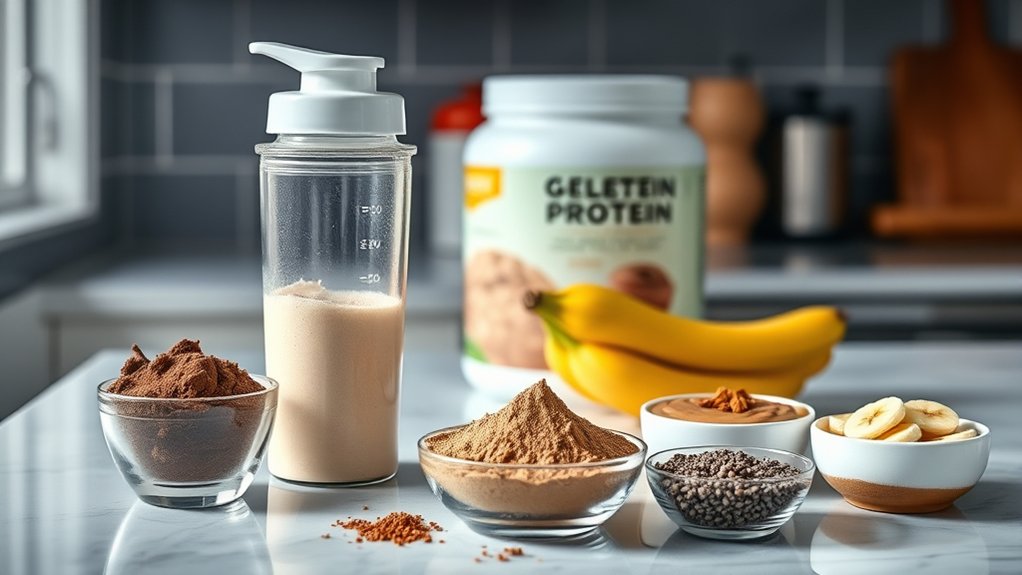
When you add flavor and nutritional boosters to your protein powder, you not only enhance the taste but also increase its health benefits.
Carefully selected ingredients can improve both flavor and nutrient density without compromising the powder’s functionality. Consider these additions:
Enhance taste and nutrition effortlessly with thoughtfully chosen ingredients that keep your protein powder effective and delicious.
Add 2-3 tablespoons of cacao powder to introduce antioxidants and a rich chocolatey flavor.
Mix in 1 tablespoon of cinnamon to help regulate blood sugar levels while providing a warm, inviting taste.
Incorporate a scoop of nutritional yeast for a boost of B vitamins and a savory, cheesy flavor that works well in various recipes.
You can also include ground flaxseeds to increase omega-3 fatty acids and fiber, supporting cardiovascular health.
These boosters transform your protein powder into a more nutritious, enjoyable supplement.
Give them a try and see how they change up your routine!
Customize Homemade Protein Powder for Your Dietary Needs
You can tailor your homemade protein powder to meet specific dietary needs by carefully selecting and substituting ingredients. For instance, if you want to avoid nut allergies, replace hemp protein seeds with flaxseeds or sunflower seeds. This way, you still preserve healthy fats and protein content.
To increase protein concentration, incorporate pea protein isolate or whey protein concentrate. Doing this enhances the protein-to-carb ratio for your targeted goals.
Adjusting the ratios of seeds and nuts lets you customize the macronutrient profile precisely, balancing protein, fats, and carbohydrates.
Flavor can be enhanced without compromising nutrition by adding cocoa powder or spices like cinnamon and vanilla bean powder.
Store Homemade Protein Powder to Keep It Fresh
Storing homemade protein powder correctly preserves its nutritional quality and prevents spoilage. To keep it fresh and extend its shelf life, you should store your powder in an airtight container. This blocks moisture and contaminants that cause clumping or rancidity.
Proper storage in airtight containers preserves homemade protein powder’s nutrition and prevents spoilage.
Place the container in a cool, dark area like a pantry if you plan to use it soon. For longer preservation, refrigerate it.
Follow these guidelines to keep your protein powder fresh:
- Use an airtight container to prevent moisture absorption and spoilage.
- Store in a cool, dark place for up to 2 weeks; refrigerate for up to 2 months.
- Freeze for up to 6 months, making sure it’s sealed airtight to avoid freezer burn.
It’s a good idea to regularly check for off smells or clumping. If you notice anything off, discard the powder promptly to stay safe.
Which Liquids Work Best With Homemade Protein Powder?
When you’re mixing up your homemade protein powder, picking the right liquid can really change the texture and flavor.
For example, almond milk and water are great if you want something smooth and low in calories.
But if you’re after something creamier with a bit more protein, Greek yogurt or oat milk are awesome choices. You can also play around with how much liquid you add to get the thickness just right.
And if you want to boost the taste without piling on sugars, try using flavored liquids. It’s an easy way to keep things tasty and healthy!
Liquid Choices Overview
Although selecting the right liquid might seem straightforward, it greatly impacts the texture, flavor, and nutritional profile of your homemade protein shake. Choosing between almond milk, coconut water, oat milk, or Greek yogurt determines not only taste but also the nutrient density and hydration benefits.
Consider these options:
- Almond milk offers a creamy texture with low calories, ideal for light, dairy-free shakes.
- Coconut water supplies natural electrolytes and subtle sweetness, perfect for replenishing post-workout.
- Oat milk provides a rich, plant-based creaminess that enhances nutty protein powders.
- Greek yogurt adds thickness and extra protein, creating a richer, more satiating smoothie.
Selecting your liquid carefully guarantees your protein supplement meets your dietary and flavor preferences efficiently. It’s all about finding what works best for you and your goals.
Impact On Texture
The choice of liquid greatly influences the texture of your homemade protein supplement, impacting how smooth or thick your shake becomes. When mixing powder with liquid, start with a 1:1 ratio, one cup each, to balance consistency.
Liquid choices like almond milk, water, or coconut milk provide a smooth base without overpowering the protein’s natural flavor.
Incorporating chia seeds affects texture considerably because they absorb liquid and swell, thickening the supplement. Using less liquid with chia seeds yields a dense, pudding-like texture, while more liquid creates a thinner, more drinkable shake.
You can also experiment with liquids such as coconut water or herbal teas to adjust texture while maintaining nutrient density.
Understanding these interactions helps you tailor the texture precisely to your liking. Give it a try and see what works best for you!
Flavor Pairing Tips
Choosing the right liquid markedly influences the flavor and nutritional profile of your homemade protein supplement. Selecting liquids that complement the protein powder can optimize taste and enhance benefits. Consider these options:
Nut milks like almond or oat milk provide a creamy texture and extra nutrients without overpowering the protein powder’s flavor.
Coconut water delivers subtle sweetness and essential electrolytes, making it perfect for hydration after workouts.
Blended fruits such as bananas or berries enrich the supplement with fiber, vitamins, and antioxidants, boosting both flavor and nutrition.
Water or coconut milk can also be used depending on the desired consistency.
Each liquid choice affects your supplement’s taste, texture, and nutrient density. So, experiment to find your ideal combination.
Use Homemade Protein Powder in Smoothies, Oatmeal, and Recipes
When you add 2-4 tablespoons of homemade protein powder made from chia seeds, hemp, and pumpkin seeds to your smoothies, you boost their protein content by approximately 7 grams per serving. This homemade protein powder not only enhances protein per serving but also delivers fiber and healthy fats.
You can also mix it into oatmeal to increase nutritional value while keeping a versatile flavor profile that pairs well with various toppings. It’s an easy way to make your breakfast more filling and nutritious.
Moreover, incorporate homemade protein powder into baked goods by substituting part of the flour. This improves protein content without adding sugars or artificial ingredients.
For best results, store your powder in an airtight container to preserve freshness for up to two weeks at room temperature or six months frozen. This approach guarantees convenient, nutrient-dense additions to your recipes.
Fix Common Problems With Homemade Protein Powder
Incorporating homemade protein powder into your diet can really boost your nutrient intake. But you might run into a few common challenges along the way. Don’t worry though, with a little know-how, you can tackle them easily.
To get the most out of your protein powders, start by preventing clumps. Mix your ingredients thoroughly and store the powder in an airtight container. This keeps moisture out and stops clumping from happening.
Prevent clumps by mixing well and storing your protein powder airtight to keep moisture—and clumping—away.
When it comes to texture, try using a spice grinder for a nice, fine powder. Just be careful not to over-blend, or you could end up with a paste-like consistency instead.
For flavor, consider adding things like cocoa powder or cinnamon after grinding. This way, you can boost the taste without messing with the base powder, keeping it versatile for different recipes.
If you can’t find hemp seeds, no problem! You can swap in flaxseeds or hulled sunflower seeds. Just make sure to keep the protein content balanced so your homemade supplement stays effective.
Why Choose Homemade Over Store-Bought Protein Powder?
Although store-bought protein powders offer convenience, making your own lets you control every ingredient. You can eliminate added sugars, artificial flavors, and potential contaminants like heavy metals.
Commercial powders often contain variable levels of heavy metals, which can pose health risks over time. By choosing homemade protein powder, you reduce your exposure to these contaminants and unwanted additives.
Plus, homemade options provide significant cost savings compared to store-bought products, which typically cost $2-3 per serving. You can customize flavors and nutritional content precisely to your needs using whole-food ingredients such as chia, hemp, and pumpkin seeds.
This customization boosts nutrient density, supplying fiber, healthy fats, and anti-inflammatory compounds alongside about 7 grams of protein per serving. Ultimately, homemade protein powder offers a safer, more economical, and nutritionally optimized alternative tailored to your personal health goals.
It’s definitely worth trying if you want more control over what you put in your body.
Frequently Asked Questions
Can Homemade Protein Powder Replace All Meals?
You can’t rely on homemade protein powder to replace all meals because it lacks essential nutrient balance from diverse protein sources and other food groups.
Effective meal planning requires incorporating carbohydrates, fats, vitamins, and minerals to meet your dietary preferences and health needs.
While protein powder supplements your intake, you still need whole foods for fiber and phytonutrients.
So, think of homemade protein powder as a complement, not a substitute, in a well-rounded diet.
It’s all about balance!
How Long Does Homemade Protein Powder Take to Digest?
If you consume a homemade protein powder with hemp seeds and almond flour, you’ll typically digest it within 2 to 3 hours.
Digestive enzymes break down the protein sources, which affects absorption rates. The high fiber content slows digestion slightly but promotes gut health.
Meal timing also matters. Taking it post-workout may help optimize absorption.
Plus, your body’s hydration and enzyme efficiency influence how quickly amino acids enter your system for muscle repair.
Are There Any Allergens Commonly Found in Homemade Protein Powders?
Yes, common allergens in homemade protein powders include nuts like almond flour and seeds such as chia or flax. These may cause reactions if you’re sensitive.
Pea protein, a common ingredient, can also trigger legume allergies.
Despite their nutritional benefits and flavor variations, you should carefully select ingredients based on your allergies.
Store your powder in airtight containers to maintain freshness and reduce contamination risks. This way, you can ensure safe consumption every time.
Can Homemade Protein Powder Help With Muscle Recovery?
Imagine your muscles as a garden thirsty for nutrients after a storm; homemade protein powder nourishes them effectively. It supports muscle repair thanks to ingredient benefits like omega-3-rich chia seeds and anti-inflammatory cocoa.
You’ll notice improved recovery timing when you consume it post-exercise.
Using precise blending techniques guarantees a uniform mix, maximizing nutrient absorption.
This tailored approach accelerates muscle recovery, making your body ready for the next workout sooner.
What Is the Environmental Impact of Making Protein Powder at Home?
Making protein powder at home reduces energy consumption by cutting out industrial processing and long-distance shipping.
You can guarantee sustainable sourcing by selecting local, organic, and non-GMO ingredients, which improves ingredient quality and minimizes environmental harm.
This approach also supports waste reduction by avoiding single-use plastic packaging typical of commercial powders.
Conclusion
Now that you know how to craft your own protein supplement with precision, imagine the control you gain over quality and nutrition. But here’s the twist: the true power lies not just in mixing ingredients. It’s in tailoring every batch to your unique needs, revealing potential store-bought powders can’t match.
Ready to transform your health with a custom formula? Your homemade protein journey starts now, promising results that science and personal care combined can deliver.