How To Take Pre Workout Supplement ? Step by Step Guide for Beginners
To take a pre-workout supplement effectively, choose one that matches your fitness goals and start with a low dose to assess tolerance. Mix the recommended serving with 8 to 12 ounces of cold water and consume it 20 to 45 minutes before exercise for ideal energy and focus.
Be sure to monitor your caffeine intake to avoid any side effects. Also, stay hydrated with water and have some light snacks before your workouts.
Feel free to explore further to enhance your timing, dosage, and nutrition strategy for peak performance. It’s all about finding what works best for you!
What Is a Pre-Workout Supplement and How Does It Work?
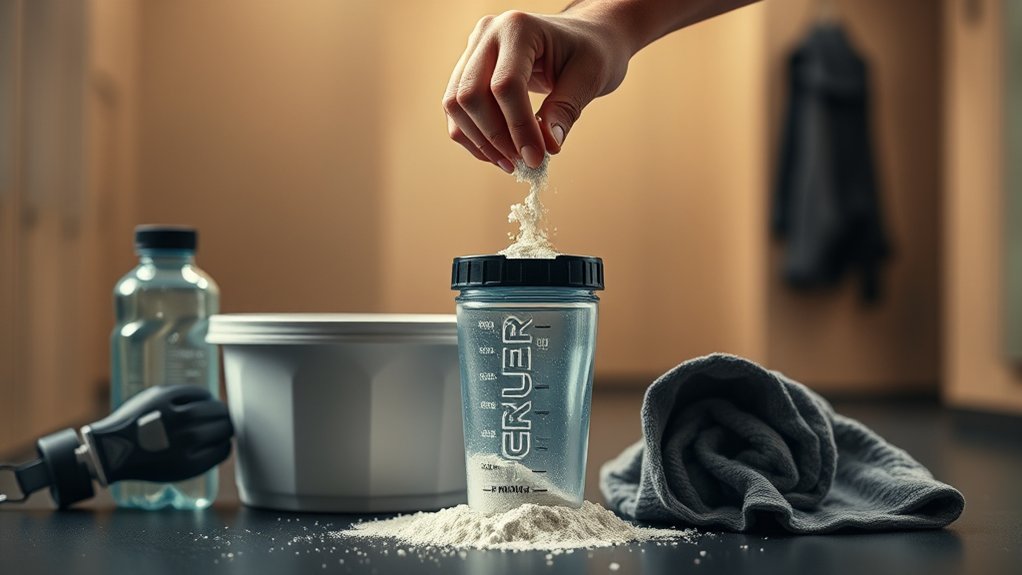
A pre-workout supplement is a specially formulated product that helps boost your energy and focus during exercise.
These supplements are designed to enhance athletic performance by providing an energy boost and improving workout performance. Common ingredients include caffeine, which increases energy and alertness, and beta-alanine, which helps reduce muscle fatigue.
Pre-workout supplements boost energy and focus, featuring ingredients like caffeine and beta-alanine to enhance performance.
Pre-workout supplements come in various forms, such as powders, capsules, or gummies. Powders are typically mixed with water for consumption.
To maximize effectiveness, especially for caffeine-based formulas, the ideal timing for taking a pre-workout is 20 to 45 minutes before exercise.
How to Choose the Best Pre-Workout for Your Fitness Goals
How do you select the best pre-workout supplement to match your fitness goals? Start by identifying your specific objectives, whether muscle gain, weight loss, or endurance. Pre-workout supplements often target different needs.
Look for ingredients that align with your goals. For example, creatine and beta-alanine support strength and endurance, while BCAAs aid muscle recovery.
Decide if stimulants fit your routine, considering their impact on energy levels and potential sleep disruption.
Always choose products from reputable brands that clearly disclose ingredient sourcing and dosages to ensure transparency.
Finally, assess tolerance by starting with a lower dose to monitor how your body reacts before increasing intake. This evidence-based approach helps you pick a pre-workout that effectively supports your fitness journey.
How Much Pre-Workout Should You Take for Best Results?

Selecting the right pre-workout supplement is only part of the equation; determining the correct dosage is just as important to maximize benefits and minimize risks. The ideal dosage usually falls between 1 to 2 scoops, or about 10-20 grams, depending on the specific product’s concentration.
Choosing the right pre-workout is key, but proper dosage is essential to maximize benefits and reduce risks.
To figure out how much pre-workout you should take, always check the product label for precise serving sizes and ingredient amounts. If you’re new or sensitive to stimulants, start with a half-serving to safely assess your tolerance.
For caffeine-based products, aim for 3-6 mg of caffeine per kilogram of your body weight. Regular users might want to cycle off pre-workouts every 3-6 months to prevent building tolerance and keep them effective.
Following these guidelines helps ensure you use your pre-workout effectively and safely. It’s all about finding what works best for you while staying mindful of your body’s responses.
When Is the Best Time to Take Pre-Workout Powder?
When should you take pre-workout powder to maximize its benefits? The best time is 20 to 45 minutes before your workout to guarantee ideal absorption and peak effect.
Caffeine-based pre-workouts typically hit their peak effect within 30 to 45 minutes, providing the energy boost you need for intense sessions.
Avoid taking pre-workout immediately after a large meal, as this delays absorption and reduces effectiveness. If your workout is long, consider a second dose about an hour in to maintain energy levels.
For evening workouts, choose stimulant-free pre-workout formulas to prevent sleep disruption.
Timing your pre-workout correctly helps you harness its full potential, enhancing performance without compromising rest or recovery.
How to Mix and Prepare Your Pre-Workout Correctly
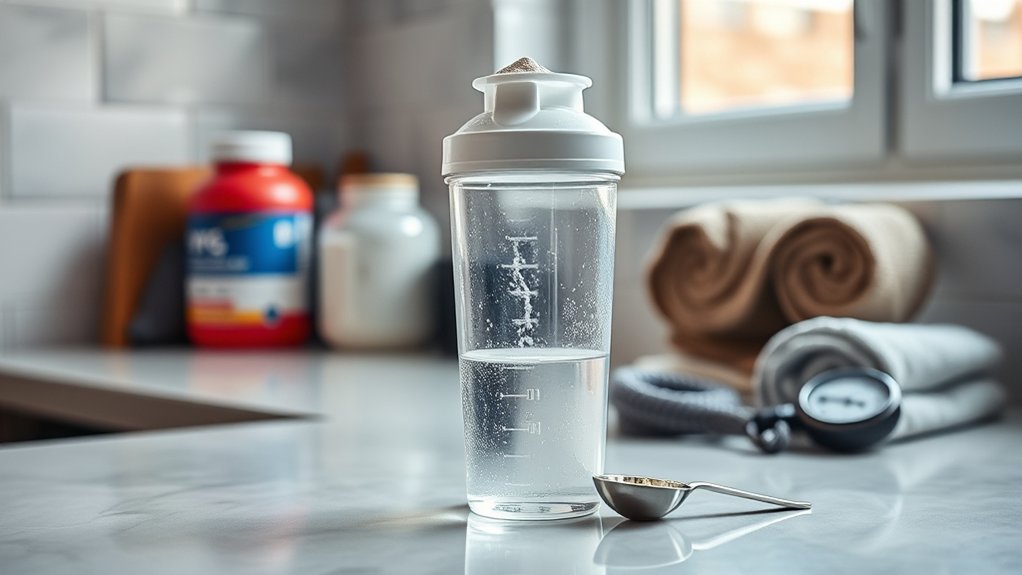
You’ll want to mix your pre-workout powder with about 8 to 12 ounces of cold water or juice. This helps make sure you stay properly hydrated and your body absorbs the nutrients well.
Using a shaker bottle is a great idea because it mixes everything smoothly, so you won’t end up with any clumps.
Plus, picking the right liquid and mixing it the right way can actually boost how well your supplement works.
Proper Mixing Techniques
Three key steps guarantee you mix your pre-workout supplement correctly for maximum effectiveness.
First, measure your serving size accurately using a scoop or gram scale to avoid overdosing.
Next, mix your pre-workout powder with 8-12 ounces of cold water to guarantee proper hydration and absorption.
For ideal mixing, use a shaker bottle and shake vigorously for 5-10 seconds or stir until fully dissolved, preventing clumps. This method supports how to take your supplement efficiently.
Consuming your mix 20-30 minutes before exercise maximizes performance benefits.
If the taste is too strong, you can dilute it with additional water for better palatability.
Following these steps guarantees you prepare your pre-workout correctly, enhancing your workout experience with precise, evidence-based techniques.
Ideal Liquid Choices
Mastering proper mixing techniques sets the foundation for choosing the right liquids to enhance your pre-workout supplement’s effectiveness.
When you mix your pre-workout powder, selecting the ideal liquid is vital for taste, absorption, and ingredient stability. Follow these guidelines for effective mixing:
Use 8-12 ounces of cold water or juice to guarantee excellent flavor and nutrient uptake. Always use a shaker bottle and shake vigorously for 5-10 seconds to fully dissolve pre-workout powders.
Avoid hot liquids, as they can degrade sensitive ingredients, reducing effectiveness.
If taste is an issue, dilute with extra water or flavored beverages to improve palatability.
And don’t forget to strictly follow the manufacturer’s instructions for specific mixing recommendations to maximize benefits.
These practices ensure you get the most from your pre-workout supplement. Give them a try and see how much better your mix can be!
Should You Take Pre-Workout on an Empty Stomach or After Eating?
When should you take your pre-workout supplement for the best results, on an empty stomach or after eating?
Taking pre-workout on an empty stomach can increase absorption speed. This allows ingredients like caffeine to kick in faster.
However, it might cause stomach discomfort or jitters, especially if you don’t tolerate stimulants well. Eating before your pre-workout, especially a small carb-rich snack, can reduce these side effects. It still helps support your energy levels.
If you’ve just had a large meal, it’s best to wait 30 to 60 minutes before taking your pre-workout. This way, you balance absorption and comfort.
At the end of the day, try different timings and food choices to see what works best for your body and boosts your workout the most.
How to Manage Caffeine From Pre-Workout and Avoid Tolerance
Although caffeine can boost your workout performance, managing your intake is essential to avoid building tolerance and experiencing negative side effects.
To optimize your caffeine intake from pre-workout supplements, follow these evidence-based strategies:
Monitor total caffeine intake, keeping it below 400 mg daily from all sources.
Start with a lower dosage of pre-workout to assess your individual tolerance.
Cycle off caffeine-based pre-workout for 1-2 weeks every 3-6 months to reset tolerance.
Stay hydrated during workouts to counteract caffeine-induced dehydration.
Use stimulant-free pre-workout options on off days to maintain performance without increasing tolerance.
This way, you can keep your energy up without overdoing it.
What Are Common Pre-Workout Side Effects and How to Minimize Them?
You might notice some jitters, trouble sleeping, or an upset stomach after taking pre-workout supplements. This usually happens because of caffeine or ingredients like beta-alanine.
To keep these side effects in check, try starting with just half a serving. Also, it’s a good idea not to take the supplement on an empty stomach.
Drinking plenty of water and having a light carb snack before your workout can make a big difference too.
These small changes can help reduce those unwanted effects and make your workout feel better overall.
Common Side Effects
Because pre-workout supplements often contain high levels of caffeine and other active ingredients, you might experience side effects like jitters, irritability, and insomnia if you take more than the recommended amount.
Common side effects can also include skin tingling and gastrointestinal discomfort.
To minimize these effects, try adjusting the dosage to reduce the high caffeine content. Eating a small, carb-rich snack can help prevent stomach issues.
Also, make sure to drink plenty of water to counteract dehydration caused by caffeine’s diuretic effect.
Keep an eye on how your body responds so you can catch any adverse reactions early. If side effects stick around, you might want to consider stimulant-free alternatives.
Causes Of Side Effects
Pre-workout supplements often cause side effects due to their stimulant content, particularly caffeine and beta-alanine. Common side effects like jitters, irritability, and digestive issues arise mainly from high caffeine content and stimulants. Beta-alanine may cause harmless tingling but can be minimized if you start with a smaller dosage.
To reduce side effects, monitor overall caffeine consumption and avoid taking pre-workouts on an empty stomach. Increasing water intake helps prevent dehydration-related discomfort.
| Cause | Side Effect |
|---|---|
| High caffeine content | Jitters, irritability |
| Beta-alanine | Tingling sensation |
| Empty stomach | Digestive issues |
Understanding these causes helps you use pre-workouts safely and effectively. Just keep an eye on what you’re taking and how your body reacts.
Minimizing Discomfort Strategies
Although side effects like tingling, jitters, and digestive discomfort are common with stimulant-based supplements, you can take practical steps to minimize these issues.
Start by adjusting your pre-workout approach to match your tolerance and needs.
Take a lower dose of beta-alanine initially and gradually increase it to reduce skin tingling. Stay well-hydrated before and during workouts to counteract caffeine-induced dehydration.
If jitters arise, reduce stimulant intake or choose a stimulant-free pre-workout.
Consume a small carb-rich snack before your supplement to ease digestive discomfort.
Also, keep an eye on your total daily caffeine to avoid going over 400 mg. Adjust your servings accordingly to stay within that limit.
When and How to Take a Break From Stimulant Pre-Workouts
If you want to maintain the effectiveness of stimulant pre-workouts, taking regular breaks every 3 to 6 months is vital.
To prevent tolerance buildup, plan a 1 to 2-week break during which you gradually taper off stimulants instead of stopping abruptly. This approach helps minimize withdrawal symptoms like headaches or irritability.
During your break, monitor how your body reacts and consider using stimulant-free alternatives to sustain workout performance safely.
Proper hydration is important since discontinuing stimulants can cause increased fatigue and lower energy levels.
By taking these steps, you’ll reset your tolerance and maintain the pre-workout’s efficacy over time.
How to Combine Pre-Workout With Nutrition and Hydration for Optimal Performance
To get the most from your pre-workout supplement, try eating a small, carb-rich snack like a banana about 30 to 60 minutes before you start exercising. This will help fuel your muscles effectively.
Also, make sure to drink 8 to 12 ounces of water when you take your pre-workout.
Keep hydrating throughout your session to avoid getting dehydrated, especially if your supplement contains caffeine.
Timing your nutrition and hydration like this helps keep your energy levels up and can reduce any discomfort while you’re working out.
Pre-Workout Meal Timing
When you consume your pre-workout meal 30 to 60 minutes before taking the supplement, you enhance digestion and assure energy availability during your session. Timing is essential to avoid sluggishness and maximize performance.
To get the most out of your pre-workout nutrition, keep these tips in mind:
Choose a small, carb-rich snack like a banana for sustained energy. Avoid large meals before your workout to prevent digestive discomfort.
Stay hydrated by drinking water throughout the day and with your supplement. Adjust meal and supplement timing based on workout intensity and duration.
Consider a small mid-workout snack during longer sessions to maintain energy levels.
Following these guidelines guarantees your pre-workout meal supports your supplement intake for ideal digestion and energy availability.
Hydration Strategies During Workouts
Although proper nutrition fuels your workout, maintaining hydration is just as important for peak performance and getting the most out of your supplements. Drink 16-20 ounces of water 2-3 hours before taking your pre-workout to make sure you’re nicely hydrated.
Mix the pre-workout powder with 8-12 ounces of cold water or juice. This helps with absorption and keeps you hydrated while you exercise.
For intense sessions, add electrolytes to replace minerals lost through sweat and support fluid balance. Keep an eye on your hydration by checking your urine color. Light yellow means you’re good, but if it’s darker, you need to drink more fluids.
During longer workouts, sip water every 15-20 minutes to keep your endurance up and maintain performance, especially if your pre-workout has stimulants.
Focusing on hydration along with nutrition really helps you get the best results from your pre-workout supplement and your workout overall.
Frequently Asked Questions
Can Pre-Workout Supplements Interact With Medications?
Yes, pre workout ingredients can interact with medication types like blood thinners, stimulants, or antidepressants.
You should consider health considerations such as your condition and individual responses before use. Following dosage recommendations and timing strategies helps minimize potential side effects like increased heart rate or nerve sensitivity.
Always consult your healthcare provider to guarantee safety and effectiveness, especially if you take multiple medications or have chronic health issues.
It’s better to be safe and make sure your supplements won’t cause any unwanted problems.
Are Pre-Workout Supplements Safe for Beginners?
Think of pre-workout supplements like a new map for your fitness journey. For beginners, following clear guidelines guarantees you navigate safely. Start with half the recommended dosage to gauge your personal tolerance.
Pay attention to ingredient safety and timing strategies. Take it 30–60 minutes before exercise. Monitor side effects closely and consult a healthcare provider if needed.
With responsible use and awareness, these supplements can support your goals without risking long-term usage issues. Just be smart about it, and listen to your body along the way.
How Long Do the Effects of Pre-Workout Last?
The effects of pre-workout typically last 3 to 6 hours, depending on your pre-workout timing and dosage recommendations.
Ingredients like caffeine boost energy levels quickly but may cause side effects if you have caffeine sensitivity.
Non-stimulant ingredients offer shorter benefits, around 2 to 4 hours.
Your workout types and metabolism also influence duration.
To maximize benefits and minimize side effects, start with lower doses and adjust based on your response and workout intensity.
Can I Take Pre-Workout Supplements on Rest Days?
Wondering if you can take pre-workout supplements on rest days? Yes, you can, and it might actually help your rest by supporting workout recovery and keeping your energy levels steady.
Just make sure you focus on ingredient safety and pick non-stimulant formulas to avoid building up a tolerance.
Also, pay attention to when you take them and stick to the recommended dosages. This way, you can boost your mental focus without feeling overstimulated. It’s all about finding the right balance.
And remember, always listen to your body. Monitoring how you respond will help you get the most from your supplements safely.
Do Pre-Workout Supplements Cause Dehydration?
Yes, pre-workout supplements can cause dehydration due to their caffeine content. Caffeine may increase urination and impact your hydration levels.
Your individual tolerance and workout intensity play key roles in this effect.
To minimize side effects, use a timing strategy that guarantees you drink plenty of water before and during exercise.
Also, maintain electrolyte balance by consuming fluids rich in minerals. Monitoring these factors helps you stay properly hydrated.
Conclusion
Now that you know how to choose, time, and dose your pre-workout supplement properly, you’re set to get the most bang for your buck. Remember, balancing caffeine intake and staying hydrated are key to avoiding common side effects.
Listen to your body and take breaks when needed. After all, slow and steady wins the race.
With the right approach, pre-workouts can power up your performance safely and effectively every time.