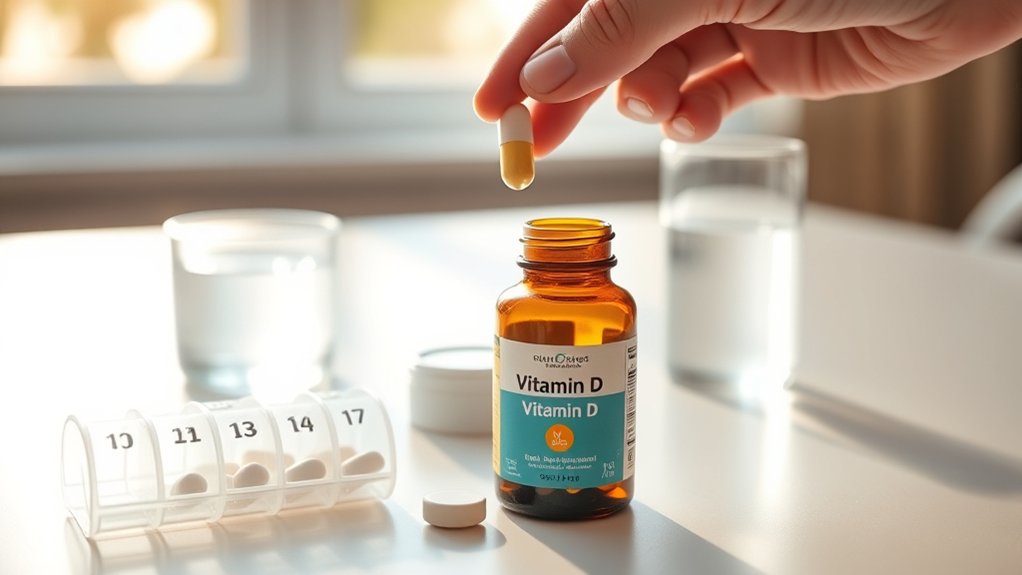
How Much Vitamin D Supplement Should I Take Recommended Intake Explained
You should take vitamin D supplements based on your age, health, and sun exposure. Adults typically need 600-2,000 IU daily, while seniors may require 800-1,500 IU. Limited sun exposure or certain health conditions could mean you need higher doses, up to 2,000 IU or more.
Remember, intakes above 4,000 IU can cause toxicity. If you want to guarantee the right dose and supplement type for your needs, there’s more important information to evaluate.
How Much Vitamin D Do You Need Daily?

The Endocrine Society, however, suggests that adults may benefit from higher daily vitamin D levels. They recommend supplements containing 1,500 to 2,000 IU to maintain maximum health.
Since individual needs vary, especially with limited sun exposure, you should consult your health care provider before adjusting your intake.
Taking daily vitamin D supplements during fall and winter can help maintain adequate levels. By following these guidelines, you can guarantee you get the right amount of vitamin D your body needs.
How Your Age and Health Change Your Vitamin D Needs
Your vitamin D needs actually change as you get older. For example, infants, adults, and seniors each need different daily amounts to stay healthy.
Also, if you have certain health conditions like obesity or malabsorption, you might need to take more supplements.
Knowing these differences can help you adjust your vitamin D intake in a way that supports you best throughout your life.
Age-Based Dosage Guidelines
Several factors, including age and health status, influence the amount of vitamin D you need daily. Infants require 400 IU (10 mcg) to support bone health and development.
Children aged 1-3 and teens need 600 IU (15 mcg) daily for proper growth.
Adults between 19 and 70 are recommended the same 600 IU, but those over 70 should increase to 800 IU (20 mcg) to maintain bone density.
If you’re pregnant or breastfeeding, you should also aim for 600 IU daily to support both your health and the baby’s development.
The Endocrine Society suggests adults may benefit from higher daily doses between 1,500 and 2,000 IU, especially if you have limited sun exposure or specific health considerations.
Health Conditions Impact
Because your vitamin D needs vary with both age and health status, it’s important to tailor your intake accordingly. Health conditions that impair absorption, such as celiac disease or Crohn’s disease, often require higher doses of vitamin D to maintain adequate levels.
Adults over 71 typically need 800 IU daily, while younger adults require about 600 IU according to recommendations.
Pregnant women should take at least 600 IU, with some evidence supporting doses up to 2,500 IU to reduce pregnancy complications. If you have prediabetes, research suggests 3,500 IU daily may help lower the risk of developing type 2 diabetes.
For children aged 1 to 18, 600 IU is standard, but 1,200 IU might better protect against respiratory infections.
Adjusting vitamin D intake based on these factors supports ideal health. It’s all about finding what works best for your unique situation.
Supplementation for Seniors
Although your body’s ability to produce vitamin D decreases with age, you can maintain healthy levels by adjusting your supplementation.
As a senior, ensuring adequate vitamin D supports bone health and reduces osteoporosis risk. Consider these points:
Seniors 71+ typically need at least 800 IU daily, but 900 to 1,500 IU may be necessary because of reduced skin synthesis and absorption.
Supplement more during fall and winter when sunlight exposure is limited.
Health conditions like obesity or malabsorption can increase your vitamin D requirements and may need personalized dosing.
Regular monitoring of your blood levels helps tailor supplementation to your specific needs and health conditions.
How to Adjust Vitamin D Intake for Limited Sun Exposure
When you get limited sun exposure, especially during fall and winter, you’ll likely need to increase your vitamin D intake through supplements. The recommended daily allowance for adults is 600 IU, but with limited sun exposure, experts suggest raising your daily intake to 1,000–2,000 IU to prevent deficiency.
Limited sun means increasing vitamin D intake to 1,000–2,000 IU daily to avoid deficiency.
Dark-skinned individuals and those in northern climates may require year-round supplementation, as their skin produces less vitamin D.
Infants and young children not receiving sufficient breast milk or formula should get 400 IU daily.
If you have chronic health conditions or are at higher risk of deficiency, regular monitoring of vitamin D levels can guide appropriate adjustments in supplementation.
Tailoring your vitamin D intake to your sun exposure guarantees you maintain peak health.
How to Determine Your Ideal Vitamin D Supplement Dose
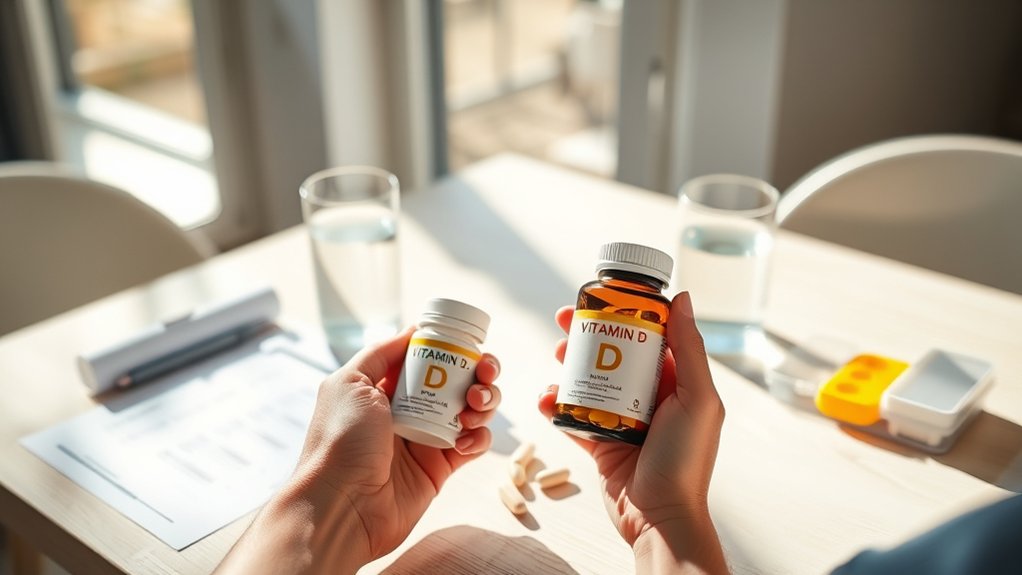
How do you figure out the right vitamin D supplement dose for your needs? Start by considering the recommended daily allowance (RDA), which is generally 600 IU for most adults and 800 IU for those over 70.
Individual factors like age, skin color, location, and health conditions play an essential role.
Here’s how to determine your ideal dose:
- Assess your risk for vitamin D deficiency based on lifestyle and health.
- Consult a healthcare provider for personalized supplement recommendations.
- Monitor your blood levels to tailor dosage and guarantee effectiveness.
- Stay within safe upper limits, typically 4,000 IU daily for adults, to avoid toxicity.
Following these steps helps you achieve maximum health with the right vitamin D dose. It’s all about finding what works best for you!
Best Vitamin D Supplement Types for Absorption and Effectiveness
Choosing the right form of vitamin D supplement can greatly impact how well your body absorbs and uses this essential nutrient. Vitamin D3 supplements have higher bioavailability than D2, making them more effective in maintaining adequate vitamin D levels. You should select high-quality supplements verified by third-party testing to guarantee accurate IU content and purity.
Supplements come in softgels, gummies, and liquids, each offering different absorption rates to suit your preferences and health conditions. Taking vitamin D with meals containing fat further enhances absorption. Your daily intake typically ranges from 600 IU to 2,000 IU depending on individual needs.
| Supplement Type | Form | Absorption & Effectiveness |
|---|---|---|
| D3 Softgels | Oil-based | High absorption, suitable for adults |
| D3 Gummies | Chewable | Convenient, moderate absorption |
| D3 Liquid | Drops | Fast absorption, customizable dosage |
| D2 Tablets | Dry form | Lower bioavailability than D3 |
| Combination | D3 + K2 | Supports bone health, enhanced effects |
The Best Times and Ways to Take Vitamin D Supplements

Since vitamin D is fat-soluble, taking your supplements with meals containing fat greatly improves absorption.
To maximize the benefits of vitamin D supplements, consider these key points:
- Take your supplement with a fat-containing meal to enhance absorption.
- Aim for morning or early afternoon dosing to avoid potential sleep disruption.
- If you have limited sun exposure, 600 to 800 IU daily is typical; some may require up to 2,000 IU based on health needs.
- Maintain consistent timing to keep steady vitamin D levels for ideal health benefits.
Always consult your healthcare provider for personalized recommendations on dosage and timing, especially if you have existing health conditions or take other medications.
This approach guarantees safe and effective supplementation tailored to your needs.
Signs You Might Need More Vitamin D Supplements
Wondering if your vitamin D intake is sufficient? Recognizing symptoms of vitamin D deficiency can guide you in taking a supplement to support your health.
Frequent fatigue or muscle weakness often signal inadequate vitamin D, as it’s essential for muscle function.
Bone pain or frequent fractures also indicate poor bone health due to impaired calcium absorption. Those living in northern climates or with limited sun exposure face higher risk and may need more vitamin D.
Furthermore, mood changes or depression have been linked to low vitamin D levels, suggesting supplementation could help.
If you have osteoporosis or chronic conditions affecting absorption, your healthcare provider might recommend higher doses.
Monitoring these signs guarantees you maintain ideal vitamin D for overall well-being.
Risks of Taking Too Much Vitamin D Supplements
Taking too much vitamin D, especially more than 4,000 IU a day, can lead to some unpleasant symptoms like nausea, feeling weak, and even kidney problems.
It’s important to keep an eye on your blood levels—they should stay below 150 ng/mL to prevent more serious issues, such as an irregular heartbeat or confusion.
So, the best approach is to stick to the recommended limits.
And whenever you’re unsure, it’s always a good idea to check in with your healthcare provider to make sure your vitamin D intake stays safe.
Toxicity Symptoms
Although vitamin D is essential for health, consuming it in excessive amounts can lead to toxicity with serious consequences. Excessive vitamin D intake, typically above 4,000 IU daily, causes high blood levels that trigger hypercalcemia, which means elevated calcium in your blood. This condition can result in harmful toxicity symptoms and health risks.
Watch for these key signs of vitamin D toxicity:
- Nausea, vomiting, and weakness
- Frequent urination and dehydration
- Kidney damage and kidney stones
- Calcium buildup in soft tissues, affecting bones and cardiovascular health
If you take supplements, it’s important to monitor your intake carefully. High blood levels of vitamin D (over 375 nmol/L) increase the risk of these complications.
Safe Upper Limits
Exceeding safe limits of vitamin D supplements can lead to serious health risks, mainly because of elevated calcium levels in the blood. For adults, the safe upper limit is a maximum daily intake of 100 mcg (4,000 IU) to avoid toxicity and related complications.
Taking too much over time may cause hypercalcemia, which shows up as nausea, weakness, and kidney problems like stones or even failure.
Pregnant and breastfeeding women should follow these same limits. Kids aged 1 to 10 should keep their vitamin D intake below 50 mcg (2,000 IU). For infants under 12 months, the limit is 25 mcg (1,000 IU) daily.
It’s important to know that exceeding these amounts through supplements—not sun exposure—increases the risk of serious health issues.
Vitamin D Supplement Recommendations for Special Groups
Because certain groups face higher risks of vitamin D deficiency and related health issues, tailored supplementation is essential. You should consider these recommendations for vitamin D intake based on your specific group:
- Pregnant women need about 2,500 IU daily to reduce risks like preeclampsia and preterm birth.
- Children and adolescents (1-18 years) benefit from 1,200 IU daily, which lowers respiratory infection risk.
- Seniors aged 75 and older should aim for 900 IU daily to decrease premature mortality risk.
- Individuals with prediabetes may require around 3,500 IU daily to slow progression to type 2 diabetes.
Supplementation is advised for these groups without prior testing due to widespread deficiencies.
Supplementation is recommended for these groups even without testing because deficiencies are common.
Following these evidence-based guidelines helps you maintain ideal vitamin D levels safely.
When to Talk to Your Doctor About Vitamin D Supplements
If you start noticing signs like bone pain or muscle weakness, it’s a good idea to chat with your doctor about checking your vitamin D levels and whether you might need supplements.
Some health conditions, like osteoporosis or kidney disease, mean you need to keep a closer eye on your vitamin D. Your healthcare provider can give you personalized advice to make sure the supplement dose is just right for you.
Signs Of Deficiency
When you notice persistent fatigue, muscle weakness, or bone pain, it could be a sign of vitamin D deficiency that needs medical attention.
Catching these symptoms early is really important, especially for older adults who are more likely to face fractures and falls.
Mood changes like depression or anxiety might also be a clue that your vitamin D levels are low.
If you have conditions that affect absorption, like celiac or Crohn’s disease, it’s a good idea to stay alert.
Think about consulting your healthcare provider if you experience:
- Unexplained fatigue or muscle weakness
- Persistent bone pain or frequent fractures
- Mood changes including depression or anxiety
- Risk factors like older age or limited sun exposure
Getting checked out promptly helps make sure your vitamin D levels are where they should be and supports your overall health.
Health Conditions Requiring Monitoring
Although many people get enough vitamin D through diet and sunlight, certain health conditions require careful monitoring of your levels. If you have osteoporosis, absorption disorders, or are pregnant, you should discuss vitamin D supplementation with your healthcare provider. Monitoring your vitamin D levels helps guarantee you maintain peak health and avoid complications.
Symptoms like muscle weakness or bone pain also warrant medical advice. It’s always better to check in with your doctor if you notice anything unusual or have concerns about your vitamin D.
| Health Condition | Monitoring Advice |
|---|---|
| Osteoporosis | Regular vitamin D level checks recommended |
| Absorption Disorders | Frequent monitoring due to impaired metabolism |
| Pregnant Women | Consult healthcare provider for dosage |
| Limited Sunlight Exposure | Evaluate vitamin D status periodically |
Always consult your healthcare provider before changing your supplementation routine based on these health conditions. It’s important to get personalized advice that fits your specific needs.
Personalized Supplement Guidance
Because vitamin D needs vary widely depending on age, health status, and lifestyle, consulting your healthcare provider guarantees you receive personalized supplement advice. Your provider can assess your supplementation needs based on factors like existing conditions and lifestyle.
Consider talking to your healthcare provider if you’re over 70 and may benefit from 800 IU/day for ideal bone health. Or if you’re pregnant or breastfeeding, aiming for around 600 IU/day.
Also, if you have conditions that affect vitamin D levels, such as obesity or gastrointestinal disorders, it’s a good idea to check in.
And if you have osteoporosis or chronic illnesses, testing vitamin D levels can guide precise supplementation.
Personalized recommendations guarantee you safely meet your vitamin D requirements and support overall health effectively. It’s all about what works best for you.
Frequently Asked Questions
Can Vitamin D Supplements Interact With Other Medications?
Yes, vitamin D supplements can interact with various medications. These interactions may affect calcium absorption, which can lead to side effects like hypercalcemia.
If you have chronic conditions or concerns about your blood pressure, it’s important to keep an eye on these effects.
Vitamin D also plays a role in your immune system, hormonal balance, and neurological health.
How Does Vitamin D Affect Mood and Mental Health?
Vitamin D acts like a key that opens mood regulation and mental clarity. When you have vitamin D deficiency, your brain’s serotonin production may drop, affecting emotional well-being and increasing risks of anxiety and depression.
It plays an essential role in cognitive function and supports seasonal affective disorder treatment by boosting mood during low sunlight months.
While its full impact needs more research, vitamin D clearly contributes to improved mental health and anxiety reduction.
Are There Natural Foods Rich in Vitamin D Besides Supplements?
Yes, you can get vitamin D from natural sources besides supplements.
Fatty fish like salmon, fortified products such as milk and cereals, and egg yolks are excellent vitamin D rich foods.
Mushrooms exposed to sunlight offer plant-based sources with notable benefits.
Don’t forget dairy options, which also contribute to your vitamin D intake.
Moreover, sunlight exposure helps your body produce vitamin D naturally.
Can Vitamin D Supplements Improve Athletic Performance?
Think of vitamin D as the sun’s handshake, connecting your body to peak performance.
Yes, vitamin D supplements can boost your athletic recovery, immune function, muscle strength, and energy levels.
They support training adaptation, enhance endurance performance, and improve exercise efficiency.
By preventing injury and muscle weakness, these supplements help you stay consistent.
While benefits vary, maintaining ideal vitamin D is key to unleashing your full athletic potential.
How Long Does It Take for Vitamin D Supplements to Show Effects?
You’ll typically notice vitamin D’s absorption rates improve bone health and reduce deficiency symptoms within 2 to 3 weeks.
However, blood levels often take 3 to 6 months to stabilize. This depends on dosage guidelines, seasonal effects, individual variations, and health conditions.
Long-term benefits require consistent intake, but watch overdose risks.
Everyone’s response varies, so regular monitoring helps guarantee you safely achieve ideal vitamin D status.
Just keep an eye on how your body reacts and stay in touch with your healthcare provider.
Conclusion
You need to tailor your vitamin D intake to your age, health, and sun exposure. You should monitor your levels, choose the right supplement type, and adjust doses thoughtfully.
Make sure to recognize signs of deficiency and avoid excessive intake. Also, consider recommendations for special groups. Always consult your doctor before making any changes.
By staying informed, cautious, and proactive, you’ll support your health with vitamin D safely and effectively. It’s all about finding the right balance for you.