How Is Creatine Supplement Made Without Harmful Additives
You make creatine supplements by chemically synthesizing creatine from high-purity sodium sarcosinate and cyanamide. These raw materials are heated under controlled pressure to trigger a reaction forming creatine crystals.
The crystals undergo centrifugation, vacuum drying, and milling to guarantee purity and consistent particle size. Rigorous testing verifies potency and safety before the powder is packaged securely.
Explore further to understand the detailed purification steps and quality assurance that confirm every batch meets strict standards. It’s pretty interesting how much goes into making sure the creatine you use is both safe and effective.
Overview of Creatine and Its Uses
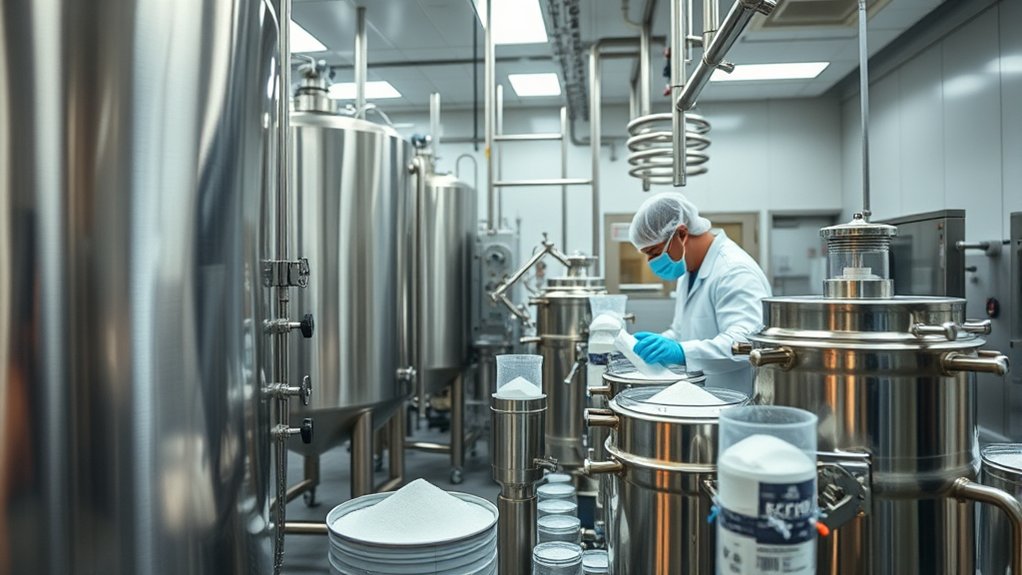
Creatine is a naturally occurring tripeptide made from L-arginine, glycine, and L-methionine. It plays an essential role in your body’s energy metabolism, especially during high-intensity, short-duration activities like weightlifting and sprinting.
When you take creatine supplements, usually creatine monohydrate, you boost the phosphocreatine stores in your muscles. This helps your body resynthesize ATP faster when it needs quick energy.
Supplementing with creatine monohydrate boosts muscle phosphocreatine, speeding up ATP resynthesis for quick energy.
This whole process directly improves your athletic performance by allowing you to produce more power and sustain endurance during anaerobic efforts.
Scientific consensus, backed by around 1,000 peer-reviewed studies, shows that taking 5 to 8 grams daily combined with resistance training increases muscle strength and size.
Knowing how creatine works makes it easier to see why creatine monohydrate is the most studied and widely used supplement for optimizing muscle energy metabolism and athletic outcomes.
It’s pretty impressive how much it can help!
Raw Materials for Creatine Powder
To produce the creatine powder that enhances muscle energy metabolism, manufacturers start with specific raw materials chosen for their chemical properties. The primary inputs are sodium sarcosinate, an amino acid intermediate contributing to a sweet taste and involved in choline metabolism, and cyanamide, an organic compound distinct from toxic cyanide.
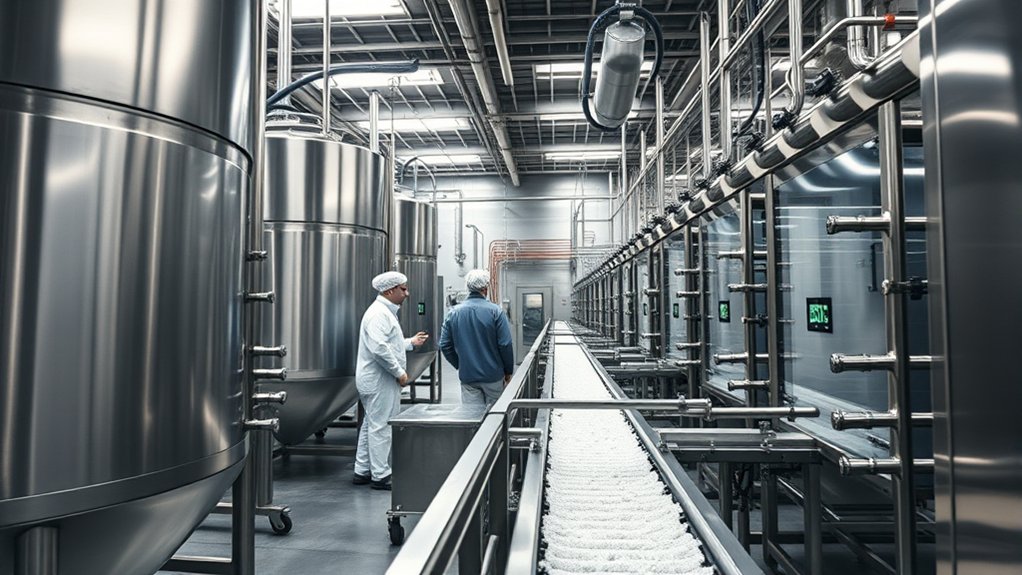
These raw materials are essential for creatine production due to their reactive functionality. Sodium sarcosinate and cyanamide are combined in a controlled reactor environment where heating and pressurization facilitate their interaction.
This process yields a liquid solution that, upon cooling, crystallizes into creatine.
Understanding the role and purity of sodium sarcosinate and cyanamide is critical for ensuring the quality and efficacy of the final creatine powder used in supplements.
How Creatine Is Made From Sodium Sarcosinate and Cyanamide
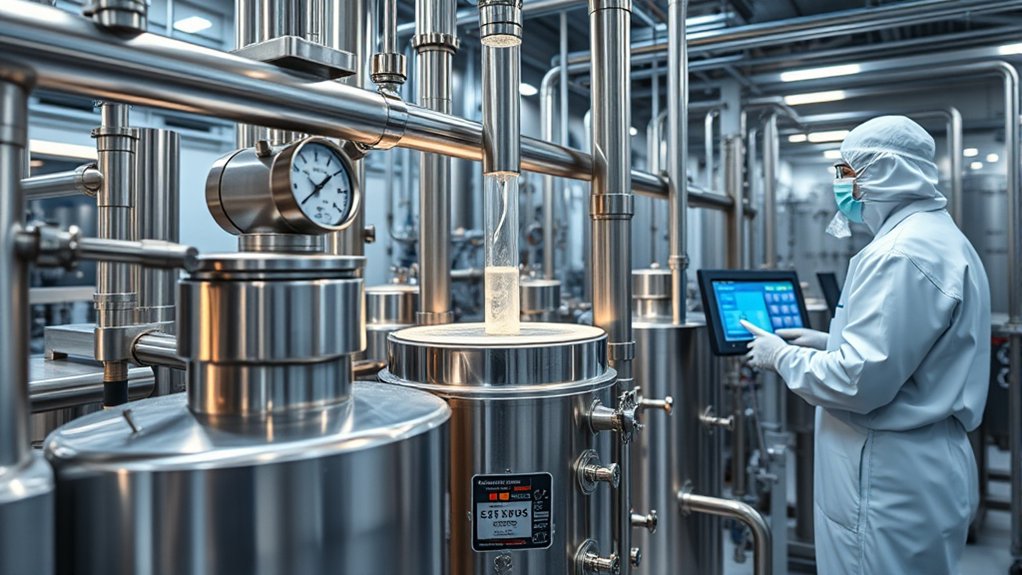
You’ll start by mixing sodium sarcosinate and cyanamide together, applying controlled heat and pressure to kick off the chemical reaction that creates creatine.
After the reaction finishes, the liquid mixture cools down and starts to crystallize into solid creatine.
Next, you’ll purify those crystals using centrifugation.
Finally, the creatine is vacuum-dried and milled into a fine powder, ready for use.
Key Raw Materials
Two essential raw materials, sodium sarcosinate and cyanamide, serve as the foundation for synthesizing creatine. Sodium sarcosinate, an amino acid intermediate, reacts with cyanamide, an organic compound, to produce crystalline creatine. Understanding these raw materials is vital for guaranteeing product purity and efficacy.
Key points about these materials include:
- Sodium sarcosinate originates from choline metabolism and provides the nitrogen backbone for creatine synthesis.
- Cyanamide acts as the reactive agent, facilitating molecular bonding during synthesis.
- Both must meet strict purity standards to avoid contamination in crystalline creatine.
- The quality and consistency of these raw materials directly influence the efficiency of subsequent chemical reactions and final product quality.
This precise selection guarantees the creatine you receive is both potent and safe.
It’s all about making sure what you get is top-notch and reliable.
Chemical Reaction Process
Building on the importance of high-purity sodium sarcosinate and cyanamide, the chemical reaction process begins by combining these raw materials in a reactor.
You’ll initiate the reaction through controlled heating and pressurization, which facilitates the synthesis of creatine from the reactants. This precise environment guarantees the reaction proceeds efficiently, maximizing yield while maintaining a high level of purity.
As creatine is made, the mixture undergoes a transformation from liquid to solid upon cooling, preparing it for subsequent processing.
Throughout this phase, careful monitoring of temperature and pressure is essential to avoid unwanted byproducts. This chemical reaction process is the foundation for producing creatine with consistent quality, enabling further refinement to achieve the purity standards required for supplement-grade creatine.
Crystallization And Purification
Although creatine initially forms as a liquid mixture from sodium sarcosinate and cyanamide, the process quickly advances to crystallization by carefully cooling the solution under controlled conditions. This step is essential for separating creatine from the reaction medium.
You then proceed with purification, which involves utilizing a centrifuge to separate crystalline creatine from impurities effectively. Ensuring the removal of residual contaminants is key to achieving high purity standards.
Next, vacuum-drying the purified creatine helps eliminate moisture without degrading the compound. The final product is a fine, easily dissolvable creatine powder suitable for supplementation.
Each stage optimizes crystallization and purification, maximizing yield and quality while sticking to strict quality control.
This meticulous approach guarantees the final creatine product meets industry specifications for efficacy and safety.
Heating and Pressurizing in Creatine Synthesis
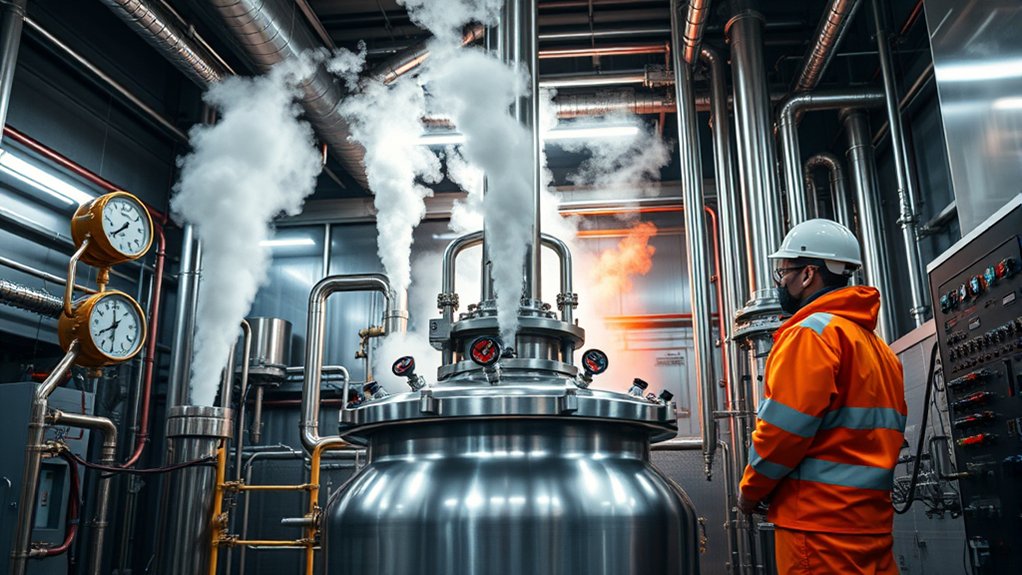
When you combine sodium sarcosinate and cyanamide in a reactor, applying controlled heating and pressurizing drives the chemical reaction that synthesizes creatine. This vital phase transforms raw materials into a reactive liquid mixture under specific temperature and pressure conditions, optimizing creatine synthesis.
The heating and pressurizing process guarantees maximum yield and purity before creatine crystals form.
| Parameter | Typical Range |
|---|---|
| Temperature | 120–150°C |
| Pressure | 3–5 bar |
| Reaction Duration | 2–4 hours |
Maintaining precise heating and pressurizing is fundamental to drive the reaction efficiently. It produces a homogeneous mixture that’s ready for the next cooling and crystallization stages.
This step directly influences the quality and consistency of the final creatine crystals. So keeping things just right here really matters.
Cooling and Crystallization of Creatine Crystals
Cooling the heated creatine solution initiates the crystallization process, where creatine molecules organize into solid crystals. This step is essential for obtaining purified creatine in a solid form.
During cooling, the solution’s temperature drops, reducing solubility and enabling nucleation of creatine crystals.
You’ll notice these crystals grow progressively as the system stabilizes.
Key aspects of the cooling and crystallization stage include:
- Controlled cooling rate to optimize crystal size and purity.
- Maintenance of solution homogeneity to prevent premature aggregation.
- Monitoring temperature precisely to trigger effective crystallization.
- Ensuring maximal yield of creatine crystals for downstream processing.
Removing Impurities via Centrifugation
You’ll use centrifugation to separate crystalline creatine from denser impurities by spinning the mixture at high speeds. This technique is great at efficiently removing contaminants like heavy metals and microorganisms.
That way, the creatine meets strict quality standards.
It’s important to understand how centrifugation works and why it’s so beneficial. Doing this helps ensure you produce a pure, compliant supplement every time.
Centrifugation Process Overview
Three key phases define the centrifugation process in creatine manufacturing, where crystalline creatine is efficiently separated from impurities.
Centrifugation involves spinning the mixture at high speeds, leveraging centrifugal force to separate components by density. This step is essential for achieving a high purity level in the final creatine powder.
You’ll observe these critical stages:
- Loading the creatine mixture into the centrifuge.
- High-speed rotation causing denser impurities to settle at the bottom.
- Carefully decanting the purified creatine solution from the sediment.
- Preparing the purified creatine for subsequent vacuum drying.
This method guarantees that the creatine powder you receive meets stringent quality standards, is free from unwanted contaminants, and is ready for further processing.
It’s all about making sure you get the best quality product every time.
Impurity Removal Techniques
Although synthesizing creatine produces a mixture containing both the desired crystalline compound and various impurities, centrifugation efficiently separates these components based on density differences.
In impurity removal techniques, you spin the mixture at high speeds, forcing denser contaminants to settle at the bottom while the lighter creatine remains suspended.
This precise density-based separation allows you to isolate purified creatine in the liquid phase. After centrifugation, the purified creatine solution proceeds to vacuum drying, which removes residual moisture to improve product quality further.
Using centrifugation as an impurity removal technique is critical to meeting stringent safety and quality standards, including tests for heavy metals and microbiological contaminants.
This step ensures the final creatine supplement follows regulatory protocols and keeps its effectiveness intact.
Benefits of Centrifugation
Because centrifugation separates components based on precise density differences, it considerably enhances the purity of creatine by efficiently removing unwanted impurities. This critical step in creatine supplement production happens after cooling, where the mixture is spun at high speeds to sediment contaminants.
By doing so, centrifugation directly impacts the safety and efficacy of the final product.
When you apply centrifugation, you benefit from:
- Achieving higher purity levels that comply with USP and FDA standards.
- Minimizing contaminants to reduce adverse effects for consumers.
- Increasing production efficiency through better yield of crystalline creatine.
- Reducing raw material waste by optimizing impurity separation.
Incorporating centrifugation guarantees your creatine supplements maintain consistent quality and performance.
It’s a straightforward way to make sure what you’re putting out there’s top-notch.
Vacuum Drying and Milling Creatine Powder
Vacuum drying removes residual moisture from crystallized creatine, preserving its purity and preventing thermal degradation that could compromise efficacy.
After crystallization, the creatine slurry is vacuum dried to enhance powder stability and extend shelf life by eliminating all traces of moisture. This controlled drying method guarantees the creatine remains vacuum dried without exposure to damaging heat.
Once dried, you mill the creatine into a fine powder, typically achieving around 200 mesh particle size. This fine milling is essential for consistent particle distribution, promoting rapid and uniform dissolution in liquids.
Achieving uniform particle size also helps with homogeneous mixing when combined with other ingredients.
The vacuum dried and milled creatine powder you produce maintains the efficacy of creatine supplementation by guaranteeing peak stability, solubility, and bioavailability for end users.
Quality Control Tests for Purity and Safety
To guarantee the creatine supplement meets stringent purity and safety standards, you must perform thorough quality control tests throughout production. These tests guarantee the product’s integrity and consumer safety by verifying ingredient composition and contaminant absence.
Key quality control tests include:
- Identity and potency analysis via High-Performance Liquid Chromatography (HPLC) to confirm accurate ingredient labeling.
- Microbiological testing to detect and eliminate harmful microorganisms.
- Heavy metal testing for contaminants such as lead, mercury, cadmium, and arsenic, guaranteeing compliance with USP/FDA and California Proposition 65 limits.
- Third-party testing by NSF or USP to independently verify quality and adherence to safety protocols.
Implementing these tests rigorously helps you maintain product purity and regulatory compliance.
That way, you can guarantee a safe creatine supplement for consumers.
Vegan and Safety Standards in Creatine Manufacturing
You’ll find that creatine manufacturing uses sodium sarcosinate and cyanamide, which are both synthetic and completely vegan raw materials.
The process is carefully designed to follow FDA cGMP regulations.
On top of that, there’s thorough testing for contaminants, heavy metals, and microbiological hazards to make sure everything meets safety compliance.
To give you even more confidence, third-party certifications like NSF and USP confirm the product’s purity and that it adheres to strict safety standards.
Vegan Manufacturing Process
Although creatine synthesis may seem complex, the vegan manufacturing process guarantees that no animal-derived materials are involved by using sodium sarcosinate and cyanamide as primary raw inputs. This assures the creatine made is fully plant-based, suitable for vegan supplements.
You’ll find the process involves precise conditions to synthesize creatine without contamination from animal sources.
Key steps in the vegan manufacturing process include combining sodium sarcosinate and cyanamide in a controlled reactor, applying heat and pressure to facilitate chemical synthesis, conducting rigorous quality control including third-party testing, and verifying compliance with vegan certifications and FDA cGMP standards.
This thorough approach confirms the purity and integrity of creatine supplements produced through this vegan-friendly method. It’s a reliable way to ensure you’re getting a product that aligns with vegan values and high-quality manufacturing practices.
Safety Compliance Standards
Building on the vegan manufacturing process, creatine production also sticks to strict safety compliance standards to guarantee product purity and protect consumers.
You’ll find rigorous quality control measures in place, including High-Performance Liquid Chromatography (HPLC) to verify creatine’s identity and potency.
Heavy metal screening targets contaminants like lead, mercury, cadmium, and arsenic, making sure safety thresholds meet or exceed USP/FDA regulations.
In places like California, compliance with Proposition 65 limits is a must.
Manufacturers like Vitaquest maintain FDA cGMP compliance and secure third-party certifications from NSF and USP.
This really reinforces the reliability and safety of the final product.
All these thorough safety and quality control protocols make sure the creatine supplement you use is consistent, pure, and safe for consumption.
Packaging Creatine Powder for Shipment
Before the creatine powder reaches your hands, it undergoes a meticulous packaging process designed to preserve its purity and consistency. This process rigorously implements packaging, quality control, and safety measures to guarantee product integrity.
Here’s how it unfolds: after milling to approximately 200 mesh, the powder transfers to an Intermediate Bulk Container (IBC) for streamlined handling.
Then, it passes through a sieving stage to ensure uniform particle size and eliminate aggregates.
Next, the powder undergoes sieving to guarantee consistent particle size and remove any clumps.
Next, the powder is filled into signature pouches, each sealed securely to prevent contamination.
Every sealed pouch undergoes x-ray scanning to detect foreign materials, assuring safety before shipment.
Following these precise steps, the creatine is dispatched efficiently, maintaining high-quality standards until it reaches you.
Frequently Asked Questions
Can Creatine Supplementation Cause Kidney Damage?
Creatine supplementation doesn’t cause kidney damage if you follow dosage recommendations of 5-8 grams daily.
Research disproves supplementation myths linking creatine to impaired kidney function in healthy individuals. Your kidneys handle creatine efficiently, and studies show no adverse effects on renal markers like serum creatinine or blood urea nitrogen.
However, if you have pre-existing kidney issues, you should consult a healthcare professional before use to avoid potential risks.
It’s always better to be safe and get personalized advice when it comes to your health.
How Long Does Creatine Take to Show Results?
Don’t worry if you don’t see instant gains. Creatine loading helps speed things up. You’ll typically notice performance benefits within 1 to 4 weeks when you follow the ideal dosage, often around 20 grams daily during the loading phase.
This rapidly saturates your muscles, boosting strength and power.
After loading, maintaining 3-5 grams daily sustains these effects. Long-term muscle growth becomes more evident after 4 to 12 weeks of consistent use.
Are There Any Side Effects of Long-Term Creatine Use?
You might experience temporary weight gain from water retention when following creatine dosage guidelines of 5 to 8 grams daily.
Comparing creatine types, most show similar safety profiles long-term. Adopting a creatine cycling strategy can help minimize risks, though evidence of serious side effects is limited for healthy users.
Still, if you have kidney concerns, consult a healthcare professional before prolonged use to guarantee safety and efficacy. It’s always better to be safe and get personalized advice.
Is Creatine Safe for Teenagers and Young Adults?
Yes, creatine benefits teenage athletes when taken at a safe dosage, typically 5-8 grams daily.
You should consult a healthcare professional to tailor the dosage and monitor usage.
Research shows creatine enhances high-intensity performance without significant adverse effects in healthy young adults.
How Should Creatine Be Stored at Home?
You should use creatine storage solutions that keep the supplement in airtight containers to prevent moisture absorption.
Store creatine at ideal temperature conditions between 20°C to 25°C (68°F to 77°F), avoiding heat and sunlight exposure.
For moisture prevention tips, keep it away from humid areas like bathrooms or kitchens. Moisture can cause clumping and degrade quality.
Always check expiration dates to maintain safety and efficacy.
Conclusion
You might think making creatine is just mixing powders, but it’s actually a precise chemical process involving sodium sarcosinate and cyanamide. There’s controlled heating and exact cooling to form pure crystals.
This meticulous synthesis and vacuum drying guarantee you get a consistent, high-quality supplement every time. It’s pretty fascinating how these steps ensure the final product is both safe and effective.
Understanding this process shows why your creatine powder meets strict safety and vegan standards. So, before it’s packaged for shipment, you can be assured of its purity and effectiveness.