How Long Does An Iron Supplement Take To Work for Women and Men
You’ll start to notice iron supplement benefits, like less fatigue and more energy, within about two weeks. Your hemoglobin levels should rise within 2 to 4 weeks, but it can take up to three months to fully restore your iron stores.
Following the recommended dosage and proper intake strategies helps speed recovery. Regular blood tests after a month or two track your progress effectively.
Understanding the role of absorption and side effects can further optimize your treatment. It’s all about being consistent and paying attention to how your body responds.
How Soon Do Iron Supplements Start Working?
How soon can you expect iron supplements to start working? Typically, you’ll notice improvement in symptoms within 14 days of consistent iron supplement use.
Hemoglobin levels, an important marker of iron status, often rise within 2 to 4 weeks after beginning supplementation.
However, fully replenishing your iron stores may take up to 3 months, depending on the severity of your deficiency and individual absorption rates.
Complete restoration of iron stores can require up to 3 months, varying with deficiency severity and absorption.
It’s essential to follow the recommended dosage and continue supplementation even after symptoms improve to restore iron levels effectively.
Monitoring blood tests after 4 to 6 weeks helps assess how well the supplements are working and guides any necessary adjustments.
This evidence-based approach guarantees you address iron deficiency safely and efficiently.
Signs That Iron Supplements Are Improving Your Health
Although iron supplements take time to fully restore your iron levels, you can start noticing signs of improvement within just a couple of weeks. Effective iron supplementation gradually alleviates anemia symptoms and boosts your overall well-being.
For example, reduced fatigue and weakness signal that your body is responding to iron supplementation and improving anemia symptoms. Increased energy levels during daily activities show rising hemoglobin and better oxygen transport.
You might also see noticeable improvement in pale skin, which reflects enhanced iron status and blood health.
In children, iron supplements support cognitive development, especially in low- and middle-income settings.
Blood tests revealing rising serum ferritin and hemoglobin confirm these positive changes. Keeping an eye on these signs helps you track how iron supplements are progressively improving your health.
How Long Until Hemoglobin and Ferritin Levels Improve With Iron Supplements?
You can expect to see hemoglobin levels start to rise within 2 to 4 weeks after beginning iron supplementation, signaling your body’s response to treatment. Early improvements in symptoms like increased energy and reduced fatigue may appear around 14 days.
Hemoglobin levels rise within 2 to 4 weeks, with symptoms improving as early as 14 days.
However, replenishing iron stores reflected by ferritin levels takes longer, often up to 3 months of consistent supplementation.
To guarantee effectiveness, healthcare providers recommend monitoring your hemoglobin and ferritin levels at baseline, 4 to 6 weeks, and again at 3 months.
This monitoring helps track your progress and guides the duration of treatment. Continuing iron supplementation beyond the rise in hemoglobin is vital for fully restoring iron stores and maintaining symptom improvement.
It also helps prevent relapse and supports overall health.
Why Taking Iron Every Other Day May Work Better Than Daily
You might find that taking iron supplements every other day actually helps your body absorb iron better than taking them every day. That’s because it gives your body’s hepcidin levels a chance to go down.
Hepcidin is a hormone that can block iron absorption if it’s too high. In fact, studies show that by spacing out your iron doses to every other day, you can nearly double how much iron your body takes in compared to daily doses.
Plus, this method not only improves how well the iron works but might also cut down on those annoying side effects that can come with taking iron regularly.
Hepcidin’s Role Explained
Hepcidin, a key hormone regulating iron absorption, peaks about 24 hours after you take an iron supplement. This peak blocks further uptake from the gut. Understanding hepcidin’s role clarifies why alternate-day dosing often outperforms consecutive day dosing in iron supplementation.
Hepcidin inhibits iron absorption by reducing iron transport across the gut lining. Serum hepcidin levels rise with daily iron intake, which limits total iron absorption.
Taking iron every other day allows hepcidin levels to fall, enhancing absorption during the next dose. This pattern supports more efficient replenishment of iron stores compared to daily dosing.
Improved Absorption Benefits
Why does taking iron every other day often work better than daily supplementation?
Alternate day dosing of iron supplements, like ferrous sulfate, improves absorption by letting serum hepcidin levels drop between doses. When you take iron every day, hepcidin stays elevated and blocks iron absorption, making the supplement less effective.
Studies show that a single 200 mg dose on alternate days results in about twice the total iron absorption compared to daily 100 mg doses. This better absorption helps refill your iron stores faster and improves your overall iron status.
Plus, taking iron every other day tends to cause fewer side effects, so it’s easier to stick with.
How the Hormone Hepcidin Affects Iron Absorption
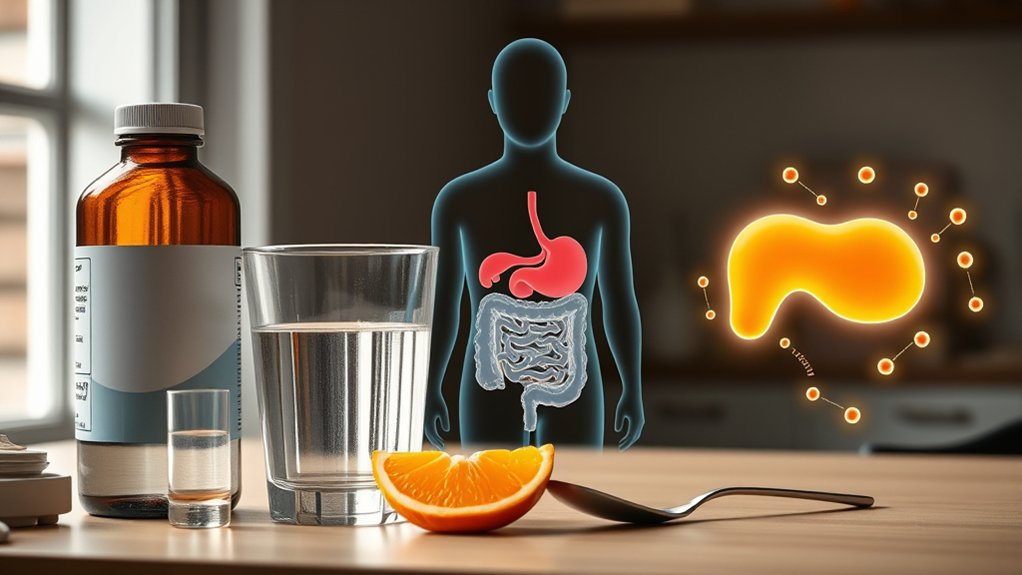
Let’s talk about hepcidin, a hormone made by your liver. It plays a big role in controlling how your body absorbs iron.
Basically, it blocks iron from being absorbed in your intestines and also limits how much iron is released from your storage areas.
Now, when you take iron supplements, something interesting happens. Your hepcidin levels go up for about 24 hours. This rise can actually reduce how much iron your body absorbs after that.
Hepcidin’s Role
Although iron supplements provide a direct source of iron, your body’s ability to absorb this mineral depends largely on a hormone called hepcidin. Hepcidin regulates iron metabolism by controlling iron absorption from the intestine and release from stores.
When hepcidin levels rise, especially after oral iron intake, iron absorption efficiency drops. This can actually worsen iron deficiency anemia.
To optimize iron supplements’ effectiveness, consider these points:
- Hepcidin inhibits iron absorption, limiting how much iron your body takes in.
- Elevated serum hepcidin levels occur during inflammation or iron overload, blocking iron uptake.
- Alternate-day dosing reduces hepcidin levels, improving iron absorption compared to daily dosing.
- Monitoring serum hepcidin levels helps assess iron metabolism and guide supplementation strategies.
Understanding hepcidin’s role is essential for effective iron supplementation. It really helps you get the most out of your iron supplements.
Dosing Timing Impact
Hepcidin’s influence goes beyond just regulating iron absorption. It also affects when you should take your supplements. After you take iron supplements, hepcidin levels rise and reduce further absorption for up to 24 hours.
So, taking iron supplements on consecutive days might actually limit how much iron your body absorbs. This can slow down your recovery from iron deficiency. Studies show that taking your supplements every other day lowers hepcidin levels and doubles total iron absorption compared to daily dosing.
For best results, keeping an eye on your serum hepcidin levels can help you find the right supplementation schedule. By spacing doses every other day, you give your body time to reset hepcidin. This improves absorption and helps boost your iron status more efficiently.
Adjusting the timing of your doses is a simple but effective step to manage iron deficiency better.
Key Factors That Influence How Fast Iron Supplements Work
When addressing iron deficiency, several key factors influence how quickly iron supplements begin to work. Your response time depends on a few things:
- Baseline ferritin levels: Lower initial iron stores and hemoglobin often lead to faster improvements in symptoms. So, if your levels are really low, you might notice changes sooner.
- Stomach acid levels: Adequate acid helps your body absorb iron from supplements better. If you have conditions that lower stomach acid, it might take a bit longer to see results.
- Timing of iron intake: Taking supplements on an empty stomach boosts absorption. Just keep in mind, it can sometimes upset your stomach.
- Alternate day dosing: This method can improve iron absorption by reducing hepcidin fluctuations. It might speed up your recovery compared to taking iron every day.
Iron supplements often mention these factors because the severity of your iron deficiency really affects how fast you notice benefits.
Knowing this can help you set realistic expectations for your treatment timeline.
How to Take Iron Pills for the Best Absorption and Results
To maximize the benefits of iron supplements, you should take them on an empty stomach, either at least 30 minutes before meals or two hours after eating. This timing improves ferrous iron absorption and helps prevent interactions with food components like calcium, dairy, and caffeine that inhibit uptake.
Take iron supplements on an empty stomach to enhance absorption and avoid interactions with calcium, dairy, and caffeine.
When you take iron pills, consider pairing them with vitamin C, such as orange juice, to modestly enhance absorption.
Also, alternate day dosing may be as effective as daily dosing and can reduce side effects.
Always follow the dosage instructions provided by your healthcare professional, since elemental iron content varies across supplements.
Proper adherence is essential to correct iron deficiency efficiently and safely. This way, you can get the best results from your iron supplementation regimen.
Common Side Effects That Affect Iron Supplement Use
Although iron supplements effectively address deficiency, they often cause side effects like nausea, constipation, and diarrhea. These can make sticking to your regimen challenging. Most of these side effects come from gastrointestinal issues linked to dosage and formulation.
To help manage them, consider using slow-release forms or lower doses to reduce discomfort. You might also try alternate-day dosing. This approach keeps iron absorption effective while lessening side effects.
Keep in mind, about 20-30% of users experience nausea, low appetite, or constipation at standard doses. If side effects persist, it’s a good idea to consult your healthcare provider. They can help adjust your dosage or suggest alternative supplements.
When to See a Doctor If Iron Supplements Aren’t Helping
Managing side effects is important, but you also need to keep an eye on whether your iron supplements are actually helping your anemia symptoms. If you don’t notice any improvement after three months, it’s a good idea to check in with your doctor. They can help rule out persistent iron deficiency or other underlying issues.
Feeling tired, weak, or short of breath even though you’re taking supplements might mean there’s something else going on. It could be problems like malabsorption, ongoing bleeding, or medications interfering with your treatment. Your doctor might suggest blood tests to see where your iron levels stand and decide if any changes to your treatment are needed.
Persistent symptoms despite supplements may indicate absorption issues, bleeding, or medication interference—consult your doctor for testing and treatment adjustments.
Also, if you start having severe side effects or new symptoms while on iron supplements, don’t wait—get medical help right away.
Talking to your doctor early on ensures you get the right diagnosis and treatment. This way, you can avoid complications and give yourself the best chance to recover from anemia.
How to Monitor Your Progress With Blood Tests During Iron Supplementation
Since iron supplementation affects your blood parameters over time, regular blood tests are essential for tracking your progress and adjusting treatment if needed. To assess how well the supplementation is working, focus on these key points.
First, monitor ferritin levels, which reflect your iron stores. Keep in mind, these may take up to 3 months to normalize. You’ll also want to check your hemoglobin and hematocrit levels. These usually start to improve within 2 to 4 weeks of beginning supplementation.
Next, evaluate the mean corpuscular volume (MCV). This often normalizes alongside your iron status and gives you extra insight into your progress.
It’s a good idea to schedule blood tests at baseline, then at 4-6 weeks, and again around 3 months. This way, you’re tracking trends in your biomarker levels rather than relying on isolated results.
Following this approach helps you understand your expected improvement timeline. Plus, it ensures your supplementation regimen is effectively restoring your iron balance.
Frequently Asked Questions
Can Iron Supplements Interact With Other Medications I’M Taking?
Yes, iron supplements can interact with your medications, affecting iron absorption and how well they work. You’ll need to manage medication timing carefully.
Make sure to space doses at least two hours apart from antacids, calcium, antibiotics, and thyroid drugs.
Be aware of possible side effects and nutrient competition, especially with vitamins. Always follow dosage recommendations and think about your health conditions, chronic diseases, and any dietary restrictions you have.
Different supplement forms might impact how well iron is absorbed. It’s a good idea to check with your healthcare provider for advice that’s tailored just for you.
Are There Natural Foods That Enhance Iron Supplement Effectiveness?
Yes, you can enhance iron supplement effectiveness with natural foods. Consuming iron-rich foods like leafy greens, legumes, and iron-fortified cereals alongside vitamin C-rich fruits really boosts absorption. It’s a simple way to get more from your supplements.
Cooking methods matter too. For example, using cast iron utensils can increase the iron content in your meals. Pretty handy, right?
At the same time, try to avoid herbal teas and calcium-rich foods around meal times because they can block iron absorption.
Is It Safe to Take Iron Supplements During Pregnancy?
Yes, it’s safe to take iron supplements during pregnancy when you follow a safe dosage and consult your healthcare provider.
To boost iron absorption, take supplements with vitamin C-rich dietary sources and consider timing intake away from calcium.
Prenatal vitamins often include iron, but you can explore recommended brands and vegetarian options if needed.
Regular blood tests help monitor levels, preventing side effects from long-term use and ensuring you meet your increased iron needs safely.
Can Iron Supplements Cause Constipation or Other Digestive Issues?
Yes, iron supplements can cause constipation and other digestive discomfort.
But don’t worry—you can manage these side effects by following dosage recommendations and timing strategies. Taking your supplement with food might help reduce digestive issues, though it can lower iron absorption.
Try boosting your fiber intake and staying hydrated to ease constipation.
If you need to take iron long-term, consider slow-release or alternative supplements.
Always think about your diet and check in with your healthcare provider to get the best results while minimizing side effects.
How Should I Store Iron Supplements to Maintain Their Potency?
You should store iron supplements in airtight containers to control moisture and limit light exposure. This helps preserve dosage stability and shelf life.
Keep them in a cool environment, and avoid temperature changes from places like bathrooms or kitchens.
Always check expiration dates to make sure they’re still potent. For safety, keep supplements out of children’s reach.
Proper storage conditions prevent degradation, so your supplements stay effective throughout their shelf life. This way, you can support your health goals efficiently.
Conclusion
Iron supplements can start improving your energy and reducing fatigue within 2-3 weeks. But it often takes 6-8 weeks to see significant changes in hemoglobin and ferritin levels.
Interestingly, studies show that taking iron every other day can boost absorption by up to 50% compared to daily dosing. So, it might be worth trying this approach if you want better results.
To get the best outcomes, make sure you follow proper dosing guidelines. Also, keep track of your progress with blood tests. And if your symptoms don’t improve, don’t hesitate to consult your doctor.