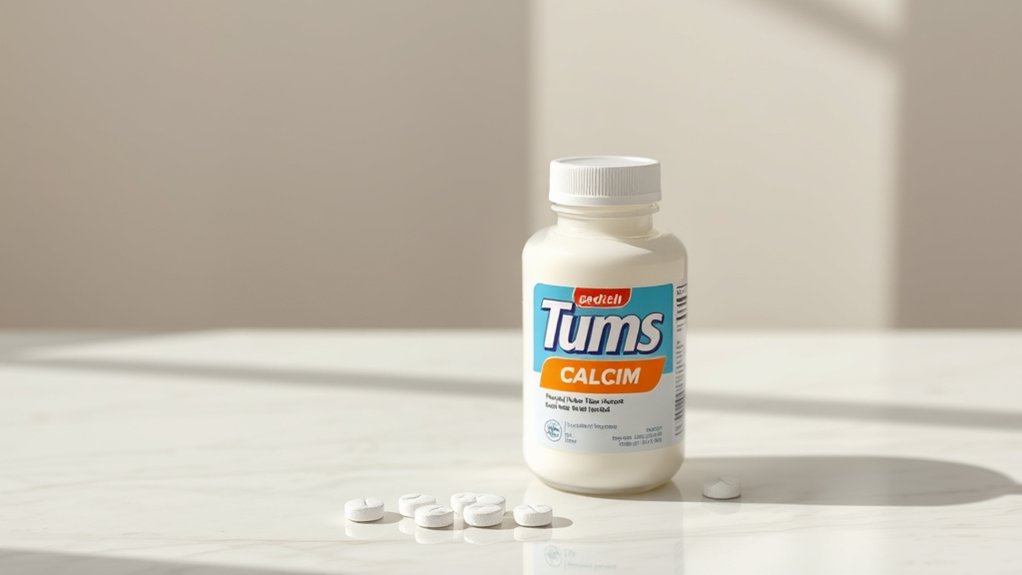
Can Tums Be Used As A Calcium Supplement? What You Need to Know Before Taking It
You can use Tums as a calcium supplement since it provides a reliable source of elemental calcium. Each tablet offers 200 to 400 mg depending on the type.
For best absorption, take Tums with meals and limit doses to 500 mg or less at a time. Keep in mind that interactions with medications and health conditions may affect safety.
Exploring how Tums works and when it’s appropriate will help you meet your calcium needs wisely. It’s always a good idea to check with your healthcare provider before starting any supplement.
Can Tums Be Used As A Calcium Supplement?

How effective is Tums as a calcium supplement? Tums contains calcium carbonate, a well-established source of elemental calcium, providing 200-400 mg per tablet depending on the formulation.
You’ll absorb it best when taken with food since stomach acid helps dissolve calcium carbonate.
Given the recommended daily intake of 1,000 to 1,200 mg for adults, Tums offers a convenient way to supplement your calcium intake, especially if your diet falls short.
To maximize absorption, don’t exceed 500 mg of elemental calcium per dose and space out your intake throughout the day.
However, if you use acid-reducing medications, Tums might be less effective, as reduced stomach acid impairs calcium carbonate absorption.
Elemental Calcium Content In Tums Products
Understanding the elemental calcium content in various Tums products helps you choose the right option to meet your daily calcium needs. Tums contains calcium carbonate, which provides elemental calcium ranging from 200 to 400 mg per tablet.
Knowing the elemental calcium in Tums helps you select the best option for your daily needs.
For example, Tums Extra Strength offers 300 mg, while Tums Ultra Strength delivers 400 mg of elemental calcium. This makes Tums a viable option among calcium supplements to help meet the Recommended Daily Intake of 1,000 mg for most adults.
Keep in mind that calcium carbonate requires stomach acid for ideal absorption, so taking Tums with food is important. To maximize absorption and effectiveness, avoid exceeding 500 mg of elemental calcium at one time and space doses throughout the day.
This approach guarantees you get the most benefit from Tums as a calcium supplement.
How Tums Delivers Calcium To Your Body
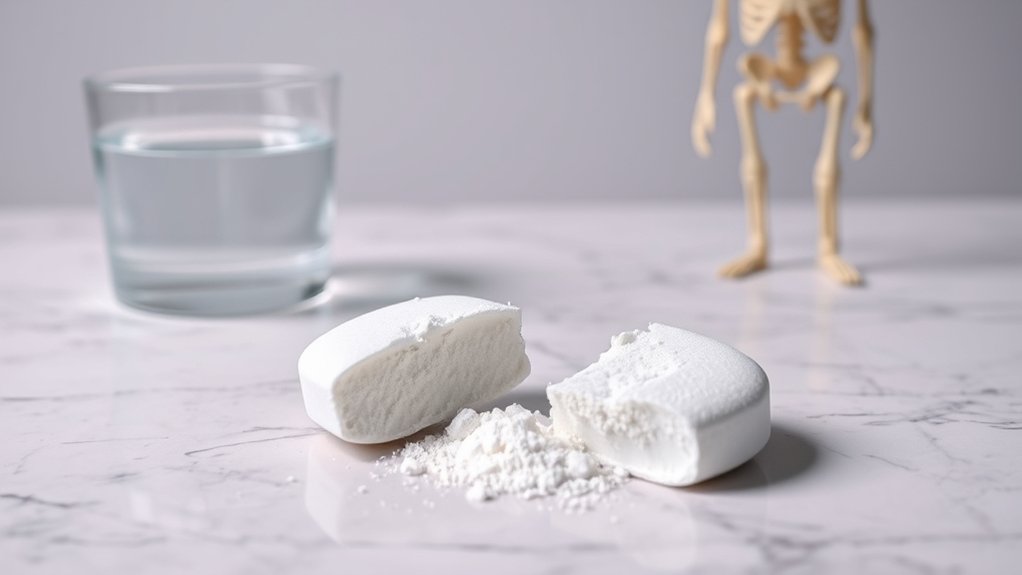
When you take Tums, the calcium carbonate inside depends on stomach acid to release elemental calcium that your body can absorb.
So, to get the most out of it, it’s a good idea to take Tums with your meals. That’s because the acid your stomach produces while digesting helps your body soak up the calcium better.
Also, keep in mind that your body can only absorb a certain amount of calcium at one time.
That’s why spreading out your Tums doses throughout the day is the smartest way to make sure you’re getting the maximum benefit.
Calcium Absorption Mechanism
Because Tums contains calcium carbonate, it relies on stomach acid to dissolve and release calcium effectively. When you take Tums, the calcium carbonate reacts with gastric acid, freeing elemental calcium that your intestines can absorb. Each tablet provides about 200-400 mg of elemental calcium, contributing to your daily calcium needs.
Calcium absorption from Tums is most efficient when doses don’t exceed 500 mg at once, since larger amounts reduce absorption efficiency.
Also, adequate vitamin D levels are essential because vitamin D enhances calcium uptake in your intestines. So, by making sure you have enough stomach acid and vitamin D, Tums delivers elemental calcium efficiently.
This supports bone health and helps your body carry out important functions through effective calcium absorption.
Optimal Timing For Intake
Although Tums provides a convenient source of calcium, you’ll get the most benefit by timing your intake carefully. The ideal timing for Tums intake is with meals because calcium carbonate requires gastric acid to dissolve effectively, enhancing calcium absorption.
To maximize uptake, you should divide your doses into increments providing 500 mg or less of elemental calcium at a time. Taking larger amounts at once can reduce absorption efficiency. Spreading your Tums intake 2-3 times throughout the day supports consistent calcium availability without exceeding recommended limits.
Moreover, maintain adequate vitamin D levels, as it plays an essential role in calcium absorption. If you use acid-reducing medications, consider alternatives like calcium citrate, which doesn’t rely on gastric acid or food for absorption, unlike calcium carbonate in Tums.
Elemental Calcium Content
Understanding the elemental calcium content in Tums helps you gauge how much calcium your body actually receives from each tablet. Tums contains calcium carbonate, a reliable source of elemental calcium. Each tablet delivers between 200 and 400 mg of elemental calcium, depending on the product variant.
Taking Tums with food enhances absorption since stomach acid aids in dissolving calcium carbonate. For effective calcium supplementation, it’s best not to exceed 500 mg of elemental calcium per dose.
| Tums Product | Elemental Calcium (mg) |
|---|---|
| Regular | 200 |
| Tums EX | 300 |
| Ultra | 400 |
| Recommended Dose | ≤ 500 per intake |
| Absorption Tip | Take with food |
Tums offers an economical way to supplement calcium when used appropriately. It’s a simple option if you need to boost your calcium intake.
Best Ways To Take Tums For Calcium Absorption

When you take Tums for calcium supplementation, timing and dosage greatly impact how well your body absorbs the calcium. Since Tums contain calcium carbonate, taking them with meals guarantees sufficient gastric acid is present for ideal dissolution and absorption.
It’s best to divide your intake into doses of 500 mg elemental calcium or less, as your body absorbs calcium more efficiently in smaller amounts.
Also, keep a two-hour gap between Tums and other medications to prevent absorption issues. To maximize calcium uptake, maintain adequate vitamin D levels, which play a significant role in calcium metabolism.
Monitor for side effects like constipation and consider alternatives if needed.
Following these guidelines helps you get the most benefit from Tums as a calcium supplement. So, by paying attention to when and how you take them, you can really boost your calcium absorption and support your bone health better.
When Should You Avoid Using Tums As A Calcium Supplement?
You should avoid using Tums as a calcium supplement if you have kidney disease because too much calcium can actually make your condition worse.
Also, if you’re taking acid-reducing medications like proton pump inhibitors or H2 blockers, your body mightn’t absorb calcium from Tums very well.
Knowing these things can help you pick the safest and most effective way to get your calcium.
Acid Blocker Interference
Although Tums contains calcium carbonate, which relies on stomach acid for absorption, taking it alongside acid-reducing medications like proton pump inhibitors or H2 blockers can greatly decrease its effectiveness.
If you use Tums as a calcium supplement, consider these points:
Calcium carbonate requires stomach acid; acid-reducing medications lower acid levels, reducing absorption. Conditions like achlorhydria also impair calcium carbonate uptake.
So, if your stomach acid is low, Tums mightn’t give you the calcium you need.
Calcium citrate is better absorbed in low-acid environments and may be a superior alternative. It’s worth thinking about switching if you’re on acid blockers.
Make sure to monitor your calcium intake carefully if you’re on acid blockers and adjust supplements accordingly.
That way, you can stay on top of your calcium needs without any surprises.
Kidney Disease Risks
Since kidney disease impairs your body’s ability to regulate and excrete calcium properly, using Tums as a calcium supplement can pose significant health risks.
Calcium carbonate requires healthy kidney function for safe elimination. When kidneys are compromised, calcium can accumulate, leading to hypercalcemia and worsening kidney function.
Excessive calcium intake may also increase the risk of kidney stones. Plus, calcium carbonate can interact with medications commonly prescribed for kidney disease, raising the risk of serious complications.
Because of these risks, you should avoid Tums if you have kidney disease unless your healthcare provider explicitly approves it.
Instead, talk to your doctor about alternative supplements like calcium citrate, which are generally safer for impaired kidney function.
Always seek medical advice before starting or changing any calcium supplementation if you have kidney disease.
Side Effects To Watch For When Using Tums For Calcium
When using Tums for calcium supplementation, it’s important to recognize both common and serious side effects. The calcium carbonate in Tums can cause side effects, so stay alert to these signs:
Constipation, bloating, and gas are common due to calcium carbonate.
Watch for symptoms of high calcium levels, like excessive thirst and nausea, which require medical attention.
Though rare, an allergic reaction may appear as rash or swelling. Seek immediate care if this occurs.
Also, monitor for black tarry stools or rectal bleeding, signaling possible severe gastrointestinal issues.
If you experience persistent discomfort, talk with your healthcare provider about switching to calcium citrate. It might cause fewer gastrointestinal side effects.
How Tums Compares To Other Calcium Supplements
While Tums provides a cost-effective source of calcium carbonate, offering 200-400 mg of elemental calcium per tablet, its absorption depends on gastric acid and is best taken with food. Compared to calcium citrate, which absorbs well on an empty stomach, Tums’ calcium carbonate requires stomach acid for ideal uptake.
Tums also doubles as an antacid, unlike other supplements focused solely on calcium intake. To maximize absorption, split doses under 500 mg are recommended.
| Supplement | Elemental Calcium per Dose | Absorption Condition |
|---|---|---|
| Tums | 200-400 mg | Requires gastric acid, with food |
| Calcium Citrate | ~210 mg | Absorbs well on empty stomach |
| Calcium Gluconate | ~90 mg | Moderate, varies by intake |
This comparison helps you choose based on your digestive needs and calcium goals.
Safe Tums Dosing For Calcium Needs
To meet your daily calcium needs safely using Tums, it’s important to manage dosing carefully. Each Tums tablet contains 200-400 mg of elemental calcium, so understanding safe dosing is key.
Follow these steps:
Take Tums with food to optimize calcium absorption. Divide doses to 500 mg or less of elemental calcium at a time to improve uptake. Aim for the recommended daily calcium intake: 1,000 mg for most adults, increasing to 1,200 mg for women over 50 and men over 70, which may require multiple tablets.
Also, avoid exceeding 2,000-2,500 mg of total daily calcium from supplements to prevent health risks. Doing this helps keep things safe and effective for your body.
Interactions Between Tums, Medications, And Health Conditions
Because Tums contains calcium carbonate, you need to be cautious about its interactions with certain medications and health conditions. Calcium can reduce the absorption of antibiotics like tetracycline and thyroid medications such as levothyroxine. To minimize interactions, try to keep at least a 2-hour gap between Tums and other medications.
Also, if you have kidney disease or high blood calcium, it’s best to avoid using Tums because of potential health risks.
| Medication Type | Interaction Risk |
|---|---|
| Antibiotics (Tetracycline) | Reduced effectiveness |
| Thyroid Medications (Levothyroxine) | Decreased absorption |
| Acid-Reducing Medications | Poor calcium carbonate absorption |
If you notice persistent gastrointestinal symptoms while using Tums, make sure to consult your healthcare provider.
Combining Tums With Diet And Vitamin D For Bone Health
To support your bone health effectively, it’s a good idea to combine Tums with a balanced diet.
Think about including plenty of calcium-rich foods like dairy, leafy greens, and fortified products.
Also, don’t forget that vitamin D is super important because it helps your body absorb calcium properly. You can get vitamin D from sunlight or supplements, so make sure you’re getting enough of it.
Taking Tums with meals can actually help your body absorb calcium better, which means you’ll get the most benefit for your bones.
Dietary Calcium Sources
Although Tums provide a convenient source of calcium, combining them with calcium-rich foods like dairy, leafy greens, and fish with edible bones guarantees you meet your daily needs more effectively.
Tums deliver 200 to 400 mg of elemental calcium per tablet, but dietary sources offer diverse calcium forms essential for absorption and bone health.
To optimize your calcium intake, consider these steps:
- Include dairy products like milk, yogurt, and cheese for high bioavailable calcium forms.
- Add dark green leafy vegetables such as kale and spinach to your meals.
- Consume fish with edible bones like sardines for natural calcium and other nutrients.
- Space out calcium intake throughout the day, combining Tums with meals to improve absorption and minimize side effects.
This balanced approach supports your overall calcium requirements effectively.
Vitamin D Importance
Maximizing calcium absorption from Tums and your diet depends heavily on maintaining adequate vitamin D levels.
Vitamin D plays an essential role in enhancing calcium absorption, ensuring that the calcium you take from Tums and dietary sources is effectively utilized by your body.
Adults typically need 600 IU daily, increasing to 800 IU for those over 70, to support ideal bone health. You can obtain vitamin D through sunlight, supplements, and dietary sources like fatty fish, fortified dairy, and egg yolks.
Without sufficient vitamin D, your body struggles to absorb calcium, reducing the benefits of Tums and increasing the risk of osteoporosis.
Frequently Asked Questions
Can Tums Help With Muscle Cramps Caused by Low Calcium?
Yes, Tums can help with muscle cramps caused by calcium deficiency symptoms by providing calcium carbonate, which supports muscle contraction mechanisms.
Calcium plays a key role in muscle function, so low levels may trigger cramps.
While Tums offer quick calcium boosts, you should also consider dietary sources like dairy and leafy greens for sustained intake.
Always consult your healthcare provider if cramps continue despite supplementation.
How Quickly Does Calcium From Tums Enter the Bloodstream?
Calcium from Tums swiftly seeps into your system, starting absorption within 30 minutes.
Calcium absorption rates depend heavily on your digestive health effects and Tums dosage guidelines. Taking them with food enhances absorption due to stomach acid.
Remember, doses over 500 mg at once can slow absorption efficiency. So, for best results, stick to recommended dosages.
Also, consider your digestive health to optimize how quickly calcium enters your bloodstream.
Are There Age Restrictions for Using Tums as Calcium Supplements?
You don’t face strict age restrictions when using Tums for calcium absorption, but age-related concerns do matter.
Adults and teens 12 and older can safely take Tums following the recommended dosage.
For children under 12, you should avoid Tums without a healthcare provider’s advice.
Older adults should keep an eye on their total calcium intake to prevent complications.
Always stick to the recommended dosage to make sure calcium absorption is both effective and safe.
It’s better to be cautious and check with a healthcare provider if you’re unsure.
Can Tums Calcium Supplements Affect Dental Health?
Back in the days of quills and parchment, you’d want to know that Tums ingredients, mainly calcium carbonate, can impact your dental health.
While calcium aids dental enamel remineralization, frequent use of Tums might expose your teeth to acid, risking enamel erosion.
You should balance calcium absorption with proper oral hygiene to protect your teeth.
Opt for sugar-free Tums and visit your dentist regularly to monitor any effects on dental health.
It’s all about keeping that smile healthy while getting your calcium fix.
Do Tums Calcium Tablets Have an Expiration Date Affecting Potency?
Yes, Tums calcium tablets have an expiration date that affects their potency. The expiration date means the manufacturer guarantees full effectiveness only until that time, based on potency testing.
If you use them past this date, their calcium carbonate may lose strength.
To keep them potent, it’s best to follow the storage recommendations by keeping Tums in a cool, dry place. Proper storage helps preserve their effectiveness up to the expiration date.
Conclusion
You might find that Tums can quietly support your calcium needs, but they’re not the whole story. While they deliver elemental calcium effectively, relying solely on Tums isn’t always the best recipe for bone health.
It’s wise to think about your overall diet, vitamin D levels, and any medications you take. When used thoughtfully and in the right doses, Tums can be a helpful part of your calcium strategy. Just don’t let them carry the load alone.