Can You Take Too Much Vitamin B12 Supplement? Expert Insights You Should Know
You can take vitamin B12 supplements safely, but consistently exceeding 2,000 mcg daily may cause symptoms like facial redness, anxiety, or heart palpitations. So, medical supervision is important.
Your body efficiently removes excess B12 through urine, making toxicity rare. However, persistent high levels could signal underlying health issues, especially with liver or kidney problems.
Understanding how to manage and monitor your intake helps guarantee safe supplementation and overall well-being. It’s always a good idea to check in with your healthcare provider if you’re unsure about your dosage.
What Is Vitamin B12 And Why Does It Matter?
Vitamin B12, also called cobalamin, plays an essential role in your body by supporting red blood cell production, DNA synthesis, and nerve function.
Vitamin B12, or cobalamin, is vital for red blood cells, DNA creation, and healthy nerves.
If you experience vitamin B12 deficiency, your body can’t produce enough healthy red blood cells, which may lead to fatigue and neurological issues.
The recommended daily intake for adults is 2.4 mcg, with slightly higher needs during pregnancy and breastfeeding.
Since vitamin B12 is primarily found in animal products, you might need supplements if you follow a vegetarian or vegan diet.
Because it’s water-soluble, your body usually excretes excess amounts, making toxicity rare.
However, you should still consult a healthcare professional before starting supplements, especially if you have health conditions or take medications that impact B12 absorption.
Regular monitoring helps guarantee your levels stay within a healthy range.
How Much Vitamin B12 Is Too Much? Understanding Excess B12
Although your body can usually handle high doses of vitamin B12 because it’s water-soluble, taking more than 2,000 mcg daily isn’t without concerns. Toxicity is rare, but having chronically high levels of B12 might signal underlying health issues, like high blood pressure or other conditions that need medical attention.
It’s important to know that there’s no official Tolerable Upper Intake Level for vitamin B12. So, it’s a good idea to talk with a healthcare provider before starting high-dose supplements.
Excess B12 has been linked to increased risks in certain groups, including early death and fractures. If you’re treating a vitamin B12 deficiency, be careful with your dosage and keep an eye on your levels regularly.
Finding the right balance helps you get the benefits while avoiding too much B12. This way, your supplementation stays safe and effective, tailored just for your health needs.
Common Symptoms Of High Vitamin B12
High levels of B12 in your system can lead to noticeable symptoms that you shouldn’t ignore. Common symptoms of high vitamin B12 levels include facial redness, acne, anxiety, and sometimes nausea.
You might also experience heart palpitations and hypertension, which are more concerning signs linked to elevated B12 levels.
While these symptoms may result from excess intake, they can also indicate underlying medical conditions, particularly involving the liver or kidneys. Some individuals report chromaturia, or red urine, which is generally harmless but worth mentioning to your healthcare provider.
It’s important to monitor your B12 status regularly, especially if you have chronic health issues.
Although many people with high B12 levels don’t show symptoms, recognizing these signs early helps prevent complications and guarantees proper management.
Why Might Your B12 Levels Be High?
You might’ve high B12 levels because you’re taking too many supplements or eating a lot of foods rich in B12 to fix a deficiency.
But it’s not just about what you consume. Certain medical conditions, like liver disease, kidney failure, or some types of cancer, can also make your B12 levels go up.
Common Causes
When your vitamin B12 levels rise unexpectedly, several factors could be at play. High doses of supplements or excessive dietary intake from animal-based foods and fortified products often cause elevated B12 levels.
If you’re addressing a deficiency, you might consume more than necessary, pushing your levels higher.
Age and chronic digestive issues can affect absorption, sometimes leading to elevated B12 levels despite normal intake. Certain medications that reduce gastric acid can also alter absorption, contributing to increased blood B12.
While medical conditions can influence B12 metabolism, this discussion focuses on common causes related to intake and absorption.
Understanding these factors helps you manage your vitamin B12 levels safely and avoid complications linked to unnecessarily high doses of supplements.
Medical Conditions
Although elevated vitamin B12 levels can result from supplement intake, they may also signal underlying medical conditions that affect how your body processes the vitamin. High B12 levels, or hypercobalaminemia, often reflect issues with vitamin absorption, metabolism, or excretion related to specific health problems.
You should consider the possibility of liver disease, such as hepatitis or cirrhosis, which impairs vitamin processing and leads to elevated B12 levels.
Kidney dysfunction can also cause high B12 because it reduces the clearance of excess B12 from your bloodstream.
Certain medications like metformin or proton pump inhibitors might interfere with vitamin absorption or metabolism, contributing to high B12 levels.
If you notice persistent elevated B12 levels without supplementation, it’s important to consult a healthcare professional to evaluate these potential medical conditions.
How Your Body Deals With Excess Vitamin B12
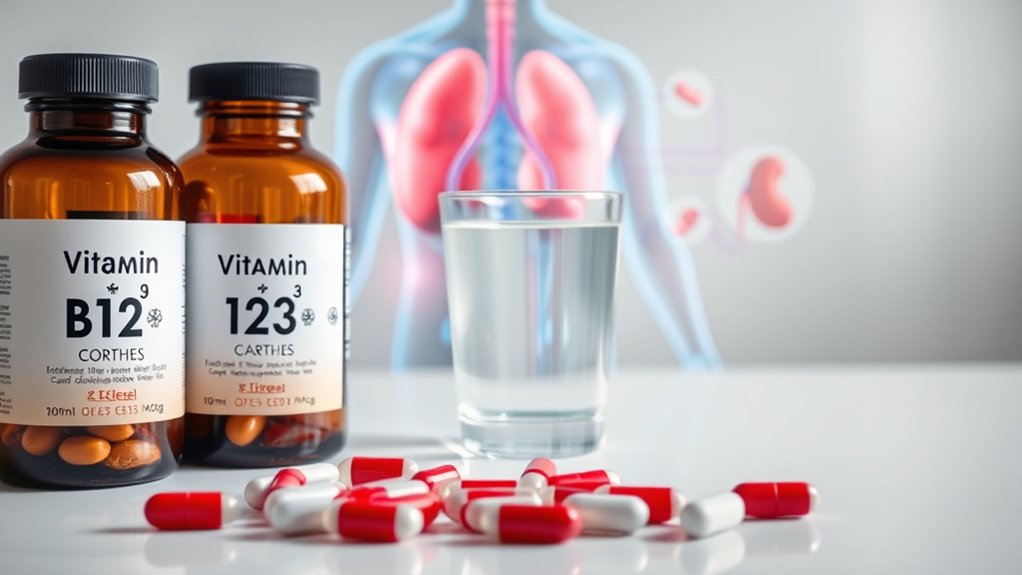
Since vitamin B12 is water-soluble, your body efficiently manages any excess by excreting it through urine. This greatly reduces the risk of toxicity.
When you take high doses of vitamin B12, like 1,000 mcg daily, your body absorbs what it needs and gets rid of the rest within about 48 hours.
The liver also stores vitamin B12 for several years, which helps regulate levels and prevent buildup. Although vitamin B12 excess is generally safe, very high blood concentrations might sometimes signal underlying health issues. So, it’s a good idea to keep an eye on it.
Overall, your body’s ability to handle excess vitamin B12 through urine excretion and storage makes toxicity rare, even with high-dose supplementation.
This efficient process means taking vitamin B12 is safe for most people.
When Is High-Dose B12 Supplementation Needed?
Why might you need high-dose vitamin B12 supplements? High doses are often necessary when your body struggles with absorption issues, making it difficult to get enough B12 from food alone. You might also need supplements if you’re at risk of deficiency due to diet or age.
Here are key situations where high-dose vitamin B12 supplementation is recommended:
- If you have absorption issues, such as pernicious anemia or gastrointestinal disorders.
- If you’re a vegetarian or vegan who may not get enough B12 from plant-based diets.
- If you’re an older adult, especially over 50, since absorption efficiency decreases with age.
These high doses, typically up to 2,000 mcg daily, are considered safe because excess B12 is excreted, minimizing toxicity risks.
Risks And Side Effects Of High Vitamin B12 Intake
Even though vitamin B12 is water-soluble and generally safe at high doses, you can still experience side effects like headaches, nausea, diarrhea, or tingling sensations.
High doses of vitamin B12 may also pose risks beyond mild side effects. Elevated blood levels have been linked to increased early mortality and, in some cases, excessive supplementation raises fracture risk, especially in postmenopausal women.
Because toxicity is rare but high levels might signal underlying health issues, monitoring intake is vital.
You should work closely with healthcare professionals to assess your B12 status, particularly if you take medications affecting absorption.
How To Safely Supplement With Vitamin B12
Although vitamin B12 supplements are generally safe, you should consult a healthcare provider before starting high-dose supplementation. This helps confirm proper dosing and avoid potential risks. Most healthy adults get enough B12 from their diet.
Consult a healthcare provider before high-dose B12 supplements to ensure safe and proper dosing.
But if you’re at risk of deficiency, like if you’re vegan or older, you might need supplements. To supplement safely, consider these steps:
- Have blood tests to monitor your B12 levels and adjust doses accordingly.
- Avoid consistently taking high doses (above 2,000 mcg) without medical supervision.
- Report any unusual symptoms like headache or nausea to your healthcare provider promptly.
Following these guidelines helps make sure your vitamin B12 supplementation is safe and effective. It can prevent potential complications while addressing deficiency.
When Should You Get Tested For High Vitamin B12 Levels?
While supplementing with vitamin B12 is generally safe, it’s important to know when to get tested for high levels to avoid potential complications. You should consider testing if you experience symptoms like acne, anxiety, or heart palpitations. These might signal excess B12 in your system.
Regular testing is also advised for those on high-dose supplements, people with dietary restrictions, or those who have underlying liver and kidney conditions. Healthcare providers use blood tests alongside your health history to evaluate B12 levels accurately.
| When to Get Tested | Why It’s Important |
|---|---|
| Symptoms of high B12 | Detects excess levels early |
| High-dose supplements or diet | Monitors risk of imbalance |
| Underlying health conditions | Guarantees safe B12 levels with medication use |
Testing helps prevent complications from both deficiency and high vitamin B12 levels. So, it’s a good idea to keep an eye on your levels if you fall into any of these groups.
How To Manage And Monitor High Vitamin B12 Levels
To manage high vitamin B12 levels, it’s important to get regular blood tests and have a thorough chat with your healthcare provider about your diet and any symptoms you might be experiencing.
You might need to cut back on foods and supplements that are rich in B12, but don’t make any changes on your own—always check with a professional first.
Keeping an eye on your levels over time is really important, especially if you have any chronic health conditions that affect how your body processes B12.
Monitoring B12 Levels
When you notice elevated vitamin B12 levels, regular blood tests become crucial to track changes and identify any underlying health issues promptly.
Effective monitoring involves more than just lab results; it requires a thorough approach. You should work closely with your healthcare provider to assess your B12 levels alongside your dietary intake, supplement use, and health history.
This helps pinpoint causes and guides appropriate actions.
Key steps for monitoring B12 levels include:
- Evaluating dietary intake and supplements to understand sources of excess B12
- Tracking symptoms that may indicate complications or underlying conditions
- Reviewing your health history to identify risks or medications affecting B12 absorption
Consistent monitoring guarantees timely intervention and supports your overall health management.
Managing Excess Intake
If you notice your vitamin B12 levels rising beyond the normal range, managing and monitoring this excess becomes critical to prevent potential health issues.
Start by scheduling regular blood tests to track your vitamin B12 status, especially if you’re on high-dose supplementation or have underlying health conditions. Reducing intake of B12-rich foods like meat and dairy can help lower excess levels.
If you experience symptoms such as anxiety, headaches, or heart palpitations, consult your healthcare provider promptly.
Your provider can assess these symptoms, review your supplementation, and evaluate factors affecting B12 absorption, including medications like metformin or gastric acid inhibitors.
Careful management guarantees you maintain an ideal vitamin B12 balance and avoid complications linked to excess intake.
Frequently Asked Questions
Can Vitamin B12 Interact With Other Medications?
Yes, vitamin B12 can interact with certain medications, affecting absorption and efficacy. You should consider vitamin interactions when taking drugs like metformin or omeprazole, as they may reduce B12 absorption.
Following dosage recommendations and monitoring side effects is essential.
Regular blood tests help detect deficiency symptoms early and prevent long-term effects. Understanding absorption factors and medication timing guarantees you maintain ideal B12 levels safely and effectively.
It’s all about keeping things balanced and staying on top of your health.
Are Certain Forms of B12 Safer Than Others?
Yes, some forms of B12 are safer for you. Methylcobalamin benefits include higher absorption rates and potential neuroprotective effects.
This makes it ideal if you’re concerned about neurological effects or deficiency symptoms.
Cyanocobalamin safety is well-established, but it releases cyanide, which your body detoxifies.
When choosing supplementation sources, consider dosage recommendations and your body’s ability to absorb each form. This can help optimize results and minimize risks.
Does Diet Alone Ever Cause B12 Toxicity?
You won’t find B12 toxicity lurking in your daily meals. Dietary absorption acts like a smart gatekeeper, letting just enough through.
Typical B12 sources, even with food fortification, won’t overload you.
Vegans face deficiency risks, not toxicity, since plant-based diets often lack enough B12. Age factors and daily requirements matter more for preventing deficiency symptoms.
Can Children Take the Same B12 Supplements as Adults?
You shouldn’t give children the same B12 supplements as adults because children’s dosage and absorption rates differ.
Pediatric formulations match age recommendations and supplementation guidelines, ensuring safety and preventing excessive intake.
Dietary sources usually meet kids’ needs, but supplementation helps when symptoms of deficiency appear.
Always consider safety concerns and consult a pediatrician before starting supplements.
That way, you can follow age-appropriate dosages and avoid potential risks.
How Quickly Do B12 Levels Drop After Stopping Supplements?
Think of your vitamin B12 levels like a slowly deflating balloon after you stop supplements. They begin to drop within 24 to 48 hours because your body starts excreting it.
But don’t worry too much right away. Your liver has B12 stores, and things like how well you absorb B12 and what foods you eat can slow down the appearance of deficiency symptoms.
It’s a good idea to get regular B12 blood tests to keep an eye on your levels.
Following dosage recommendations and talking to your doctor about injection frequency can help, especially if you have trouble absorbing B12. This way, you can maintain adequate levels and avoid deficiency.
Conclusion
You might think more is better, but taking too much vitamin B12 can backfire like a double-edged sword. While your body usually handles excess B12 well, consistently high doses may lead to unwanted symptoms or mask underlying health issues.
Stick to recommended amounts, get tested if you suspect imbalance, and consult your healthcare provider. That way, you’ll safely reap B12’s benefits without tipping the scales against your health.