Should You Take A Potassium Supplement? Everything You Need to Know
You should only take a potassium supplement if your healthcare provider confirms you have low potassium or a condition that diet alone can’t fix. Potassium is essential for muscle, nerve, and heart health, but too much can cause serious issues. This is especially true if you have kidney problems or take certain medications.
It’s safer to get potassium from foods unless supplementation is medically advised. Understanding how and when to supplement can help you make the best choice for your health. So, always check with your doctor before starting any supplement.
What Are Potassium Supplements and How Do They Work?

Potassium supplements help restore the essential mineral your body loses due to certain medications, health conditions, or poor diet. These supplements come in tablets, capsules, powders, and liquids. Taking them with food enhances absorption.
Potassium supplements replenish minerals lost from medications, health issues, or diet, available in various forms and best taken with food.
They work by replenishing your body’s potassium levels, which is vital for muscle function, nerve signaling, and maintaining a healthy heart rhythm. If your potassium levels drop too low, a condition known as hypokalemia, you might experience muscle cramps, fatigue, or irregular heartbeats.
Potassium supplements help prevent these symptoms by correcting the imbalance. However, typical doses shouldn’t exceed 99 mg without medical supervision, as excessive potassium can cause dangerous effects.
Always consult your healthcare provider before starting potassium supplements, especially if you have kidney issues or take diuretics. These factors influence how your body manages potassium.
Who Needs Potassium Supplements? Conditions and Risk Factors
Although most people get enough potassium through their diet, certain conditions and lifestyle factors can increase your need for supplements. If you take diuretics that lower potassium levels, supplements may help prevent hypokalemia.
Likewise, gastrointestinal disorders like inflammatory bowel disease can impair potassium absorption, making supplementation beneficial.
Athletes or highly active individuals lose potassium through sweat and might require additional intake to maintain electrolyte balance.
Pregnant people often need more potassium to support fetal development, as advised by healthcare providers.
However, if you have chronic kidney disease, potassium supplements may pose risks due to potential hyperkalemia and are generally avoided.
It’s always best to check with your healthcare provider to evaluate your potassium levels and health conditions before starting supplements.
Dietary Sources vs. Potassium Supplements: Which Is Better?

You’ll get more than just potassium from whole foods—they also provide vitamins, minerals, and fiber that supplements just can’t match.
Plus, eating a variety of foods makes it easier and more enjoyable to get your nutrients.
Supplements do offer controlled doses, which can be helpful in certain situations.
But they come with risks, like hyperkalemia, so it’s important to use them carefully and only under medical supervision.
Understanding how your body absorbs potassium from food versus supplements can really help you decide which option is safest and most effective for you.
Whole Foods Benefits
When you focus on whole foods like bananas, sweet potatoes, and leafy greens, you not only get potassium but also essential nutrients and fiber that supplements can’t provide.
Potassium from food sources is absorbed more effectively by your body, lowering the risk of gastrointestinal side effects common with supplements.
The recommended daily intake of potassium, 3,400 to 5,000 mg for adults, is best met through a balanced diet rich in these foods. Whole foods also support heart health, help manage blood pressure, and counteract sodium’s effects, reducing chronic disease risk.
Unlike isolated potassium supplements, which can cause hyperkalemia especially if you have kidney issues, food sources offer a safer, more thorough way to boost your potassium intake and overall well-being.
Supplement Safety Considerations
While whole foods provide potassium along with beneficial nutrients and fiber, many people consider supplements to quickly meet their potassium needs.
However, supplement safety is really important because too much potassium can cause serious problems like hyperkalemia. This is especially true if you have kidney issues or take certain medications.
Before you start using supplements, it’s a good idea to chat with a healthcare provider. They can help make sure you’re taking the right dose and staying safe.
Here are a few things to keep in mind:
Dietary potassium from fruits and vegetables offers balanced nutrition and heart health benefits. Supplements might give you higher potassium doses, but they don’t come with those extra nutrients.
Most people can get all the potassium they need just by eating well, so supplements aren’t usually necessary.
Using supplements without proper guidance can lead to dangerous potassium imbalances. Your healthcare provider can help you figure out if supplements are safe and right for you.
Absorption And Effectiveness
Although potassium supplements can help fill gaps in your intake, getting potassium from whole foods is usually more effective for absorption and overall health.
Dietary sources like fruits, vegetables, and legumes provide potassium along with fiber and other nutrients. This combo helps your body regulate potassium in the blood better.
Supplements often contain only about 99 mg per dose and may not match the bioavailability of food sources. Plus, they can sometimes cause stomach discomfort.
Since adults need between 2,600 to 3,400 mg daily, it makes sense to focus on high-potassium foods like bananas and sweet potatoes.
These foods support better absorption and cardiovascular health. At the end of the day, whole foods offer a more balanced and efficient way to keep your potassium levels ideal compared to supplements alone.
Benefits of Potassium Supplements for Low Potassium Levels
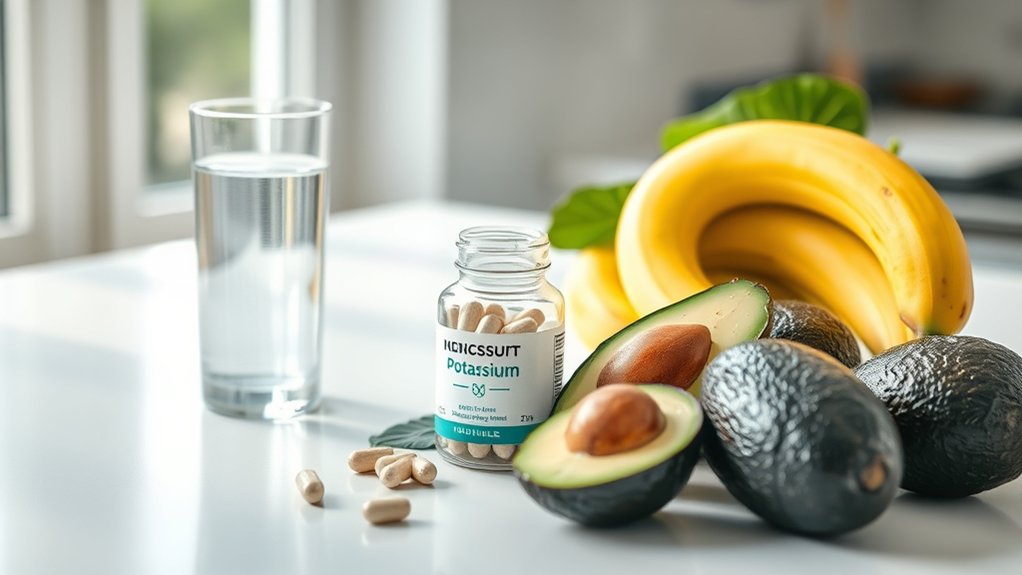
If you have low potassium levels, taking potassium supplements can really help restore balance in your body. They work well to prevent problems like muscle cramps and feeling tired all the time.
Potassium supplements are especially useful if your diet doesn’t provide enough potassium or if certain medications cause your potassium levels to drop.
But it’s important to keep an eye on your levels while you’re taking them to avoid any risks.
Knowing how these supplements benefit you means you can treat low potassium safely and keep yourself feeling your best.
Correcting Hypokalemia Safely
Because low potassium levels can lead to symptoms like fatigue, muscle cramps, and irregular heartbeats, taking potassium supplements can be an effective way to correct hypokalemia when dietary intake falls short or losses increase.
You should know that oral potassium supplements are safe for most people at doses up to 100 mEq daily, but higher doses need medical supervision.
To correct hypokalemia safely, consider these key points:
- Monitor potassium levels regularly, especially if you have kidney issues or take medications like diuretics or ACE inhibitors.
- Use supplements mainly when dietary potassium is insufficient or losses are excessive.
- Follow your healthcare provider’s dosage recommendations precisely.
- Report any side effects such as muscle weakness or heart palpitations promptly.
This approach helps restore potassium balance effectively and safely.
Potassium Supplement Benefits
Potassium supplements offer several important benefits, especially when your potassium levels drop due to medications, health conditions, or insufficient dietary intake. They effectively restore the potassium your body needs to maintain critical functions like muscle contractions and nerve transmission.
If you take diuretics, supplements help replenish potassium lost through increased urine output. This prevents complications linked to low potassium.
Plus, regular supplementation under medical supervision can support cardiovascular health by helping to lower blood pressure. This, in turn, reduces the risk of stroke when combined with a balanced diet.
Because too much potassium can be harmful, dosing is carefully controlled, usually not exceeding 99 mg per dose. Overall, potassium supplements provide targeted support to correct deficiencies and promote healthy bodily functions when used appropriately.
Signs of Too Much or Too Little Potassium
When your potassium levels fall outside the normal range, your body will often signal distress through various symptoms. Both too much and too little potassium can affect your heart’s rhythm, increasing the risk for heart disease and related complications.
You should watch for these signs:
- Muscle weakness or cramping, indicating imbalance
- Abnormal heart rhythms (arrhythmias), a crucial warning
- Gastrointestinal issues like nausea, vomiting, or constipation
- Fatigue or general weakness, often linked with low potassium
Since potassium plays a key role in maintaining healthy heart function, recognizing these symptoms early is essential.
Potassium is vital for heart health, so early symptom recognition is crucial for prevention.
If you experience any of these signs, especially if you have kidney problems or take medications affecting potassium, consult your healthcare provider to evaluate your potassium status and avoid serious health risks.
Risks of Potassium Supplements Without Medical Advice
If you start taking potassium supplements without consulting a healthcare provider, you risk developing hyperkalemia. This condition is marked by dangerously high potassium levels that can cause irregular heart rhythms, nausea, and fatigue.
Without proper medical advice, you mightn’t realize that underlying kidney problems increase this risk.
Plus, unmonitored potassium intake can lead to gastrointestinal issues like stomach upset, diarrhea, and vomiting, which can further harm your health.
If you have gastrointestinal motility disorders, potassium supplements could actually make your condition worse.
That’s why regular medical monitoring of serum potassium levels is so important to prevent cardiovascular complications.
Taking potassium supplements without medical guidance can be hazardous.
How Potassium Supplements Interact With Common Medications
Supplements can affect how your medications work, especially those that influence potassium levels in your body. If you’re taking potassium supplements, you need to be aware of potential interactions with common drugs.
For instance:
Potassium-sparing diuretics can raise potassium levels dangerously when combined with supplements.
ACE inhibitors, like lisinopril, may increase serum potassium, so close monitoring is important.
Angiotensin receptor blockers (ARBs) also elevate potassium, which means adding supplements could heighten risks.
NSAIDs such as ibuprofen might contribute to higher potassium levels, making supplementation more complicated.
Because these medications can amplify potassium in your blood, mixing them without medical advice can lead to hyperkalemia—a serious condition.
Always check with your healthcare provider before starting potassium supplements to manage your potassium safely alongside any medications.
Taking Potassium Supplements Safely: Dosage and Tips
You should never go over 99 mg of potassium per dose unless your healthcare provider says it’s okay, especially if you have kidney problems.
It’s a good idea to take your supplements with food because that helps your body absorb them better and can reduce any side effects.
Also, make sure to follow the right way to take your potassium supplements. This really makes a difference in how well they work.
And don’t forget—regular check-ups are important. They help catch any issues early on, especially if you’re taking other medications that affect your potassium levels.
Recommended Dosage Limits
Because excessive potassium intake can lead to serious health issues like hyperkalemia, it’s important to follow recommended dosage limits when taking supplements. Generally, potassium supplements shouldn’t exceed 99 mg per dose to avoid dangerous spikes in blood potassium levels.
Here’s what you need to keep in mind regarding recommended dosage limits:
- Aim to meet most potassium needs through a balanced diet, as adults typically require 3,400 mg (males) or 2,600 mg (females) daily.
- Consult your healthcare provider before starting supplements, especially if you take medications affecting potassium.
- Regularly monitor your potassium levels if you’re on supplements to prevent complications.
- Taking supplements with food can improve absorption and reduce gastrointestinal discomfort.
Adhering to these guidelines helps promote safe potassium supplementation and supports overall health. It’s always better to be cautious and keep your potassium intake within safe limits.
Proper Supplement Administration
When taking potassium supplements, it’s essential to follow proper administration guidelines to guarantee safety and effectiveness. Take potassium supplements with food to improve absorption and reduce gastrointestinal discomfort.
Stick to the recommended maximum dosage, usually 99 mg per dose, unless your healthcare provider advises otherwise.
For long-acting potassium tablets, swallow them whole with water. If you’re using granules or powders, dilute them in a cup of cold water or juice before taking.
If you miss a dose, take it as soon as you remember. But skip it if it’s near your next dose to avoid overdosing.
Proper administration helps maintain stable potassium levels, which is really important since imbalances can affect your heart rate.
Always check with your healthcare provider for personalized instructions. They know best what works for you.
Monitoring Side Effects
Maintaining proper potassium levels involves more than just taking supplements correctly. Monitoring side effects plays a key role in safe supplementation. You should watch for any adverse reactions and regularly check potassium levels, especially if you’re on medications that affect potassium balance.
Here are some essential tips to help you monitor side effects effectively:
- Take potassium supplements with food to reduce stomach upset, nausea, diarrhea, or vomiting.
- Limit doses to 99 mg unless your healthcare provider advises otherwise.
- Report any unusual symptoms promptly to your healthcare professional.
- Schedule regular blood tests to track your potassium levels, especially if you have kidney disease or take potassium-sparing medications.
Keeping an eye on how you feel and staying in touch with your healthcare provider can make a big difference. It’s better to be cautious and catch any issues early.
When to Avoid Potassium Supplements Due to Health Conditions
Although potassium supplements can benefit many people, certain health conditions mean you should avoid them to prevent serious complications.
For example, if you have kidney disease, your kidneys might struggle to remove excess potassium. This can increase the risk of hyperkalemia, which is a potentially life-threatening condition.
You should also steer clear of potassium supplements if you have gastrointestinal motility disorders. These supplements can make symptoms like nausea and diarrhea worse.
Another thing to watch out for is combining potassium supplements with potassium-sparing diuretics. This combo can dangerously raise your potassium levels.
And if you’re taking ACE inhibitors or angiotensin receptor blockers (ARBs), be careful because these medications also increase serum potassium.
If you’re pregnant or breastfeeding, it’s best to limit potassium intake unless your healthcare professional tells you otherwise.
In all these cases, avoiding potassium supplements is really important for your safety.
Talking to Your Doctor About Potassium Supplements
How do you know if potassium supplements are right for you? The best approach is to talk to your doctor before starting any supplementation. Your healthcare provider will assess your potassium levels and dietary intake to avoid risks like hyperkalemia, especially if you have kidney issues.
Consult your doctor before starting potassium supplements to ensure safe levels and avoid risks like hyperkalemia.
Be sure to discuss any medications you’re taking, such as ACE inhibitors or potassium-sparing diuretics. These can raise potassium levels.
Also, mention any specific health conditions you have, like hypokalemia or gastrointestinal disorders that affect potassium absorption.
It’s important to understand the need for regular monitoring of potassium levels if you start supplements.
Plus, talk about your dietary habits. Sometimes increasing potassium-rich foods might be a safer alternative.
Frequently Asked Questions
Can Potassium Supplements Improve Athletic Performance?
Yes, potassium supplements can improve athletic performance by supporting muscle contractions and nerve function.
You’ll notice performance benefits especially during prolonged or intense exercise, as potassium helps maintain fluid balance and reduce fatigue.
However, you should prioritize natural potassium sources like fruits and vegetables first.
Supplements may help if your diet falls short or you sweat heavily.
Just be cautious because too much potassium can harm your heart.
Always consult a healthcare professional before supplementing.
Do Potassium Supplements Affect Blood Pressure Immediately?
Potassium supplements don’t usually affect your blood pressure immediately. Instead, consistent intake over time helps your body excrete more sodium, which gradually lowers blood pressure.
You can get potassium from natural sources like bananas, spinach, and potatoes, which support steady improvements.
If you want quick changes, supplements mightn’t deliver instantly, but regular potassium intake is key to managing blood pressure effectively.
Always consult your doctor before starting supplements.
Are Potassium Supplements Safe During Pregnancy?
Yes, potassium supplements are generally safe during pregnancy when you follow dietary recommendations and avoid excessive intake.
You should prioritize potassium sources like fruits and vegetables to meet the recommended 2,900 mg daily intake.
Supplements may be necessary only if your healthcare provider advises it, especially if you have specific health concerns.
Always consult your provider before starting supplements to guarantee safety and proper monitoring throughout your pregnancy.
Can Children Take Potassium Supplements Safely?
When it comes to potassium supplements for kids, think of them as a safety net, not a first choice. You can safely use potassium supplements if a healthcare provider confirms a potassium deficiency.
But it’s best to focus on natural potassium sources like bananas and leafy greens first.
Supplements can help, but too much potassium risks serious issues. Always consult your child’s doctor before starting supplements to keep their potassium levels balanced and safe.
It’s all about making sure your child gets what they need without any risks.
How Do Potassium Supplements Taste and Are They Easy to Swallow?
Potassium supplements vary in taste, often mildly salty or metallic, which may not suit all taste preferences.
Tablets and capsules can be large, causing swallowing difficulties for some people.
If you struggle with swallowing, powders or effervescent forms mixed in juice or water might be easier and can help mask unpleasant flavors.
Always take them with food or plenty of water to help with swallowing and reduce gastrointestinal discomfort effectively.
Conclusion
So, thinking about potassium supplements? Sure, popping pills might seem easier than eating bananas, but don’t treat potassium like your morning coffee. Too much or too little can really mess with your heart and nerves.
Instead of self-prescribing like a weekend warrior, talk to your doctor. They’ll help you strike the perfect balance because unlike your phone’s battery, your body’s potassium levels don’t come with a “low power” warning.