Does Vitamin D Supplement Work? Here Is the Truth You Need
Vitamin D supplements can work if you’re over 75, have limited sun exposure, or face certain health risks. Most healthy adults get enough from sunlight and diet and don’t need routine supplementation.
Supplements support bone health, immune function, and reduce deficiency-related issues but can cause harm if overused. Your body absorbs vitamin D efficiently with some dietary fat, but excess intake raises toxicity risks.
So, understanding when and how to use supplements helps maximize benefits safely. It’s all about finding the right balance for your needs.
Do Most People Need Vitamin D Supplements?

Although vitamin D supplements are widely available, most healthy adults under 75 don’t need to take them routinely because their bodies can produce enough vitamin D through sun exposure and a balanced diet.
Your vitamin D needs are generally met if you spend time outdoors and consume foods rich in vitamin D. The recommended daily allowance for adults is 600 to 800 IU, which you can often obtain naturally without supplements.
Spending time outdoors and eating vitamin D-rich foods usually meets the daily 600 to 800 IU requirement.
Routine vitamin D supplementation is mainly advised for specific groups, not for most healthy adults. Vitamin D deficiency affects only about 5% of the population, primarily those with limited sun exposure or dietary restrictions.
Taking excess supplementation can cause harmful effects, so it’s best to rely on natural sources whenever possible and avoid unnecessary vitamin D supplements.
Who Really Benefits From Vitamin D Supplements?
Who truly benefits from vitamin D supplements depends largely on age, lifestyle, and health status. Older adults, especially those over 75, gain significant bone health benefits and may experience reduced mortality risk with supplementation.
If you have limited sun exposure, due to living in northern latitudes or having darker skin, vitamin D supplements can help prevent deficiency.
Infants who are breastfed often need supplements because breast milk typically lacks adequate vitamin D.
Certain health conditions, like osteoporosis or medications affecting vitamin D metabolism, also increase your need for supplementation.
Furthermore, if you’re pre-diabetic, vitamin D may help lower the risk of disease progression.
How Does Your Body Absorb and Use Vitamin D Supplements?
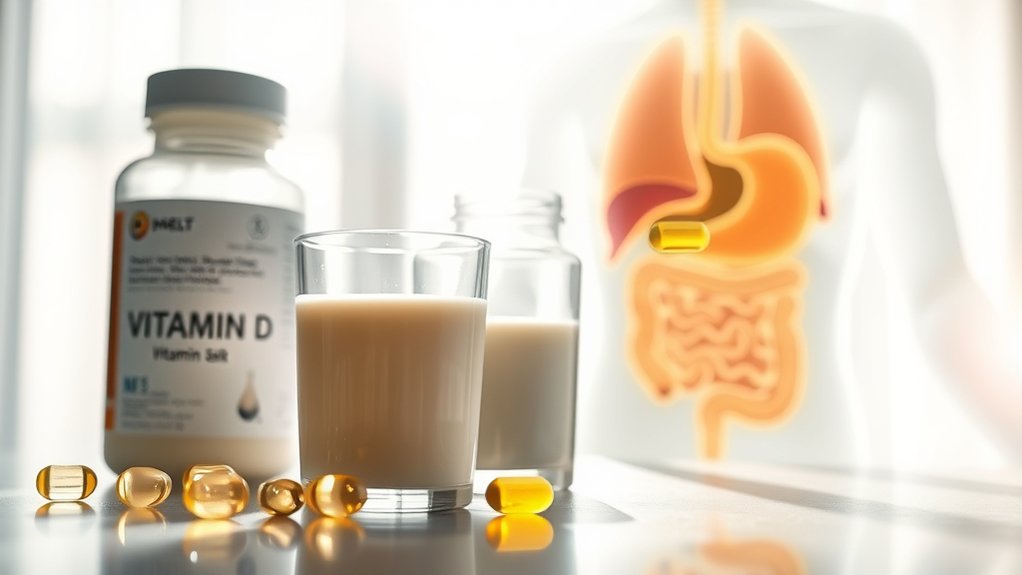
How efficiently your body absorbs and uses vitamin D supplements depends on several factors, including the form of vitamin D and your diet.
Vitamin D2 and D3 undergo conversion in your liver and kidneys to become the active form, calcitriol, which your body uses. Absorption happens in the small intestine through passive diffusion and carrier proteins.
Vitamin D2 and D3 convert in the liver and kidneys to active calcitriol, absorbed in the small intestine.
Dietary fat really helps this process along. Even without fat, some absorption still happens, but including fat makes it work better.
After absorption, vitamin D gets stored in fat cells until your body needs it.
Your serum 25(OH)D levels show your vitamin D status. Aging and obesity don’t seem to impair absorption. However, certain health conditions might reduce how effective vitamin D supplements are.
Overall, your body’s ability to absorb and use vitamin D supplements is closely linked to your diet and health.
Are Vitamin D Deficiency Rates Really That High?
Understanding how your body absorbs and uses vitamin D is just one part of the picture when considering overall vitamin D health. Deficiency rates aren’t uniformly high but vary by group. About 18% of the U.S. population risks inadequate vitamin D levels; only 5% are truly deficient.
Certain groups, like non-Hispanic Black individuals, face higher vitamin D deficiency due to limited dietary sources and absorption differences. Healthy adults aged 20-39 show peak deficiency rates, while children 1-5 years have the lowest.
| Group | Deficiency Rate (%) |
|---|---|
| General U.S. Population | 5 |
| Non-Hispanic Black | 17.5 |
| Adults 20-39 | Highest |
Adequate vitamin D is essential, but high doses aren’t always necessary for everyone.
When Should You Get Your Vitamin D Levels Tested?

You usually don’t need to get your vitamin D levels tested if you’re a healthy adult between 18 and 74.
But if you’re over 70, it’s a good idea to check your levels. The same goes if you don’t get much sun or have certain health conditions.
Also, infants who are breastfed and people with specific medical issues should think about testing to make sure they’re getting enough vitamin D.
It’s all about keeping your levels where they need to be for good health.
Testing Recommendations
Although routine vitamin D testing isn’t necessary for most healthy people, certain groups should have their levels checked to confirm ideal health.
Testing is important if you belong to at-risk groups or have conditions affecting vitamin D absorption, such as gastrointestinal disorders or medications that interfere with metabolism.
If your dietary intake of vitamin D is low or you have limited sun exposure, testing can help identify potential deficiencies early.
Breastfed infants not receiving supplements also benefit from monitoring, since breast milk alone may not provide enough vitamin D.
While the healthy population doesn’t require routine screening, targeted testing guarantees that those with absorption issues, dietary restrictions, or other risk factors maintain adequate vitamin D levels to support overall health.
It’s really about making sure everyone stays on track with what their body needs.
High-Risk Groups
Because vitamin D plays an essential role in bone health and immune function, certain high-risk groups should have their levels tested regularly. You fall into a high-risk group if you have limited sun exposure, certain medical conditions like osteoporosis, or use medications such as anticonvulsants.
Breastfed infants are especially vulnerable to vitamin D deficiency because breast milk contains low levels, so monitoring their vitamin D status is vital. Supplementation of 400 IU daily is recommended for these infants after the first two months to meet their daily allowance.
Furthermore, if your dietary intake of vitamin D-rich foods is low, testing helps guarantee you’re not deficient. Regular testing in these cases guides appropriate supplementation and protects against potential health complications.
Why Are Natural Sources Often Better Than Vitamin D Supplements?
When you choose natural sources of vitamin D, like fatty fish or fortified dairy, your body benefits from more than just the vitamin itself.
Natural sources provide whole foods with additional nutrients that enhance absorption and overall health benefits, unlike isolated supplements. For example, the dietary fat in these foods improves vitamin D uptake, while fortified foods guarantee consistent intake.
Sunlight exposure also helps your skin produce vitamin D3, which may be more effective than supplement forms. Plus, natural sources carry a lower risk of toxicity compared to high-dose supplements.
Fatty fish provide omega-3s that support bone and immune health alongside vitamin D. Fortified foods offer a reliable vitamin D boost with balanced nutrients.
Sunlight triggers natural vitamin D3 synthesis, improving absorption and function.
Choosing natural sources supports a balanced, evidence-based approach to vitamin D. It’s a simple way to get more from what you eat and how you live.
What Are the Benefits of Vitamin D Supplementation?
You’ll find that vitamin D supplementation plays a key role in supporting bone health by improving calcium absorption and reducing the risk of fractures.
It also helps keep your immune system running smoothly, so your body can better respond to infections.
Of course, the benefits can vary from person to person, but making sure you have enough vitamin D can provide these important health perks.
Bone Health Support
Although many factors influence bone health, vitamin D supplementation plays a key role by enhancing calcium absorption. This is essential for maintaining strong and mineralized bones.
When you guarantee adequate vitamin D levels, you lower your risk of osteoporosis and osteomalacia, conditions that weaken bones. This is especially important for older adults, who require a higher dietary allowance of 800 IU to support bone density and reduce fractures.
Supplementation can also help treat bone disorders like rickets and osteomalacia, improving overall bone health.
Consider these benefits of vitamin D supplementation for bone health:
- Enhances calcium absorption for stronger bones
- Reduces fracture risk in older adults
- Lowers incidence of falls, preventing bone injuries
Vitamin D supplementation is a practical step to support your bone health effectively.
Immune System Benefits
Since vitamin D directly influences the function of immune cells like T cells and macrophages, supplementing with it can strengthen your body’s defense against infections.
Maintaining adequate levels of vitamin D helps optimize your immune response, reducing your susceptibility to infections.
Research shows that supplementation can lower the risk of respiratory infections, including influenza and COVID-19, by supporting respiratory health.
Plus, studies suggest that higher vitamin D levels may lead to milder symptoms and quicker recovery from illnesses.
A meta-analysis also highlights vitamin D’s potential role in regulating the immune system, possibly decreasing the risk of autoimmune diseases.
While vitamin D supplementation isn’t a cure-all, ensuring adequate levels supports your immune system and contributes to better overall health.
What Are the Risks of Taking Too Much Vitamin D?
When you take vitamin D supplements beyond the recommended 4,000 IU per day, you increase your risk of toxicity. This can cause symptoms like nausea, vomiting, and loss of appetite.
Vitamin D toxicity mainly happens because of high doses leading to hypercalcemia, which is an excess of calcium in your blood. This condition can cause kidney stones, kidney damage, muscle weakness, cognitive issues, and heart rhythm abnormalities.
To avoid these problems, it’s really important to stay within the safe upper intake level. If you’re taking high doses, regular monitoring of your vitamin D and calcium levels can help prevent complications.
Keep an eye out for these key symptoms of vitamin D toxicity:
- Persistent nausea and vomiting
- Muscle weakness and cognitive changes
- Signs of hypercalcemia such as frequent urination and kidney pain
How Do Vitamin D Supplements Interact With Medications?
Because vitamin D supplements can interact with various medications, it’s important to understand how these interactions might affect your treatment and health.
Some medications like cholestyramine and orlistat can reduce vitamin D absorption, making supplementation less effective.
On the other hand, vitamin D can reduce the absorption of certain anticonvulsants, which might impact calcium levels.
Taking high doses of vitamin D may also negatively interact with drugs such as atorvastatin and digoxin, increasing the risk of adverse effects.
Furthermore, aluminum-based phosphate binders used in kidney failure patients can raise aluminum levels when combined with vitamin D supplementation.
Using thiazide diuretics or steroids alongside vitamin D may elevate calcium levels and increase the risk of hypercalcemia.
What Does the Latest Research Say About Vitamin D Supplements?
You might think that taking vitamin D supplements could help prevent cancer or improve your brain health, right? Well, recent research suggests the evidence for these benefits is actually pretty weak or inconclusive.
Now, we do know vitamin D is important for keeping your bones strong. But beyond that, the benefits for most people aren’t very clear.
Cancer Prevention Evidence
Although vitamin D has been linked to cancer risk in observational studies, recent large-scale trials like the VITAL study haven’t shown that supplements markedly reduce cancer incidence or cardiovascular events.
You should know that while low vitamin D levels are associated with increased cancer risk, this doesn’t prove supplementation prevents cancer. The Endocrine Society highlights the need for stronger evidence before recommending vitamin D for cancer prevention.
However, some research suggests vitamin D supplementation may reduce mortality risk in cancer patients by about 25%.
Here’s what the evidence says:
- Large trials show limited effect of vitamin D supplementation on cancer prevention.
- Observational studies link low vitamin D levels to higher cancer risk.
- Cancer patients might benefit from supplements with reduced mortality risk.
More research is needed to clarify vitamin D’s importance in cancer prevention.
Cognitive Health Links
While recent studies have suggested a connection between low vitamin D levels and cognitive decline, the benefits of taking vitamin D supplements for brain health remain unclear.
Observational studies show correlations between insufficient vitamin D and higher risks of dementia and cognitive impairment, pointing to vitamin D’s potential role in neuroprotection and inflammation reduction.
However, randomized controlled trials, like the ESSENTIAL trial, found no significant cognitive benefits from supplementation over two years. This means you shouldn’t assume supplementation will prevent cognitive decline, despite the promising associations.
More rigorous research is needed to clarify whether vitamin D supplementation effectively supports cognitive health or reduces dementia risk.
For now, maintaining sufficient vitamin D levels through diet or sunlight remains important, but the direct impact of supplements on brain function isn’t definitively proven.
Supplementation Benefits
Because vitamin D plays an essential role in bone health and immune function, you might expect supplements to offer broad protective benefits. However, the latest research shows that routine supplementation doesn’t greatly improve health outcomes for most healthy adults. Low vitamin D levels alone aren’t necessarily a cause of many conditions, so simply adding supplements may not help.
Instead, supplementation benefits appear more pronounced in specific groups. Consider these findings:
Healthy adults under 75 generally don’t need supplements beyond diet and sunlight. Cancer patients taking vitamin D showed a 25% lower mortality risk in the VITAL trial.
Guidelines recommend supplementation mainly for children, older adults, pregnant women, and those with pre-diabetes.
In short, vitamin D supplementation is most effective when targeted rather than routine.
Frequently Asked Questions
Can Vitamin D Supplements Improve Athletic Performance?
Yes, vitamin D supplements can improve your athletic performance by enhancing muscle strength and supporting endurance training.
They help reduce recovery time and may aid injury prevention by promoting calcium absorption, which is essential for muscle function.
However, these benefits mostly appear if you’re deficient, so getting the proper supplement dosage matters.
While there’s evidence supporting these effects, it’s a good idea to consult a healthcare professional.
That way, you can tailor your vitamin D intake for the best athletic outcomes.
Do Vitamin D Supplements Affect Mood or Mental Health?
You might find vitamin D supplements helpful for mood enhancement and emotional balance if you have low levels, especially during seasonal depression.
Some evidence suggests they support mental clarity and anxiety reduction, but effects on cognitive function and stress relief aren’t consistent for everyone.
If you’re generally healthy, supplements probably won’t make a big difference in mental health.
It’s wise to check your levels and consult a professional before starting.
How Quickly Do Vitamin D Supplements Raise Blood Levels?
How quickly do you expect vitamin D supplements to raise your blood levels? Absorption rates vary, but you’ll usually see increases within 1 to 2 weeks.
Significant changes often happen after 4 to 6 weeks.
Dosage recommendations, individual variability, seasonal effects, and your diet’s food sources all play roles.
Regular testing methods help track progress, especially if you have deficiency symptoms.
Adjusting your intake based on these factors guarantees effective supplementation.
Are There Different Types of Vitamin D Supplements?
Yes, there are different types of vitamin D supplements, mainly D2 and D3.
You’ll find D3 is generally the recommended form because it has better absorption rates and longer-lasting effects.
When you choose supplements, it’s important to consider dosing guidelines carefully to avoid toxicity risks.
Natural sources can help, but they mightn’t be enough if you have deficiency symptoms.
Timing matters too. Taking vitamin D with meals can improve absorption.
And always check with your healthcare provider for personalized advice.
Can Vitamin D Supplements Help With Weight Loss?
Vitamin D supplements can support weight loss by boosting your metabolism, aiding fat burning, and helping with appetite regulation.
They also promote hormonal balance, which plays a role in maintaining a healthy weight.
But here’s the thing: vitamin D alone won’t do the job. You need to combine it with dietary sources and a balanced diet.
Supplements work best when paired with regular exercise and overall healthy lifestyle habits for effective, sustainable results.
Conclusion
So, you might picture vitamin D supplements as magical sunshine in a bottle. Just pop a pill and voilà, instant health! But the truth? It’s more like a complex recipe. You need the right dose, your body’s absorption, and an actual deficiency to make it work.
Don’t rush to hoard supplements like treasure. Instead, test your levels and consult your doctor. And remember, more isn’t always better. Science says balance beats blind faith every time.