
Is Melatonin A Supplement? Benefits, Uses, and Safety Explained
You can take melatonin as a supplement to help regulate your sleep-wake cycle and improve sleep quality. It’s a hormone naturally made by your pineal gland in response to darkness. But synthetic versions replicate it to support those with sleep issues.
Supplements come in various forms and dosages, typically taken one to three hours before bedtime. While generally safe, some people should use caution. Understanding how melatonin works and when to use it can enhance its benefits effectively.
What Is Melatonin and How Is It Made?

Melatonin is a hormone your pineal gland produces in response to darkness. It plays a key role in regulating your sleep-wake cycles and circadian rhythms. This hormone increases as evening approaches, peaking at night to signal your body that it’s time to rest.
Melatonin, produced by the pineal gland, rises at night to guide your body’s sleep-wake rhythm.
Light exposure, especially blue light from screens, suppresses melatonin production. This can disrupt your circadian rhythm and sleep quality.
Besides the natural, body-made melatonin, there’s also synthetic melatonin available as supplements.
Melatonin levels fluctuate with age. They’re highest in children and decline after puberty, stabilizing around age 40.
Understanding how light exposure influences your pineal gland’s melatonin output helps you see why keeping your environment dark before bedtime is so important for healthy sleep regulation.
How Melatonin Works in Your Body
Your body starts producing melatonin when it gets dark. About two hours before you usually go to bed, melatonin levels begin to rise, letting your body know it’s time to wind down.
This hormone is really important because it helps control your circadian rhythm, which is basically your internal clock for sleep and wake cycles.
So, melatonin makes you feel sleepy and helps keep your sleep schedule on track. When your body doesn’t make enough of it naturally, that’s where melatonin supplements can come in handy to support better sleep.
Understanding how this all works can make it easier to see why melatonin is so helpful.
Melatonin Production Cycle
Although your body produces melatonin naturally, understanding its production cycle can help you optimize your sleep patterns. Melatonin production occurs in the pineal gland, triggered by darkness, with levels rising about two hours before bedtime to regulate your sleep-wake cycle. This rise signals your body to prepare for sleep.
However, exposure to light, especially blue light from screens, can inhibit natural melatonin production and disrupt this cycle. Such disruptions may contribute to sleep disorders like delayed sleep phase and negatively affect your health and well-being.
Natural melatonin levels peak in childhood and decline with age, stabilizing around 40. By managing light exposure and supporting your body’s melatonin production, you can better maintain healthy sleep patterns and overall wellness.
Role In Sleep Regulation
The body responds to darkness by increasing production of a hormone from the pineal gland that signals it to prepare for sleep. This hormone, melatonin, plays an important role in sleep regulation by helping control your circadian rhythms, the natural 24-hour cycle governing your sleep-wake patterns.
Melatonin levels rise in the evening, peaking 1-3 hours before you typically fall asleep, and decrease with morning light exposure.
Rather than directly causing sleep, melatonin induces quiet wakefulness, easing your shift into rest. However, factors like blue light from screens can suppress melatonin production, disrupting these natural rhythms and impairing sleep quality.
It’s pretty clear that understanding melatonin’s role helps you see why sticking to natural light and dark exposure is so important.
Keeping your body’s hormone production in check supports healthy sleep regulation and makes a big difference in how well you rest.
Natural vs. Synthetic Melatonin Supplements

While natural melatonin is produced by your pineal gland in response to darkness, most melatonin supplements you find on the market are synthetic. They’re made from animals, microorganisms, or through laboratory processes.
These exogenous melatonin supplements vary widely in dosage and purity. Clinical studies support synthetic melatonin‘s effectiveness in managing sleep disorders like delayed sleep phase and improving sleep quality.
Exogenous melatonin supplements differ in dosage and purity but are clinically proven to aid sleep disorders and enhance sleep quality.
However, quality control remains a concern, so choosing reputable brands matters.
Key points to evaluate include:
- Natural light regulates your body’s own melatonin production.
- Synthetic melatonin in supplements is chemically identical but manufactured externally.
- Melatonin supplements can help with circadian rhythm disruptions and jet lag.
- Some products may not match labeled melatonin amounts, so verify quality control before use.
Common Forms of Melatonin Supplements
Melatonin supplements come in several forms designed to suit different preferences and needs, including tablets, capsules, gummies, and liquid formulations. Most melatonin supplements are synthetically derived, offering consistent dosages typically ranging from 1 to 10 milligrams. Gummies are especially popular but require careful dosage verification due to variability.
Liquid forms generally provide higher bioavailability, absorbing faster than tablets or capsules. Here’s a quick comparison:
| Form | Common Dosages (mg) | Bioavailability |
|---|---|---|
| Tablets | 1–10 | Moderate |
| Gummies | 1–5 | Moderate, verify dosage |
| Liquid | 1–10 | High, faster absorption |
Choosing the right form depends on your preference and how quickly you want melatonin to act. So, think about what works best for you and how you want the supplement to fit into your routine.
When Should You Take Melatonin Supplements?
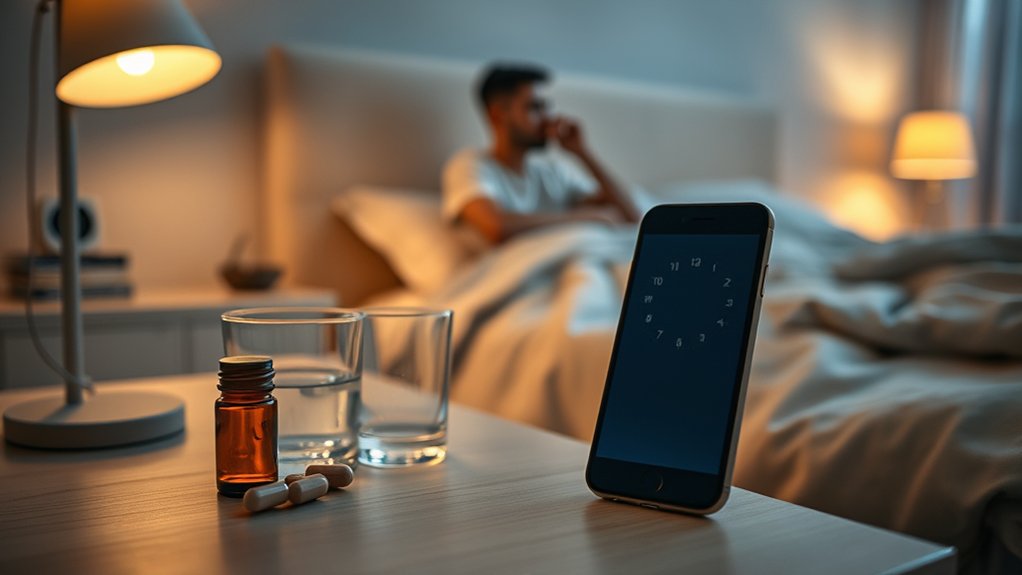
You should take melatonin supplements about 1 to 3 hours before bedtime to align with your body’s natural rhythm.
If you’re dealing with jet lag, it’s a good idea to start taking melatonin a few days before you travel and keep taking it at your destination’s bedtime.
It’s important to pay attention to how your body responds, and you might need to adjust the timing or dosage depending on how you feel.
Optimal Timing Guidelines
Because timing influences how effectively melatonin supplements work, it’s best to take them about 1 to 3 hours before your planned bedtime. This ideal timing aligns with your body’s natural melatonin release and helps improve sleep quality.
When adjusting your sleep schedule or dealing with jet lag, taking melatonin at the destination’s bedtime can be beneficial. Consistency is essential. Try to take your dose at the same time each night to strengthen your sleep-wake cycle.
Here are key points for using melatonin supplements effectively:
- Adults typically take 1 to 3 mg, while children start with 0.25 to 0.5 mg.
- Take melatonin 1–3 hours before bedtime.
- Maintain consistency for best results.
- Adjust timing gradually when changing sleep schedules.
Situational Usage Recommendations
Although not everyone needs to take melatonin supplements, they can be especially helpful if you struggle with insomnia, jet lag, or certain sleep disorders.
If you have trouble falling asleep, taking melatonin 1 to 3 hours before bedtime may improve sleep quality and reduce sleep onset time.
For jet lag, starting melatonin a few days before travel and continuing at your destination’s bedtime can help reset your internal clock.
Those with delayed sleep-wake phase disorder often see benefits in falling asleep earlier.
Children with sleep issues related to ADHD or ASD may also benefit.
Always consult a health care provider before starting melatonin, especially if you have underlying conditions or take medications.
Melatonin supplements are generally recommended for short-term use to guarantee safety and effectiveness.
How Effective Are Melatonin Supplements?
When addressing difficulties with falling asleep, melatonin supplements can offer measurable benefits. They help people by reducing the time it takes to fall asleep, especially in cases like delayed sleep-wake phase disorder.
Melatonin supplements are effective for managing certain sleep problems and jet lag, improving overall sleep quality.
Here’s what you should know:
- They reduce sleep onset time by about 22 minutes on average.
- Melatonin improves sleep in children with sleep disorders better than a placebo.
- Typical dosage recommendations range from 1 to 3 mg, usually taken two hours before bedtime.
- While short-term use is generally safe, long-term effects remain unclear and require more research.
Using melatonin supplements thoughtfully can support better sleep. Just make sure to consider potential long-term effects.
Melatonin Dosage and Timing
You should take melatonin supplements in doses of 1 to 3 milligrams about two hours before bedtime to help you fall asleep.
When it comes to jet lag, it’s important to time your dose to match the bedtime of your destination.
Also, keep in mind that the right dose can vary depending on your age and weight.
Be careful not to exceed 10 mg, since taking too much might cause side effects.
Recommended Dosage Guidelines
Melatonin dosage guidelines vary depending on age and purpose, but most adults find 1 to 3 milligrams taken about two hours before bedtime effective for improving sleep onset.
When using melatonin supplements, keep these points in mind:
For children, start with a low dose of 0.25 to 0.5 milligrams. Maximum recommended doses are 3 mg for those under 88 lbs and 5 mg for heavier children.
Begin with the lowest effective dose and only increase if needed. Never exceed maximum recommended doses.
Continuous use is generally safe for one to two months. After that, it’s a good idea to take a break to avoid tolerance.
Melatonin can help with jet lag when timed properly. Just make sure the dosage follows recommended guidelines.
Following these evidence-based recommendations guarantees safe and effective melatonin use for both adults and children.
Optimal Timing For Intake
Understanding the timing of melatonin intake can greatly impact its effectiveness in improving sleep quality. You should take melatonin about two hours before your desired bedtime to align with your body’s natural circadian rhythm, when melatonin levels typically rise. This timing enhances melatonin’s ability to help you fall asleep more quickly.
For jet lag, take melatonin at the destination’s bedtime, starting a few days before travel, to reset your internal clock effectively.
Adults should avoid exceeding 10 milligrams per dose, while children under 88 lbs should start with 0.25 to 0.5 milligrams, not surpassing 3 milligrams.
If you don’t notice sleep improvements within one to two weeks, reconsider your melatonin timing or discontinue use to maintain safety and maximize effectiveness.
It’s all about finding what works best for your body.
Common and Rare Side Effects of Melatonin
Although many people take melatonin to improve sleep, it’s important to be aware of both common and rare side effects that may occur.
The common side effects of melatonin include headaches, dizziness, nausea, and daytime drowsiness. These might affect your daily routine.
Rare side effects can involve vivid dreams, short-term depression, irritability, gastrointestinal discomfort, and urinary incontinence. Long-term effects remain unclear due to limited research.
Furthermore, higher doses of melatonin may increase risks such as confusion, falls, or seizures, especially in vulnerable populations. So, it’s good to be cautious if you’re thinking about taking more than the usual dose.
Here are some side effects to watch for:
- Headaches, dizziness, nausea, daytime drowsiness
- Vivid dreams or nightmares at higher doses
- Gastrointestinal issues and mood changes
- Potential confusion or falls with higher doses
Stay informed and monitor your response carefully. It really helps to know what to expect and when to check in with a healthcare professional.
Who Should Avoid Melatonin Supplements?
If you fall into certain health categories, you should avoid melatonin supplements to prevent potential complications. Pregnant or breastfeeding individuals, people with autoimmune disorders, seizure disorders, and diabetic patients must exercise caution. Melatonin can interact with medications or worsen specific health conditions.
Always consult your healthcare provider before starting melatonin supplements.
| Health Condition | Reason to Avoid Melatonin Supplements |
|---|---|
| Pregnancy/Breastfeeding | Potential risks to fetus or infant |
| Autoimmune Disorders | May exacerbate immune response |
| Seizure Disorders | Risk of increased seizure activity |
| Diabetic Patients | Can affect blood sugar levels |
| Blood Pressure/Clotting Meds | Possible harmful drug interactions |
Taking professional advice guarantees you use melatonin supplements safely without compromising your health.
Using Melatonin Safely With Lifestyle Changes
When you combine melatonin supplements with targeted lifestyle changes, you can greatly improve your sleep quality and overall well-being.
To use melatonin safely and effectively, consider these lifestyle changes alongside supplementation:
Take melatonin supplements in doses of 1 to 3 milligrams about two hours before bedtime to align with your natural rhythm.
Limit exposure to bright screens and artificial light in the evening to support your body’s melatonin production.
Establish a consistent bedtime routine with relaxing activities like reading or meditating to enhance sleep quality.
Get regular exposure to natural daylight during the day to maintain a healthy sleep-wake cycle.
Always consult your healthcare provider before starting melatonin, especially if you have health conditions or take medications.
It’s better to be safe and get personalized advice.
Frequently Asked Questions
Can Melatonin Interact With Prescription Medications?
Yes, melatonin can interact with prescription medications. You should be aware that melatonin interactions may affect drug metabolism and hormonal effects, especially with blood thinners, seizure meds, and birth control pills.
If you’re managing sleep disorders, consider dosage carefully to avoid safety concerns.
Always check with your healthcare provider to make sure melatonin won’t interfere with your current prescriptions or reduce their effectiveness.
Is Melatonin Safe for Children and Teenagers?
Sure, let’s just sprinkle melatonin on kids like fairy dust.
Wait, don’t! You’ve got to follow melatonin dosage guidelines carefully to respect child sleep patterns and teenage insomnia causes.
Pediatric studies show short-term use helps, but melatonin side effects like drowsiness and headaches pop up.
Natural sleep aids are safer for long term use since melatonin’s long-term effects remain unclear.
Always consult a doc before giving it to your kid.
How Should Melatonin Be Stored to Maintain Potency?
You should store melatonin in its original container, tightly sealed, to protect it from humidity and air exposure.
Keep it in a cool, dry place with stable temperature control, avoiding high humidity levels like those in bathrooms.
Try to limit light exposure by storing it away from direct sunlight.
Always check expiration dates to make sure the supplement’s shelf life hasn’t passed.
Proper storage conditions help maintain melatonin’s potency and effectiveness over time.
It’s pretty simple but makes a big difference!
Are There Any Dietary Restrictions When Taking Melatonin?
Dietary diligence definitely matters when taking melatonin. You should follow dosage recommendations carefully and consider timing strategies to avoid food interactions that might reduce effectiveness.
Alcohol can disrupt treatment for sleep disorders, so it’s wise to avoid drinking around the time you take melatonin. Natural sources usually pose fewer risks, but long-term effects still need monitoring.
Always check ingredients for allergens or carbs, especially if you have dietary restrictions.
And it’s a good idea to consult your healthcare provider for guidance.
Can Melatonin Supplements Cause Dependency or Withdrawal?
Melatonin supplements rarely cause dependency or withdrawal when you follow the recommended melatonin dosage.
However, long-term use might reduce your natural melatonin production, potentially disrupting your circadian rhythm and sleep quality.
To avoid side effects, consider natural alternatives and practice good sleep hygiene.
The best practices include using melatonin intermittently and consulting a healthcare provider for prolonged use.
This way, you can balance the benefits with minimal risks to your sleep health.
Conclusion
Melatonin acts like a gentle lighthouse, guiding your body’s sleep cycle through the night. When used correctly, it can help reset your internal clock and improve sleep quality. But remember, not all supplements are the same. Natural or synthetic forms vary, and timing plus dosage matter.
Always consult a healthcare professional before starting melatonin, especially if you have health conditions or take other medications. Use it wisely, paired with healthy habits, for the best results.