How To Take Creatine Supplement? The Right Way for Best Results
To take creatine supplement effectively, start with a 5-7 day loading phase of 20 grams daily, split into four 5-gram doses. It’s best to pair these doses with carbs to boost absorption.
After that, switch to a 3-5 gram daily maintenance dose, preferably post-workout. This helps support muscle strength and recovery.
Make sure to stay well-hydrated, aiming for 30-35 mL of water per kg of body weight. Following these steps carefully helps optimize results and minimize side effects. There are more detailed tips available if you want to dive deeper.
How To Start Taking Creatine: Loading Phase Guide
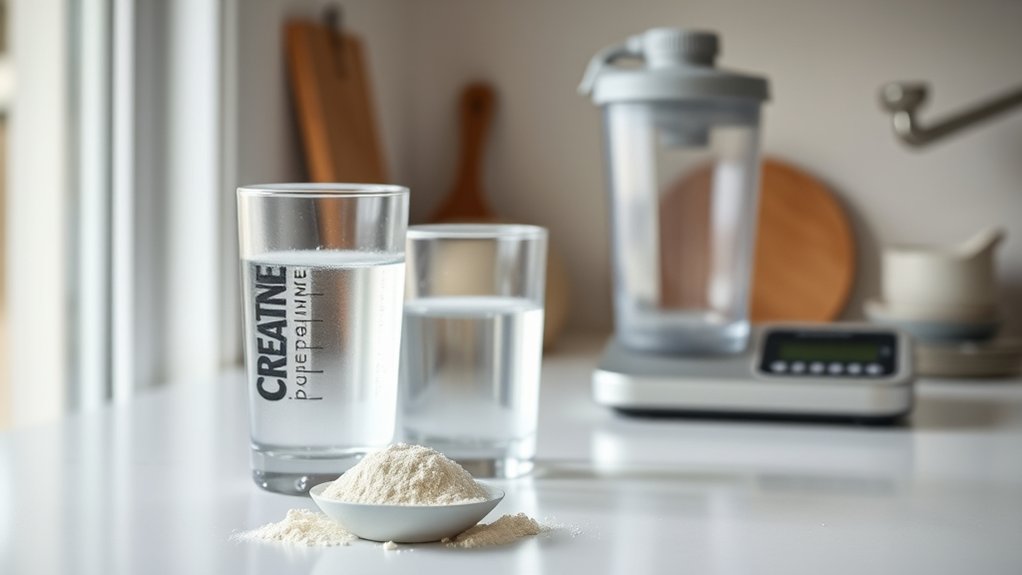
To kick off your creatine regimen, start with a loading phase that typically lasts 5 to 7 days. During this time, you’ll take about 20 grams of creatine daily, split into four 5-gram doses. This approach rapidly saturates your muscle creatine stores, setting the stage for improved performance benefits.
To boost absorption, consume creatine with a carbohydrate source like fruit juice. Staying well-hydrated is essential during the loading phase, so increase your fluid intake to roughly 30-35 mL per kg of body weight.
Consistency matters. Missing doses can delay muscle creatine saturation and limit performance gains.
After this phase, you’ll switch to a maintenance dose to keep levels elevated.
But for now, focus on completing your loading phase properly to maximize creatine’s effectiveness.
What To Expect During The Maintenance Phase
Once you complete the loading phase, maintaining your creatine levels becomes essential to sustaining the benefits. During the maintenance phase of creatine supplementation, you’ll typically take a daily dose of 2-5 grams to keep muscle creatine levels elevated after the initial loading period.
Consistency is important. Taking creatine at the same time each day helps optimize muscle saturation and performance benefits.
Maintaining a consistent daily timing for creatine intake maximizes muscle saturation and boosts performance benefits.
Within a few weeks, you should notice improvements in muscle strength, endurance, and recovery. Hydration plays a vital role during this phase. Aim for 30-35 mL of water per kilogram of body weight to support increased muscle water retention.
If you stop supplementation, muscle creatine levels will gradually decline. This could potentially reduce the gains you’ve achieved during the loading period and maintenance phase.
Best Time Of Day To Take Creatine For Maximum Benefits

Although consistent daily intake matters most, studies show that taking creatine immediately after your workout can boost muscle recovery and enhance strength gains more effectively than pre-workout doses.
When using creatine monohydrate, aim for the ideal dose and intake of 3-5 grams daily to maintain muscle saturation.
During a loading phase, split 20-25 grams into multiple doses throughout the day to improve absorption.
Timing of creatine supplementation is important but secondary. Pairing creatine with carbohydrates, like in a post-workout shake, further enhances muscle performance by increasing uptake.
Remember to stay well-hydrated, as creatine increases water retention in muscles.
Ultimately, prioritizing consistent timing and hydration guarantees you maximize creatine’s benefits for strength and recovery.
How To Mix Creatine With Drinks For Better Absorption
If you want to get the most out of your creatine, try mixing it with a drink that’s high in carbs, like fruit juice. The carbs help insulin do its job, which means your muscles can absorb the creatine more effectively.
Also, using warm water or a warm drink can make a big difference because creatine dissolves better, giving you a smoother mix.
Another great tip is to blend your creatine into your post-workout protein shake. This not only helps with muscle recovery but also boosts creatine uptake right when your body needs it most.
Best Liquid Choices
How can you maximize creatine absorption when mixing it with liquids? Choosing the right liquid enhances creatine monohydrate’s effectiveness. Here are the best options:
- Carbohydrate-rich liquid: Mixing creatine with fruit juice triggers an insulin response. This boost helps transport creatine into muscle cells more efficiently.
- Post-workout protein shake: Combining creatine with protein shakes supports muscle recovery and synthesis. It does this by supplying amino acids alongside creatine.
- Warm water with sufficient fluid volume: Dissolving creatine in 250-300 mL of warm water guarantees proper hydration and faster dissolution. This makes absorption easier.
Importantly, avoid mixing creatine with caffeine-containing drinks. Caffeine may reduce creatine’s benefits and cause gastrointestinal discomfort.
Prioritize these liquid choices to optimize creatine uptake and support your fitness goals.
Mixing Techniques
Three key steps can greatly improve how you mix creatine with liquids for better absorption.
First, use creatine monohydrate with a carbohydrate-rich drink like fruit juice or a sports drink. The carbs boost insulin levels, which helps creatine get into your muscle cells more effectively.
Second, mix your creatine with warm water or a warm beverage to help the powder dissolve completely. Stirring or shaking well prevents clumps that can slow down absorption.
Third, avoid leaving creatine in acidic drinks for too long. Acid can break down creatine into creatinine, which makes it less effective.
For ideal timing, try to consume your creatine mixture within 30 minutes after your workout. It’s best to have it with carbs and protein to maximize muscle recovery and growth.
Using these mixing techniques can really help you get better results from your creatine supplementation.
Common Mistakes To Avoid When Taking Creatine
Although creatine is a widely studied and effective supplement, many users make common mistakes that limit its benefits. To optimize your creatine supplementation, avoid these pitfalls:
- Underdosing: Skipping the loading phase of 20 grams daily for 5-7 days or taking less than the recommended maintenance dose (2-5 grams) reduces muscle saturation and effectiveness.
- Inconsistent Timing: Taking creatine irregularly rather than daily disrupts steady muscle creatine levels, impairing results.
- Neglecting Hydration and Supplement Labels: Creatine draws water into muscle cells, so failing to drink enough fluids (about 30-35 mL per kg body weight) risks dehydration.
Also, always follow supplement labels carefully to guarantee correct dosing and safety.
What Creatine Does In Your Body
Creatine boosts your muscles’ ability to produce energy during short bursts of intense exercise by increasing phosphocreatine stores in muscle cells. This phosphocreatine helps regenerate adenosine triphosphate (ATP), the primary energy carrier, allowing you to sustain high-intensity exercise performance longer.
When you use creatine monohydrate supplementation, muscle creatine levels can rise by 15% to 40%, improving muscle strength and muscle mass over time.
Plus, creatine draws water into muscle cells, promoting better hydration, which supports muscle growth and recovery.
These effects make creatine especially effective for activities like sprinting and weightlifting.
How To Choose The Right Creatine Supplement
When you’re picking out a creatine supplement, it’s best to go with creatine monohydrate. This type has been studied the most and is proven to be effective.
You’ll want to check that each serving gives you between 3 to 5 grams—that’s the sweet spot.
Also, make sure the product is third-party tested. This way, you know it’s pure and high quality.
Powder forms can be super convenient to use, so keep that in mind.
One more thing—try to avoid proprietary blends that don’t clearly say how much creatine is in them. It’s important to know exactly what you’re getting.
Types Of Creatine
Since there are several types of creatine supplements available, choosing the right one can feel overwhelming. Here’s a quick guide to help you navigate the main types of creatine for effective creatine supplementation:
- Creatine Monohydrate is the most researched and proven type, enhancing high-intensity performance reliably. It remains the gold standard.
- Creatine Ethyl Ester claims better absorption and less water retention, but scientific support is limited compared to monohydrate.
- Buffered Creatine (Kre-Alkalyn) and Creatine Hydrochloride offer potential digestive benefits and solubility but lack strong evidence of superior performance.
When selecting any type, always pick products that are third-party tested to guarantee quality and safety.
This approach helps you choose effective and trustworthy creatine supplements.
Purity And Quality
Although many creatine supplements are available, choosing one that prioritizes purity and quality can greatly impact your results and safety. Focus on creatine monohydrate, the most studied form proven to enhance performance.
Make sure the product is third-party tested to meet strict quality standards and verify purity. Check the ingredient list for minimal additives. Ideally, only creatine monohydrate should be present.
Micronized creatine dissolves better, which improves absorption and effectiveness.
| Factor | Importance | What to Look For |
|---|---|---|
| Creatine Type | Effectiveness | Creatine monohydrate |
| Testing | Safety & purity | Third-party tested |
| Ingredients | Purity | Minimal additives |
| Processing | Absorption | Micronized |
| Brand Transparency | Quality assurance | Clear sourcing info |
Dosage And Form
Three key factors determine the right creatine supplement for you: the form of creatine, the dosage, and how consistently you take it.
First, choose creatine monohydrate, the most researched form proven effective in enhancing performance.
Next, follow a dosage plan based on your body weight:
- Loading phase: 0.3 grams per kilogram daily for 5-7 days (around 20 grams total)
- Maintenance dose: 0.03 grams per kilogram daily (3-5 grams)
- Consistency: take creatine at the same time each day to maintain muscle saturation.
Also, make sure to stay hydrated by drinking 30-35 mL of fluid per kilogram of body weight daily.
Creatine supplementation draws water into your muscles, so keeping up your fluids is important. This approach guarantees safe and effective creatine use.
Taking Creatine Every Day: What You Need To Know
When you take creatine every day, you confirm your muscles stay saturated with the ideal 3-5 grams needed after the initial loading phase.
Creatine supplementation begins with a loading phase of about 20 grams daily for 5-7 days to quickly boost muscle creatine stores. After that, daily intake of 3-5 grams maintains muscle saturation, which is essential for improving muscle strength and performance.
Consistency in taking creatine every day, even on rest days, guarantees these elevated levels remain stable.
Taking creatine daily, including rest days, ensures your muscles stay consistently saturated for best results.
While timing isn’t as vital as consistency, meeting your hydration needs by drinking sufficient fluids supports muscle function during supplementation.
Remember, muscle strength gains develop gradually over several weeks, so stay patient and consistent with your creatine routine.
It really pays off when you keep at it!
Staying Safe: Hydration And Health Tips To Prevent Side Effects
When you’re taking creatine, it’s really important to stay properly hydrated. Aim to drink about 30-35 mL of water for every kilogram of your body weight each day to help avoid dehydration.
Also, keep an eye on how your body is feeling. If you have any health conditions, like kidney problems, it’s a good idea to chat with your doctor before you start using creatine.
And don’t ignore any side effects, such as stomach cramps or unusual weight gain. Sometimes, tweaking your dosage or drinking more water can make a big difference in managing these.
Importance of Proper Hydration
Although creatine effectively enhances muscle performance by drawing water into muscle cells, you need to increase your fluid intake to stay properly hydrated.
Proper hydration during creatine supplementation helps prevent dehydration. Dehydration can cause muscle cramps, gastrointestinal distress, and reduced exercise performance.
To maintain ideal hydration, follow these key steps:
- Drink 30-35 mL of water per kg of body weight daily, about 2,100 to 2,450 mL for a 155-pound person. This helps compensate for the increased water content in muscles.
- Include hydrating foods and beverages alongside water to meet your fluid intake needs.
- Monitor hydration levels closely during intense workouts so you can avoid complications related to dehydration.
Monitoring Health Conditions
Since creatine alters water distribution in your muscles, you need to monitor your health closely to prevent side effects. Creatine supplementation can increase the risk of dehydration, so make sure to drink 30-35 mL of water per kg of body weight daily. That’s about 2,100–2,450 mL for a 155-pound person.
Keep an eye out for signs of dehydration like dark urine or excessive thirst, especially during intense workouts. Before starting creatine, it’s a good idea to consult a healthcare provider, especially if you have kidney disease, diabetes, or liver issues.
If you have pre-existing kidney conditions, regular monitoring of kidney function is really important because creatine might affect kidney health.
Also, if you experience any gastrointestinal side effects, consider adjusting your dosage. Usually, people stick to a typical intake of 3-5 grams daily after the loading phase.
Careful monitoring helps make sure you use creatine safely and effectively.
Recognizing Side Effect Signs
Recognizing the signs of side effects early helps you stay safe while using creatine supplements. Creatine supplementation increases your hydration needs, so you should monitor your body closely for any adverse reactions.
Here are three essential steps to help you prevent complications:
- Maintain proper hydration by drinking 30-35 mL of fluid per kilogram of body weight daily. Creatine draws water into muscle cells, which can increase your risk of dehydration.
- Watch for side effects like gastrointestinal issues, muscle cramps, and unexpected weight gain. These might mean you need to adjust your dosage.
- Consult a healthcare provider if you experience severe symptoms such as persistent nausea, dizziness, or fatigue. Also, make sure to regularly check your kidney function, especially if you have pre-existing conditions.
Staying vigilant about these signs will help you use creatine safely and effectively.
When To Talk To A Doctor About Creatine Use
When should you talk to a doctor about using creatine? You should consult a healthcare provider before starting creatine use if you have existing health conditions like diabetes, kidney, or liver disease, as these may increase risks.
It’s also important to seek medical advice if you’re pregnant or breastfeeding since safety during these times isn’t well established.
If you have a history of bipolar disorder, creatine might raise the risk of mania, so talk to your doctor first.
Furthermore, if you notice any unusual symptoms such as muscle cramps or gastrointestinal distress after starting creatine, reach out to your healthcare provider.
Finally, consult a professional before combining creatine with other medications or supplements to avoid potential interactions and guarantee safety.
It’s always better to be safe and get personalized advice when it comes to your health.
Frequently Asked Questions
Can Creatine Cause Weight Gain Besides Muscle Growth?
Yes, creatine can cause weight gain beyond muscle growth due to water retention and increased muscle hydration. This extra water inside your muscles boosts energy production and helps improve your performance during workouts.
To manage this, it’s a good idea to follow dosage guidelines and consider cycling creatine. If you’re vegetarian, you might need supplementation since dietary sources are limited.
Just remember, weight gain from creatine isn’t fat but mostly water and muscle mass. This supports your training goals effectively and helps you get the most out of your workouts.
Is Creatine Safe for Teenagers or Young Athletes?
Yes, creatine is generally safe for teenage athletes when you stick to a safe dosage and consult a healthcare provider.
It offers performance benefits and supports muscle recovery, especially in high-intensity sports.
To maximize results and minimize risks, maintain good nutritional balance and proper hydration strategies.
Long-term studies show no harmful effects on healthy young athletes, but always use creatine responsibly.
Keep an eye on how your body responds to get the best outcomes.
If anything feels off, don’t hesitate to check in with a professional.
How Long Does It Take to See Creatine’s Effects?
You’ll typically see creatine’s effects within 7 to 14 days, especially if you use creatine loading. This means taking 20-25 grams daily for 5-7 days, then switching to maintenance doses.
Timing strategies around workouts can enhance benefits, but staying well-hydrated is essential.
Dosage guidelines matter, and individual response varies. So, choose high supplement quality to maximize results.
Consistent use combined with workout synergy helps you notice strength and muscle gains faster.
Just stick with it, and you’ll see the progress.
Can Creatine Be Taken With Other Supplements Safely?
Of course, you *could* mix creatine with just about anything, but stacking supplements safely matters.
Creatine and caffeine pair well, though watch for tummy issues.
For pre workout combinations, timing strategies help maximize benefits, while post workout synergy shines when you blend creatine with protein.
Don’t forget natural food sources and hydration considerations. They’re essential.
Always prioritize evidence-based moves, and if you’re unsure, consult a pro before mixing supplements.
Does Creatine Affect Kidney or Liver Function Long-Term?
Research studies show creatine metabolism doesn’t harm kidney health or liver function in healthy individuals when you follow dosage recommendations, typically up to 10 grams daily.
Long-term effects appear safe, with no significant impact on organ function. Still, you should maintain proper hydration levels to support your kidneys.
If you have pre-existing conditions, it’s a good idea to check with a healthcare provider before you start using creatine.
Conclusion
Taking creatine isn’t just a small boost, it’s a game-changer for your workouts and muscle gains. Stick to the loading and maintenance phases, choose the right supplement, and time your doses well to maximize results.
Don’t underestimate hydration and avoid common mistakes, or you might feel like you’ve run a marathon without water. If anything feels off, talk to your doctor.
Follow these steps, and creatine will become your ultimate fitness secret weapon.