How To Choose Protein Supplement for Beginners and Athletes
Choose a protein supplement that fits your age, activity, and health goals by aiming for 20-25 grams of complete protein per serving. Prioritize powders with essential amino acids, minimal added sugars, and no artificial additives or fillers.
If you prefer, consider plant-based options. Just remember, combining sources guarantees a full amino profile. Check for third-party testing to verify purity and safety.
Balancing supplements with whole foods maximizes benefits. There’s more to explore about protein types, quality, and usage strategies for your needs. Feel free to dig in and find what works best for you!
Why Protein Supplements Matter for Your Health
Although many adults believe they get enough protein through their diet, nearly half of those aged 71 and older don’t consume sufficient amounts. This can speed up muscle loss and make physical performance worse.
As an older adult, it’s really important to keep up with your daily protein intake. Protein helps maintain your muscles and overall health. Not getting enough protein can increase the risk of losing strength and independence, which makes everyday tasks harder.
Protein supplements can be a simple solution, especially if you have trouble eating enough or don’t feel very hungry. They help make sure you get the recommended protein levels, which are usually higher for older adults than younger people.
Using protein supplements carefully can help slow muscle loss and support your long-term well-being.
How to Determine Your Daily Protein Needs
To figure out how much protein you need each day, begin by calculating it based on your body weight. Usually, most adults aim for about 0.8 grams per kilogram.
But that’s just the starting point. From there, you’ll want to tweak that number depending on how active you are.
So, if you’re someone who exercises regularly or does strength training, you might need closer to 1.5 grams per kilogram.
Calculate Protein Requirements
When calculating your daily protein needs, you’ll want to take into account factors like your age, activity level, and health goals to guarantee adequate intake.
Protein requirements vary widely, so tailoring your consumption is key. Typically, you’ll measure protein needs in grams per kilogram of body weight.
Here’s a quick guide:
- The RDA suggests 0.8 grams per kilogram for average adults
- Older adults may need 1 to 1.2 grams/kg to combat sarcopenia
- Active individuals often require 69 to 102 grams daily
- Strength trainers should aim for about 1.5 grams/kg for muscle recovery
- Sedentary lifestyles usually call for 68 to 82 grams daily
Adjust For Activity Level
Since your activity level heavily influences your protein needs, you’ll want to adjust your intake accordingly to optimize muscle recovery and overall health.
Active individuals should consume about 1.5 grams of protein per kilogram of body weight to support muscle growth and repair. For instance, a 180-pound person would need roughly 102 grams daily.
Less active individuals require closer to 0.8 grams per kilogram. Older adults may benefit from increasing protein intake to 1–1.2 grams per kilogram to counteract age-related muscle loss.
Tailoring your protein intake based on fitness goals is essential. Higher amounts are better for muscle gain, while moderate amounts work for maintenance or weight loss.
Prioritize high-quality protein sources and regularly reassess your activity level to guarantee your protein intake consistently aligns with your evolving fitness goals.
It’s all about keeping things balanced as you progress.
Picking Protein Powders for Your Goals
Although many protein powders are available on the market, choosing the right one depends heavily on your specific fitness goals and dietary needs.
To support muscle growth, pick powders with 20-25 grams of protein per serving rich in essential amino acids. Consider ingredient quality and avoid artificial additives.
If you prefer plant protein, options like pea or hemp can provide adequate protein per serving.
Remember to balance your daily intake from powders and whole foods for ideal results.
Here’s what to focus on:
- Protein per serving aligned with muscle-building needs
- Amino acid profile supporting recovery and synthesis
- Ingredient quality with minimal additives
- Plant protein options for dietary preferences
- Daily intake tailored to body weight and activity level
Animal Protein vs. Plant Protein: Which Is Better?
How do animal and plant proteins compare when it comes to supporting your muscle growth and recovery?
Animal proteins like whey offer a complete set of essential amino acids, making them highly effective for building muscle mass and speeding recovery. They also tend to have a higher protein content per serving, typically 20-25 grams, which helps you meet your protein needs efficiently.
Plant proteins such as soy, pea, and brown rice also deliver essential amino acids but sometimes require combining different protein-rich foods to get a full amino acid profile.
Research shows no significant difference in muscle protection between animal and plant proteins, so you can choose based on your dietary preferences and health benefits.
Experimenting with both sources helps you optimize intake while considering personal goals and restrictions.
It’s all about finding what works best for you and fits your lifestyle.
How to Evaluate Protein Powder Ingredients for Quality
When choosing a protein powder, you want to focus on ingredients that deliver both effectiveness and safety. Start by checking the grams of protein per serving. Aim for 20 to 25 grams to support muscle health.
Confirm the protein source includes all essential amino acids. This means it’s a complete protein, which is ideal for repair and growth.
Also, look for clean ingredients without proprietary blends because those can hide fillers. Try to minimize added sugar by choosing unsweetened or low-sugar options. This helps protect your digestive health.
Finally, prioritize powders that are third-party tested to guarantee purity and the absence of harmful contaminants like heavy metals.
Here’s what to look for:
- 20 to 25 grams of protein per serving
- Complete protein source with all essential amino acids
- No proprietary blends or fillers
- Low or no added sugar
- Third-party tested for purity and safety
Sweeteners and Additives to Avoid in Protein Powders
When you’re picking out a protein powder, keep an eye out for hidden sugars. They can sneak in and mess with your low-sugar goals before you even realize it.
And then there are sugar alcohols like erythritol and sorbitol. They might sound like a better choice, but for some folks, they can cause digestive issues.
Hidden Sugar Sources
Why do so many protein powders contain hidden sugars that can sabotage your dietary goals? Many flavored protein powders add sugar to enhance taste but unknowingly increase your calorie and carbohydrate intake.
To avoid this, opt for unsweetened options and scrutinize labels carefully. Watch out for these common hidden sugar sources:
- Added sugars boosting carbohydrate content
- Flavor enhancers masking sugar content
- Sweeteners disguised as “natural” additives
- Excessive carbohydrates exceeding 15 grams per serving
- Lack of third-party testing allowing undisclosed ingredients
Choosing protein powders with third-party testing seals guarantees purity and helps you avoid unwanted additives and hidden sugars.
Being vigilant about these factors supports your low-sugar diet and overall health without compromising protein intake.
Harmful Sugar Alcohols
How do sugar alcohols like erythritol and sorbitol impact your digestive health when added to protein powders? Sugar alcohols often cause gastrointestinal issues such as bloating and diarrhea, especially if you’re sensitive to them.
Many flavored powders contain added sugars, which add unnecessary calories and may undermine your health goals. To avoid digestive discomfort, consider unsweetened varieties and carefully check ingredient labels, as sugar alcohols might be listed without clear warnings.
Choosing protein powders with natural sweeteners over artificial ones can further reduce your risk of gut problems. Ultimately, selecting a supplement free from excessive sugar alcohols helps guarantee you get clean nutrition without triggering unpleasant digestive symptoms.
Being vigilant about these additives supports both your supplementation goals and overall digestive health. It’s worth taking a little extra time to read labels and pick the best option for your body.
Protein Powders vs. Drinks: Which Is Right for You?
Wondering whether protein powders or drinks suit your lifestyle better? Both offer effective ways to boost your protein intake, but your choice depends on convenience, cost, and dietary needs.
Protein powders typically provide 20-25 grams per serving and allow customizable intake. You control flavor and mix-ins.
Protein powders offer 20-25 grams per serving with customizable flavors and mix-ins for personalized nutrition.
Protein drinks deliver 15-40 grams per serving and are grab-and-go, perfect for busy days.
Consider these factors:
- Protein powders cost $1-$2 per serving; drinks range $2-$4.
- Powders offer versatility for recipes and portion control.
- Drinks provide quick, ready-to-consume nutrition.
- Both help fill protein gaps, essential for older adults.
- Protein content varies, so check labels to meet your grams target.
Choose based on your routine, budget, and how much control you want over ingredients.
How to Make Sure Your Protein Powder Is Safe
Although protein powders offer convenient nutrition, ensuring their safety requires careful scrutiny.
First, look for products that have undergone third-party testing. This verifies purity and checks for contaminants like heavy metals, including arsenic and cadmium.
Always examine the ingredient list. Avoid powders with proprietary blends or excessive fillers because they can hide unwanted additives.
Choose protein powders that clearly state their protein content per serving. Ideally, it should be between 20 to 25 grams and contain all essential amino acids for effective support.
Steer clear of added sugars and artificial sweeteners since they may cause digestive issues and add unnecessary calories.
Finally, verify third-party seals or certifications on the packaging. This confirms the product meets established safety and quality standards, so you get a reliable, safe supplement.
How to Understand Protein Quality and Amino Acids
Why does protein quality matter when choosing a supplement? Because your body needs all nine essential amino acids in adequate amounts per kilogram of body weight for peak function. Protein quality is judged by its amino acid profile and digestibility.
For example, whey protein concentrate is a complete protein with a high Biological Value, making it ideal for muscle repair and growth. Plant-based proteins often lack one or more essential amino acids but can be combined to form a complete protein.
Consider these factors:
- Complete protein contains all nine essential amino acids
- Whey protein concentrate has a high digestibility and BV
- Leucine in whey stimulates muscle protein synthesis
- PDCAAS score of 1.0 indicates high protein quality
- Combining plant-based proteins enhances amino acid profile
Understanding these helps you choose the right protein supplement effectively.
How to Incorporate Protein Powders Into Your Diet
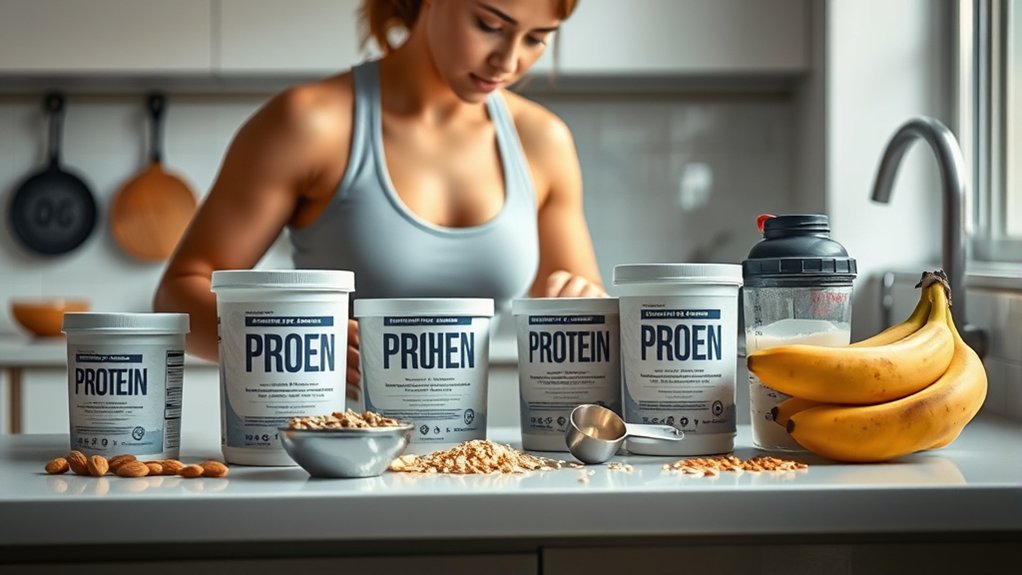
How can you seamlessly boost your daily protein intake without overhauling your meals? Protein powders offer an easy-to-add solution that helps maintain muscle and overall health. You can add protein by mixing a scoop of protein isolate into smoothies, providing 15-30 grams per serving.
Try incorporating them into yogurt or oatmeal for a subtle protein boost. Or blend them into baked goods like pancakes to increase protein content without changing the taste.
For post-workout recovery, consume 15-25 grams within an hour to maximize muscle repair. Experiment with whey or plant-based powders to find what suits you best.
Using protein powders alongside high-protein foods or as meal replacements can effectively support your nutrition goals without complicating your diet.
Frequently Asked Questions
Can Protein Supplements Affect Digestion or Cause Allergies?
Yes, protein supplements can affect your digestion and cause allergy symptoms. Different protein types like whey, casein, or plant-based impact gut health differently.
If you have lactose intolerance, whey or casein might cause digestion issues. Gluten sensitivity can also trigger reactions if the supplement contains gluten.
Some amino acids in protein powders might upset your stomach.
Always check ingredient lists and keep an eye on how your body responds to avoid discomfort or allergic reactions.
How Should Protein Supplements Be Stored for Best Freshness?
Think of your protein supplement as a treasure chest. Keep it guarded well by using airtight storage containers to prevent moisture exposure and maintain proper sealing. This helps extend its shelf life.
Store it in a cool, dry place with temperature control to avoid heat damage. Also, protect it from light exposure because UV rays can degrade protein quality.
Always check expiration dates to guarantee freshness.
Taking these steps helps you preserve potency and enjoy safe, effective supplements.
Are Protein Supplements Safe for Pregnant or Breastfeeding Women?
Protein supplements can be safe during pregnancy or breastfeeding if you check ingredient labels carefully and follow safety guidelines.
Your nutritional needs change, so it’s important to stick to recommended dosages to avoid potential risks. Some protein sources might contain additives or allergens, so choose clean, high-quality options.
Always consult your healthcare provider first before starting any supplement.
If supplements aren’t ideal, you can consider alternative options like whole foods to meet your protein requirements safely.
It’s all about finding what works best for you and your baby.
Can Children or Teenagers Use Protein Supplements Safely?
Yes, children and teenagers can use protein supplements safely if you follow age recommendations and safety guidelines.
It’s important to prioritize natural protein sources first to support their health and nutritional balance. Supplements should complement, not replace, a varied diet.
Always consult a healthcare professional and involve parental guidance to tailor dietary needs appropriately.
Overuse or inappropriate types of protein supplements might harm growth.
How Do Protein Supplements Interact With Common Medications?
Protein supplements can affect medication metabolism, which means they might change how drugs are processed in your body.
They may also impact protein absorption and interact with any dietary restrictions or health conditions you have.
Side effects could happen if you don’t think about timing, like taking supplements too close to your medication.
So, it’s a good idea to follow dosage recommendations carefully.
Always check with your healthcare provider to avoid any adverse interactions.
This way, you make sure both your meds and protein supplements work effectively together.
Conclusion
Choosing the right protein supplement is like crafting a personalized recipe for your health. It’s all about balancing quality, safety, and your unique goals.
Start by understanding your daily protein needs. Then, look closely at powders, checking the ingredients and amino acid profiles. This way, every scoop supports muscle repair and overall wellness.
Whether plant or animal-based, protein can easily fit into your routine. It fuels your body with evidence-backed nutrition that helps you thrive every day.