
How Much Fiber Supplement Per Day for Daily Nutrition Balance
You should start fiber supplements at a low dose and gradually increase to about 25 grams daily if you’re a woman, or 38 grams if you’re a man. Be sure to drink plenty of fluids to support digestion and avoid discomfort.
This approach helps prevent bloating or constipation and boosts the benefits for digestive and heart health.
It’s a good idea to tailor your intake by age and combine supplements with a high-fiber diet to get the best results. There’s more to consider for safe, effective use, so take it step by step.
Why Consider Fiber Supplements?

Although it’s best to get fiber from whole foods, fiber supplements can help you reach the recommended daily intake of about 28 grams, especially if your diet falls short. You might find it challenging to consume enough fiber daily due to dietary restrictions or busy schedules.
Fiber supplements support digestive health by promoting regular bowel movements and alleviating constipation, particularly those containing soluble fibers like psyllium.
Furthermore, these supplements may contribute to lowering cholesterol levels, benefiting your cardiovascular health.
By incorporating fiber supplements into your routine, you can efficiently increase your grams of fiber per day, helping maintain healthy digestion and overall wellbeing.
Choose the Best Fiber Supplement for Your Health
How do you choose the best fiber supplement for your health needs? Start by thinking about the type of fiber because different fiber supplements offer unique health benefits.
Psyllium, for example, is well-known for improving bowel regularity and lowering cholesterol. Other options like methylcellulose or polycarbophil have distinct effects, so pick based on what you’re aiming for.
Dosage can vary, so make sure to follow the product guidelines. It’s also smart to introduce fiber supplements gradually to avoid side effects like bloating.
Keep any dietary restrictions in mind. For instance, diabetics should avoid sugar-containing options. And if you’re taking certain medications such as tetracycline, it’s best to steer clear of polycarbophil.
Always make sure you’re drinking enough fluids to help with digestion. By choosing and starting the right fiber supplement carefully, you can safely boost your fiber intake and enjoy its proven health benefits.
Understand Soluble vs. Insoluble Fiber Supplements

When choosing a fiber supplement, it’s important to understand the difference between soluble and insoluble fiber because each type offers unique health benefits.
Soluble fiber dissolves in water, forming a gel that helps lower cholesterol and stabilize blood sugar. Supplements like psyllium and inulin provide about 7-10 grams of soluble fiber daily, supporting heart and digestive health.
Insoluble fiber, found in supplements such as wheat bran and cellulose, doesn’t dissolve in water but adds bulk to stool, promoting regular bowel movements and preventing constipation.
Combining both fibers in your supplement routine can maximize digestive health. Soluble fiber improves metabolic markers while insoluble fiber enhances stool consistency.
Understanding these differences helps you choose supplements that fit your specific health needs.
Start Fiber Supplements Safely: Dosage Guidelines
Start with a low dose of fiber supplement and increase it gradually to reduce the risk of gastrointestinal discomfort.
It’s a good idea to pay close attention to how your body responds and adjust accordingly.
And remember, always check with your healthcare provider before beginning—especially if you have medical conditions or take medications.
Gradual Dosage Increase
Although fiber supplements offer significant digestive benefits, you should introduce them gradually to prevent discomfort. Start with a small dose, like 1 teaspoon of psyllium, to let your digestive system adjust. Increase the dosage over several days, aiming for 25 grams daily for women and 38 grams for men.
Always drink adequate fluids, at least 8 ounces per dose, to help fiber move smoothly. If you experience bloating or gas, slow the gradual increase or reduce the dose temporarily. It’s a good idea to consult your healthcare provider before starting fiber supplements, especially if you have gastrointestinal conditions.
| Day | Fiber Supplement Dose | Fluid Intake (oz) |
|---|---|---|
| 1-2 | 1 tsp | 8 |
| 3-4 | 2 tsp | 8 |
| 5-7 | 3 tsp | 8 |
| 8-10 | 4 tsp | 8 |
| Maintenance | Recommended daily dose | 8 |
Monitor Side Effects
Because your body needs time to adjust, you should carefully monitor any side effects as you increase your fiber supplement dosage. Start with a low dose, such as one teaspoon of psyllium or methylcellulose, to minimize gastrointestinal discomfort like bloating or gas.
Gradually raise the amount according to product guidelines, paying close attention to how your body responds.
It’s crucial to maintain proper hydration when taking fiber supplements since water helps prevent constipation and supports digestion. If you notice persistent or severe side effects, stop increasing the dose and consider adjusting your intake.
While monitoring side effects, keep a record of any changes in symptoms to share with your health care provider if needed. This approach helps guarantee safe, effective fiber supplementation tailored to your needs.
Consult Healthcare Providers
Before adding fiber supplements to your routine, talk with your healthcare provider, especially if you have gastrointestinal issues or are taking medications. Fiber can interfere with some drugs and affect your treatment.
Make sure to follow the dosage instructions carefully. It’s a good idea to start with small amounts to reduce any stomach discomfort.
Also, keep yourself well hydrated to help fiber work effectively and prevent constipation. Regular check-ins with your provider will ensure your fiber intake fits your health needs.
| Step | Recommendation | Reason |
|---|---|---|
| Consult healthcare providers | Before starting supplements | Avoid drug interactions |
| Follow dosage instructions | Use label guidance | Confirm safe intake levels |
| Start gradually | Begin with small doses | Minimize gastrointestinal discomfort |
| Maintain hydration | Drink plenty of fluids | Support fiber function |
| Regular monitoring | Schedule check-ins | Adjust dosage as needed |
Fiber Supplement Dosage Recommendations by Age and Gender
When determining how much fiber supplement you should take, consider your age and gender, as fiber needs vary accordingly.
Adult women should aim for about 25 grams of fiber daily, while adult men need around 38 grams.
Children aged 1-3 require approximately 19 grams, increasing to 25 grams for ages 4-8.
Adolescents need between 26 and 38 grams, with boys generally requiring more.
If your dietary fiber intake falls short, fiber supplements can help you reach these targets.
Adults typically start with 1 to 2 teaspoons daily and follow dosage recommendations on product labels, ensuring proper hydration.
Begin with 1 to 2 teaspoons daily and always stay well hydrated while following product guidelines.
Always tailor fiber supplement use to your personal needs and consult healthcare providers for advice, especially if you have health conditions or dietary restrictions.
That way, you can be sure you’re taking the right amount for your body and lifestyle.
Increase Your Fiber Supplement Dose Gradually
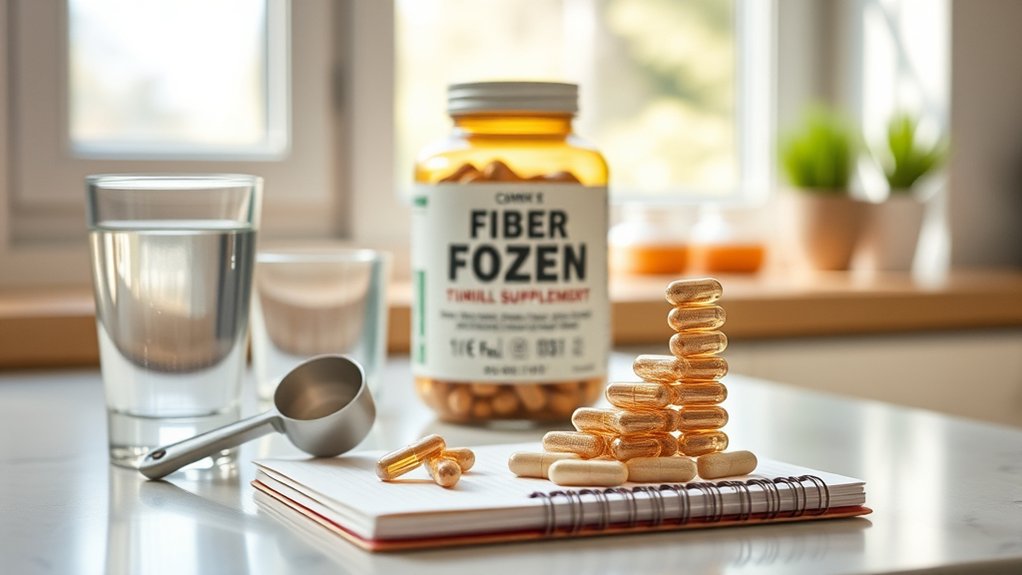
Although increasing your fiber supplement dose can improve digestive health, you should do it gradually to prevent common side effects like bloating and gas. Start with a small amount, such as 1 teaspoon of a fiber supplement, and slowly increase your fiber intake by 1 teaspoon every few days. This gives your body time to adjust.
The USDA recommends a daily fiber intake of about 28 grams for adults, so tailor your supplement dosage accordingly.
Remember, adequate fluid intake is essential when increasing fiber supplements because fiber needs water to aid digestion effectively.
Keep an eye on how your body feels. If you notice any gastrointestinal discomfort, reduce the dose or talk to a healthcare provider.
Gradual increases help minimize digestive upset and support a smoother adjustment to higher daily fiber intake.
Combine Fiber Supplements With a High-Fiber Diet
Since most adults consume only about 16 grams of fiber daily, combining fiber supplements with a high-fiber diet helps you reach the recommended 28 grams more effectively.
By adding fiber supplements like Metamucil or Citrucel, you boost your soluble fiber intake, which supports cholesterol reduction and enhances digestive health.
Pairing supplements with fiber-rich foods such as fruits, vegetables, and whole grains not only increases your daily intake but also provides essential vitamins and minerals.
To avoid gastrointestinal discomfort, increase your fiber intake gradually and drink plenty of water to help fiber supplements function properly.
This combined approach guarantees balanced nutrition and promotes smoother digestion.
It makes it easier to meet your fiber goals without common side effects.
Recognize Signs of Taking Too Much Fiber
If you suddenly increase your fiber intake or take too many supplements, you might experience uncomfortable symptoms like bloating, gas, and cramping.
These are common signs of taking too much fiber, especially from fiber supplements.
To help you recognize when you’ve gone too far, watch for these gastrointestinal issues:
Keep an eye on digestive symptoms to know if your fiber intake is too high.
- Bloating and excessive gas: Your digestive system reacts to rapid fiber increases.
- Diarrhea or accelerated bowel movements: Too much fiber can speed things up beyond normal.
- Constipation: This can occur if you don’t maintain adequate fluid intake, as fiber absorbs water.
To avoid these problems, introduce fiber gradually into your diet and make sure you drink plenty of fluids.
A gradual increase in fiber lets your body adjust and helps prevent discomfort linked to too much fiber.
Manage Fiber Supplement Interactions With Medications
Because fiber supplements can change how your body absorbs medications, you need to manage their timing carefully to keep your drugs working well.
Fiber supplements may interfere with certain medications, especially diabetes drugs, by affecting how fast food moves through your gut.
To cut down on interactions, try to take fiber supplements at least two hours apart from your medications. For example, don’t mix tetracycline antibiotics with polycarbophil supplements because they can bind together and make the antibiotics less effective.
If you’re taking medications for heart disease or cholesterol, it’s a good idea to check with your healthcare provider before starting fiber supplements.
Always keep an eye out for any changes in how your medications work or if you notice new side effects when you add fiber to your routine.
Managing these interactions helps make sure your medications absorb properly and your treatment stays effective.
When to Talk to Your Doctor About Fiber Supplements
Managing the timing of fiber supplements alongside your medications helps minimize interactions. But you should also consider consulting your doctor before starting fiber supplements. This guarantees your health is monitored and any underlying issues are addressed.
You should consult your doctor if you have gastrointestinal conditions like narrowing in the esophagus or intestines that may impact fiber supplement use.
Also, if you’re experiencing persistent digestive issues, such as constipation, it could signal underlying problems.
And if you want to use fiber supplements to manage cholesterol levels or improve glycemic control, especially if you take diabetes medications, it’s a good idea to talk with your doctor first.
Taking these steps helps you safely incorporate fiber supplements into your routine. Plus, it supports your overall digestive health and helps you avoid adverse effects.
Frequently Asked Questions
Can Fiber Supplements Help With Weight Loss?
Yes, fiber supplements can help with weight loss by using specific fiber types like soluble fibers to boost appetite control and increase satiety.
When you take them with meals, they slow digestion, helping you feel fuller longer. This meal timing really enhances their effectiveness.
Over the long term, consistent use supports reduced calorie intake and better energy release.
This contributes to sustainable weight management, especially when combined with a balanced diet and exercise.
Do Fiber Supplements Affect Blood Sugar Levels?
Yes, fiber supplements, especially soluble fiber types like psyllium, help regulate blood sugar by slowing glucose absorption and lowering the glycemic index of meals.
This improves insulin sensitivity, which aids blood sugar regulation.
Taking supplements before or with meals maximizes their effect on postprandial glucose spikes.
Just make sure to drink plenty of water to support digestion and avoid discomfort.
By timing your fiber supplement intake right, you can better optimize blood sugar control.
It’s a simple step that can make a noticeable difference.
Are There Any Fiber Supplements Suitable for Children?
Did you know children need about 19-25 grams of fiber daily?
When considering children’s fiber supplements, psyllium and methylcellulose are safe options with proper dosage. You should always consult a pediatrician before starting supplements to guarantee safe dosage and appropriate supplement types.
Remember, dietary sources like fruits and veggies provide the best fiber benefits.
Using supplements can help if food intake falls short, but whole foods remain the priority. It’s always best to focus on natural fiber first, then think about supplements if needed.
How Do Fiber Supplements Impact Gut Microbiome Health?
Fiber supplements boost your gut health by enhancing microbiome diversity and encouraging the growth of beneficial bacteria.
Through fermentation, soluble fibers act as prebiotics, feeding good microbes that produce short-chain fatty acids. These acids support digestive balance and help maintain gut barrier integrity.
This prebiotic effect improves overall gut function and boosts your immune response. Taking fiber regularly helps keep your digestion balanced and reduces inflammation.
Plus, it supports a healthy, resilient microbiome that can adapt to your individual needs.
Can Fiber Supplements Cause Nutrient Absorption Issues?
You might think fiber supplements don’t affect nutrient absorption, but they can. Certain supplement types, especially in high daily intake, may bind minerals like calcium and iron, impacting your digestive health.
To avoid these potential side effects, space your supplement timing from mineral-rich meals. This strategy helps maintain nutrient absorption while you support digestion effectively.
Always follow guidelines and consult a healthcare provider to balance benefits and risks. It’s better to be safe and get the most out of your supplements!
Conclusion
You might think adding fiber supplements is straightforward, but the right amount depends on your unique needs and lifestyle. Taking too little won’t help, and too much could cause unexpected issues.
Before you adjust your dosage or mix supplements with medications, pause and consider consulting your doctor. This small step guarantees you get the full health benefits safely. Because when it comes to fiber, balance is key, and the right choice could transform your well-being.