Does Nad Supplement Work? Benefits Side Effects and Truth
You can raise your NAD levels with supplements containing precursors like nicotinamide riboside (NR) or nicotinamide mononucleotide (NMN). These help energy production and cellular repair, which tend to decline as you age.
Early studies show NAD supplements may support metabolism and cognition, but solid human evidence is still limited and mixed. They can cause some side effects and risks, especially at high doses or if you have certain health conditions.
It’s worth exploring how these supplements compare to lifestyle approaches to better understand their potential benefits for you.
What Is an NAD Supplement and How Does It Work?
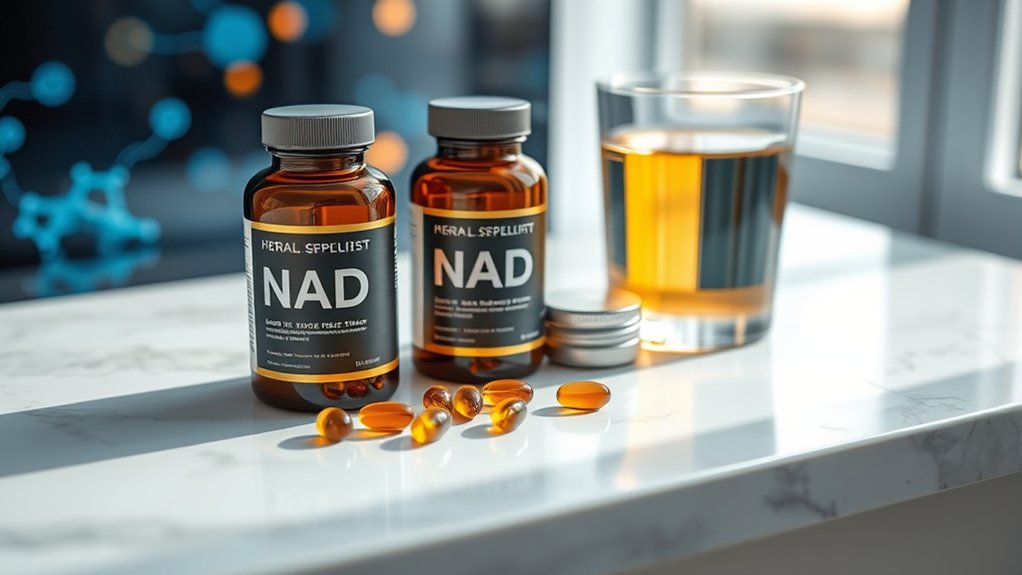
NAD supplements aim to boost your body’s levels of nicotinamide adenine dinucleotide (NAD), an essential coenzyme that drives energy production and supports cellular repair.
These supplements typically contain nicotinamide riboside (NR) or nicotinamide mononucleotide (NMN), which your body converts into NAD.
This coenzyme plays a critical role in mitochondrial function, facilitating energy metabolism and enabling cellular repair processes crucial for maintaining health.
As you age, NAD levels naturally decline, which can impair energy production and cellular maintenance.
Supplementing with NAD precursors aims to counteract this decline, potentially improving metabolic function.
However, while some research supports benefits like enhanced glucose regulation and mitochondrial efficiency, human studies remain inconclusive.
Why Do NAD Levels Decline With Age?
As you get older, your cells start needing more energy, and at the same time, DNA damage builds up.
This extra stress makes the enzymes that keep NAD levels balanced work less efficiently.
So, it’s no surprise that NAD levels drop as you age.
Knowing this helps explain why taking NAD supplements might be a good idea to support healthier aging.
Cellular Energy Demand
Although your body continuously produces molecules essential for energy and repair, their levels tend to drop considerably as you age. Sometimes, this decline can be as much as 80%. This drop in NAD levels directly affects cellular energy because NAD is vital for mitochondrial function, where energy production happens.
As you get older, your cells need more NAD to support increased repair and metabolic activity. But this higher demand actually speeds up NAD depletion. When NAD levels fall, mitochondrial efficiency goes down, which impairs energy generation and contributes to the physical decline we see with aging.
Research suggests that restoring NAD through supplements or diet might help support mitochondrial function and boost cellular energy. This could promote healthier aging overall.
Increased DNA Damage
As DNA damage accumulates with age, your cells ramp up repair processes that heavily rely on NAD, causing its levels to drop considerably. This increased demand for NAD during DNA repair strains your cellular metabolism, depleting NAD precursors necessary to sustain these functions.
Aging elevates DNA damage, making efficient repair critical. However, declining NAD levels impair these mechanisms, leading to insufficient maintenance of genomic integrity. This imbalance contributes to disruptions in cellular metabolism and escalates the risk of chronic diseases, including metabolic and neurodegenerative disorders.
By understanding how aging drives NAD depletion through heightened DNA repair needs, you see why maintaining NAD precursors is essential to support cellular health and mitigate age-related decline in DNA repair capacity.
It’s all about keeping those repair systems fueled so your cells can keep working properly as you get older.
Reduced Enzyme Activity
The increased demand for NAD during DNA repair not only drains its supply but also leads to a significant reduction in the activity of enzymes that depend on NAD.
As you age, NAD levels can drop by 10% to 80%, impairing enzyme activity in over 400 enzymes essential for energy production and cellular repair.
This decline hampers mitochondrial function, which relies on NAD for ATP generation during the Krebs cycle. That means your cells’ ability to produce energy efficiently takes a hit.
When enzyme activity drops, metabolic processes and cellular maintenance get disrupted, speeding up aging and making you more vulnerable to metabolic and neurodegenerative diseases.
Understanding how NAD depletion undermines enzyme function helps explain why aging reduces your body’s capacity for energy and repair.
It really shows how critical NAD is for keeping your cells healthy throughout your life.
How Do NAD Supplement Precursors Like NR and NMN Differ?
How exactly do nicotinamide riboside (NR) and nicotinamide mononucleotide (NMN) differ as NAD+ precursors? Both compounds effectively elevate NAD+ levels, but they follow distinct metabolic pathways.
Nicotinamide riboside first converts into NMN before becoming NAD+. Meanwhile, NMN bypasses this step and directly transforms into NAD+.
This difference impacts their bioavailability and stability. NMN tends to be more stable, which might help improve its utilization in the body.
Both nicotinamide riboside and nicotinamide mononucleotide support mitochondrial function and metabolic health by boosting NAD+, which is essential for cellular health.
Choosing between them depends on your health goals and how your body responds.
Keep in mind, clinical evidence on long-term effects remains limited. Understanding these differences can help you make more informed decisions about NAD+ supplementation.
What Are the Claimed Benefits of NAD Supplements?

You’ll often hear that NAD supplements might help with anti-aging, boost your metabolism, and support brain function.
Some studies do suggest they can raise NAD+ levels and improve certain metabolic markers.
However, when it comes to long-term health benefits, the evidence isn’t very strong yet.
Anti-Aging Potential
Although NAD+ levels naturally decline with age, sometimes by as much as 80%, you might find NAD supplements promising because they can help restore these levels. This, in turn, supports cellular energy production and repair.
NAD precursors like nicotinamide riboside have shown the ability to elevate NAD+ in human tissues. This might boost mitochondrial function and reduce oxidative stress. These effects are often linked to anti-aging claims since better cellular repair and metabolic functions could theoretically slow age-related decline.
That said, while some research supports these ideas, clinical evidence isn’t strong enough yet to prove that NAD supplements significantly delay aging or prevent age-related diseases.
Metabolic Health Effects
Because mitochondrial function plays a central role in energy production and metabolic efficiency, NAD supplements are often promoted for their potential to enhance metabolic health.
You’ll find that nicotinamide riboside, a key NAD precursor, has been studied in clinical trials showing increased NAD+ levels, which may improve glucose regulation and insulin sensitivity. This suggests potential benefits for metabolic conditions like Type 2 diabetes and obesity.
Some research also points to reduced inflammatory markers linked to metabolic disorders, though findings remain mixed.
Despite these promising signs, current evidence doesn’t conclusively prove that NAD supplements markedly improve metabolic health. Larger, well-designed clinical trials are necessary before you can confidently rely on these supplements for metabolic benefits.
Cognitive Function Support
How exactly might NAD supplements support your cognitive function? NAD, especially in forms like nicotinamide riboside (NR), may enhance brain health by improving mitochondrial function and reducing oxidative stress. This supports cellular repair and neuronal survival, which are crucial against age-related cognitive decline.
Preclinical studies highlight NAD’s role in synaptic function and neuroplasticity, which are essential for memory and learning. Some clinical trials report modest cognitive improvements in older adults after chronic NR supplementation, though definitive human evidence remains limited.
| Benefit Area | Mechanism | Evidence Level |
|---|---|---|
| Mitochondrial Health | Enhances energy in brain cells | Preclinical & clinical |
| Synaptic Function | Supports learning & memory | Preclinical |
| Cognitive Decline | Promotes cellular repair | Limited clinical |
NAD supplementation shows promise but needs more research.
What Does Research Say About NAD Supplement Benefits?
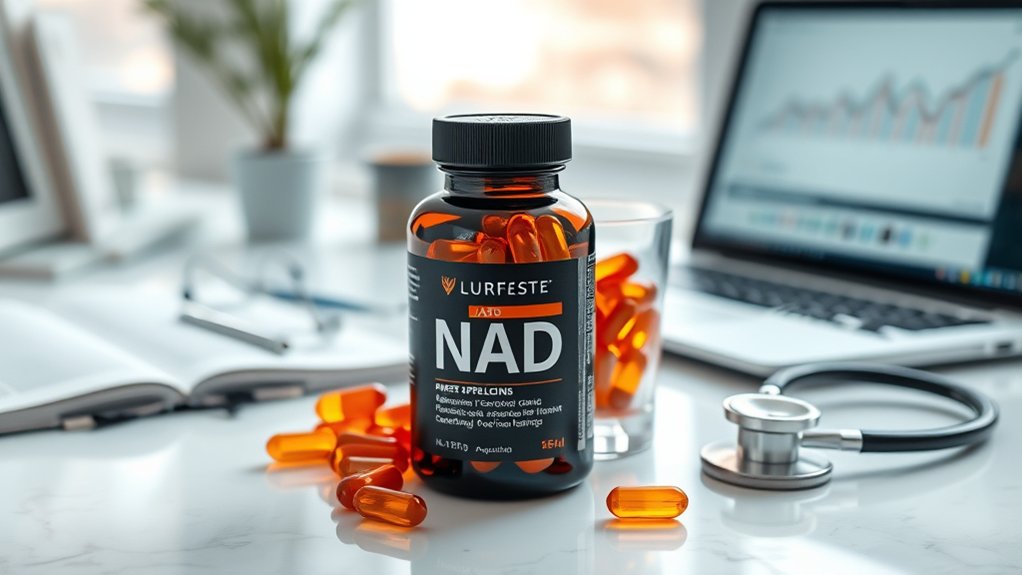
What can current research reveal about the benefits of NAD supplements? Studies show NAD+ levels naturally decline with age, and supplementation with precursors like nicotinamide riboside (NR) can boost NAD+ concentrations in blood and tissues.
Clinical trials have produced mixed results. Some suggest improvements in metabolic health and cognitive function, while others report limited or no significant health benefits. For example, a 2018 study confirmed oral NR raises NAD+ levels, yet its overall impact on health remains unclear.
Preclinical work indicates NAD supplementation might enhance mitochondrial function and reduce oxidative stress, but human evidence is sparse.
Given these mixed findings, you should recognize that larger, well-controlled clinical trials are essential to determine the true health benefits, best dosing, and long-term effects of NAD supplementation.
What Are the Risks and Side Effects of NAD Supplements?
While NAD supplements show promise in boosting cellular energy and potentially improving health, they may also bring certain risks and side effects you should be aware of.
Common side effects include nausea, headaches, lightheadedness, and diarrhea, especially at high doses.
Niacin-containing NAD supplements can cause flushing and, in excessive amounts, may lead to liver toxicity. Because concentrated doses in supplements differ from natural food sources, the risk of adverse effects increases.
Furthermore, long-term safety data on NAD supplements remains limited, making it difficult to fully assess their risk profile.
For these reasons, it’s vital you consult healthcare providers before starting NAD supplements, particularly if you plan to use high doses or take them over an extended period. This guarantees safety and minimizes potential complications.
Who Should Be Careful With NAD Supplements?
If you have a history of cancer, it’s a good idea to be cautious with NAD supplements. Since they can increase cellular energy, there’s a chance this might encourage tumor growth.
Also, if you have advanced liver disease, you should definitely talk to your healthcare provider before using these supplements because of possible liver toxicity.
Knowing about these risks can help you make smarter choices when it comes to NAD supplementation.
Cancer And NAD Risks
Because NAD supplements influence cellular energy production, individuals with a history of cancer should approach their use cautiously. Elevated NAD levels might inadvertently support tumor growth.
While NAD supplements are often promoted for cellular health, the risks in cancer patients remain unclear due to limited safety data. You should definitely consult healthcare providers before starting NAD supplementation to thoroughly evaluate potential benefits against risks.
This is especially important since NAD can enhance metabolic processes that tumors might exploit. Without robust long-term studies, the safety of NAD supplements in cancer contexts can’t be guaranteed.
Liver Disease Precautions
NAD supplements can impact multiple organs beyond cancer risks, with the liver being particularly sensitive due to its central role in metabolism. If you have liver disease, taking NAD supplements requires precautions.
High doses, especially those containing niacin, may cause liver toxicity or worsen existing liver issues by increasing energy production. Research on NAD’s effects in liver disease is limited, so consulting healthcare providers before use is vital.
You might experience side effects like nausea or lightheadedness if you have a history of liver problems. Monitoring liver function is important during supplementation to detect any adverse responses early.
How Do NAD Supplements Compare to Lifestyle Changes for Boosting NAD?
How effectively can lifestyle changes compete with supplements in boosting your NAD levels? Research shows that while NAD supplements offer a rapid increase, lifestyle changes provide sustainable boosts without the risks that sometimes come with supplements. Regular exercise, especially heavy weightlifting, and a nutrient-rich diet high in niacin naturally stimulate NAD production.
Plus, a healthy lifestyle that includes good sleep and stress management supports long-term NAD maintenance. Below is a comparison highlighting the key differences:
| Factor | NAD Supplements |
|---|---|
| Speed of NAD Boost | Quick |
| Long-Term Benefits | Limited |
| Health Risks | Potential |
| Supported by Research | Less robust compared to lifestyle |
How to Choose a Quality NAD Supplement
What should you look for when selecting an effective supplement to boost your NAD levels? Prioritize NAD supplements that emphasize quality and safety through third-party testing. This verification confirms the product genuinely contains the stated amounts of active ingredients like nicotinamide riboside.
Avoid supplements with proprietary blends that obscure ingredient dosages, making it difficult to assess effectiveness. Also, research manufacturers with strong reputations and transparent quality control to avoid questionable products.
Key considerations include:
- Third-party testing certification to guarantee ingredient accuracy and safety
- Clear labeling of nicotinamide riboside dosage without proprietary blends
- Manufacturer reputation supported by positive consumer feedback and quality assurance
Focusing on these factors helps you choose a reliable NAD supplement grounded in evidence and transparency.
It’s all about picking something you can trust and feel confident taking.
Can NAD Supplements Slow Aging or Improve Healthspan?
Can supplementing with compounds like nicotinamide riboside or nicotinamide mononucleotide truly slow aging or extend your healthspan? NAD+ levels decline considerably as you age, contributing to metabolic and neurodegenerative issues.
Supplementation with NAD precursors like nicotinamide riboside has been shown to raise NAD+ levels in your blood and tissues. Some studies suggest improved glucose regulation and cognitive function, hinting at potential healthspan benefits.
However, the evidence remains inconclusive regarding direct anti-aging effects. While supplementation appears safe for middle-aged and older adults, long-term outcomes and ideal doses are still unclear.
If you’re considering NAD supplementation, it’s important to weigh current research carefully. It’s promising, but more robust clinical data is needed before confirming its role in slowing aging or enhancing healthspan.
Frequently Asked Questions
How Long Does It Take for NAD Supplements to Show Effects?
You can expect the NAD timeline to show initial effects within days to a few weeks, but individual variations play a big role.
Dosage recommendations often suggest consistent use for at least 1 to 20 weeks to see significant changes. Comparison studies highlight quicker increases in blood NAD+ levels with nicotinamide riboside forms.
Long term effects usually require sustained supplementation, so stick with it to maximize benefits and monitor your response carefully.
It’s all about patience and paying attention to how your body reacts over time. Keep at it, and you’re more likely to notice meaningful improvements.
Can NAD Supplements Interact With Prescription Medications?
About 30% of reported drug interactions involve changes in NAD metabolism, so yes, NAD supplements can interact with prescription medications.
You should be cautious because these interactions may impact the safety profile and cause side effects, especially with anticoagulants or diabetes meds.
While efficacy research on these supplements grows, it’s essential to discuss your medications with a healthcare professional to avoid adverse drug interactions and guarantee safe, effective use.
Better to be safe and get the right advice than risk complications.
Are NAD Supplements Safe During Pregnancy or Breastfeeding?
You shouldn’t use NAD supplements during pregnancy or breastfeeding due to safety concerns and unknown effects on pregnancy.
There are limited studies, so it’s hard to confirm their safety or how they might impact breastfeeding.
While NAD supplements do have benefits, the potential risks during these stages outweigh them.
It’s better to focus on alternatives like maintaining a balanced diet and getting regular exercise to naturally support your NAD levels.
Always check with your healthcare provider before thinking about taking any supplements.
They can help guide you on what’s safest for you and your baby.
Do NAD Supplements Affect Athletic Performance or Recovery?
You might find NAD benefits helpful for athletic endurance and recovery times, as they support energy metabolism and muscle repair.
Research shows NAD supplements, especially nicotinamide riboside, can enhance mitochondrial function, boosting your energy production during exercise.
This may reduce oxidative stress and speed up recovery.
However, results vary individually, and more clinical trials are needed to confirm consistent improvements in performance and recovery.
Can NAD Supplements Be Taken Alongside Other Vitamins or Supplements?
Think of your body as a finely tuned orchestra. NAD supplements can play well alongside other vitamins if you manage NAD absorption rates and follow ideal dosing strategies.
Combining them may offer synergistic effects, boosting long-term benefits.
However, watch for potential side effects like gastrointestinal discomfort. It’s a good idea to space out doses to improve absorption.
Always consult a healthcare professional to tailor your regimen safely and effectively.
Conclusion
If you’re looking to fuel your cellular engine, NAD supplements might offer a helpful spark, but they’re no magic elixir. Science shows some promise, especially with precursors like NR and NMN. Yet the evidence isn’t a roaring fire. It’s more of a steady glow that needs more research.
Pair supplements with lifestyle changes for a balanced boost. Approach with curiosity, caution, and a critical eye to navigate the evolving landscape of NAD and aging.