How To Read Supplement Facts Everything You Should Know
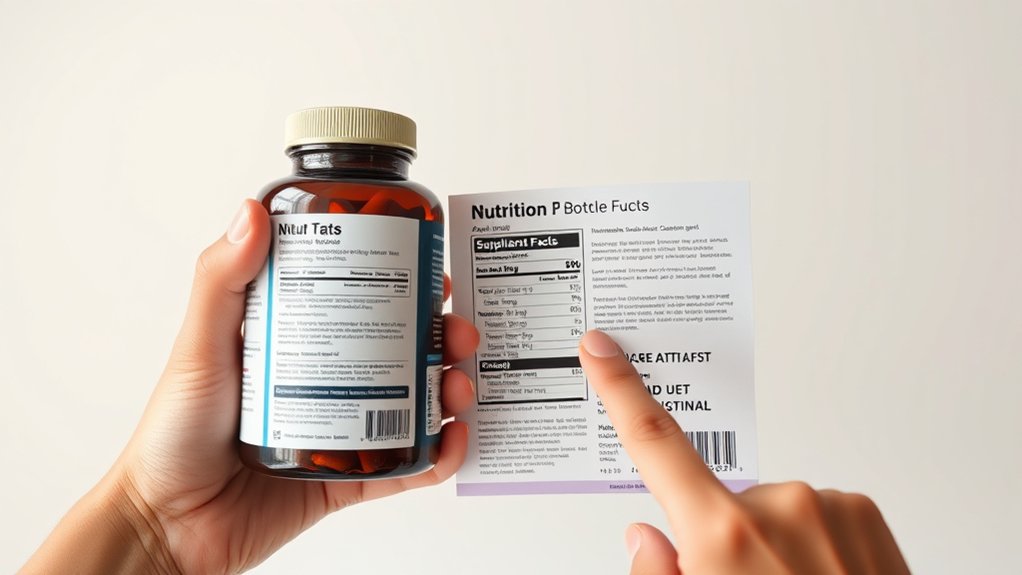
To read supplement facts, start by checking the serving size to gauge nutrient intake for one portion. Look at % Daily Value (%DV) to see how much each nutrient contributes to your daily needs. Five percent or less is low, and 20 percent or more is high.
Identify active ingredients delivering health benefits, and watch for added vitamins or minerals linked to claims. Try to limit added sugars, sodium, and saturated fats. Understanding these details helps you choose supplements that truly fit your health goals and individual needs.
More insights will clarify how to use labels effectively.
Understanding Serving Size on Supplement Labels
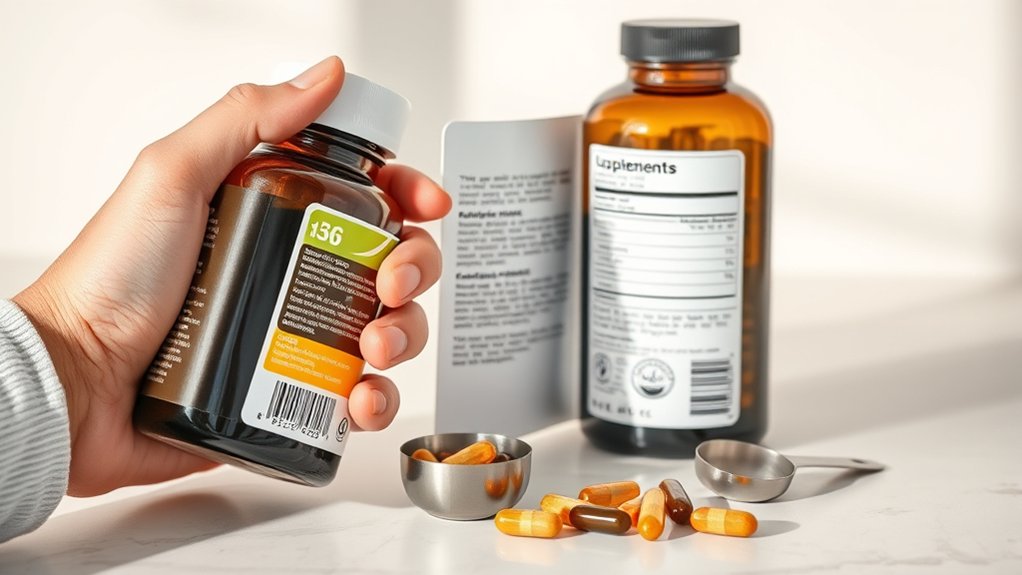
How do you know the right amount of a supplement to take at once? The serving size listed on the Supplement Facts label provides this vital information. It represents the recommended amount to consume in one sitting, helping you accurately track your nutrient intake.
The serving size on Supplement Facts guides the right amount to take at once for proper nutrient tracking.
Serving sizes are standardized, like capsules, tablets, or grams, so you can easily compare products. The label also shows how many servings are in the package, which helps you gauge total nutrient consumption if you take multiple servings.
Keep in mind, though, serving sizes mightn’t perfectly match your individual health needs or professional advice.
Reading the serving size carefully is essential because exceeding it can lead to excessive nutrient intake and possible adverse effects, despite any health-related claims the product might make.
How to Find and Interpret % Daily Value (%DV)
Once you’ve determined the appropriate serving size, the next step is to look at the % Daily Value (%DV) on the label.
The %DV on the Nutrition Facts Label shows how much a serving contributes to your daily nutrient intake based on a 2,000-calorie diet. This helps you quickly assess nutrients to consume for better health effects.
A %DV of 5% or less is low, while 20% or more is high. This makes it easier to identify supplements rich in essential nutrients like calcium, vitamin D, and potassium.
Comparing %DVs across products also helps you choose effective supplements.
Keep in mind, not all nutrients list a %DV. For example, protein only shows it when claims are made, reflecting its lesser priority in adult diets.
Nutrients Required on Supplement Facts Labels
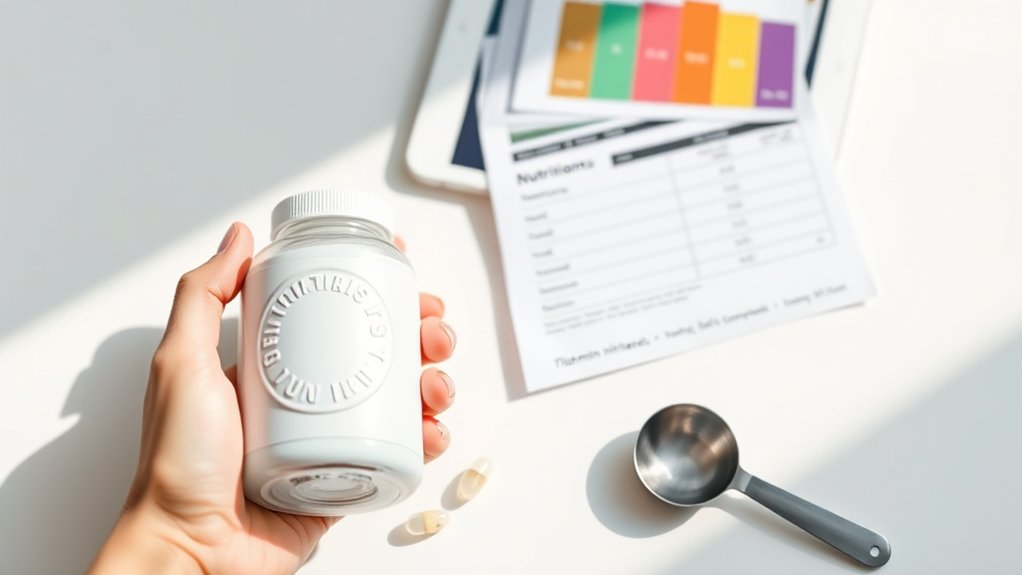
Although supplement labels vary, they must list specific nutrients to help you make informed choices. The Supplement Facts label requires you to see active ingredients, serving size, and the amount of each nutrient per serving.
Essential nutrients listed include total fat, saturated fat, trans fat, cholesterol, sodium, total carbohydrate, dietary fiber, total sugars, added sugars, and protein.
The label must also display key vitamins and minerals like vitamin D, calcium, iron, and potassium, which are vital for your body’s functions. If the supplement contains added vitamins or minerals, especially when health claims are made, those must appear on the label too.
Some labels voluntarily include other nutrients, providing a fuller picture of the supplement’s content.
Understanding these required nutrients on the Supplement Facts label helps you choose supplements that meet your nutritional needs. It’s a good way to make sure what you’re taking supports your health goals.
How to Use %DV to Evaluate Nutrient Levels
Many supplement labels include a % Daily Value (%DV) that shows how much a nutrient in one serving contributes to your daily diet, based on a 2,000-calorie intake.
Using %DV on dietary supplements helps you quickly assess nutrient levels and make informed choices.
% Daily Value on supplements lets you easily evaluate nutrients and choose wisely for your health.
Here’s how to use %DV effectively: look at the %DV to understand the nutrient per serving compared to daily needs.
Consider a %DV of 5% or less as low; 20% or more as high in that nutrient.
You can use %DV to compare similar supplements and pick one that fits your dietary goals.
Focus on nutrients you want more of, like fiber or vitamin D, and limit those you want less of, like added sugars.
Reading Nutrition Facts with %DV guides smarter supplement selection.
It’s a handy tool to help you make better choices for your health.
Understanding Active vs. Inactive Ingredients on Supplement Labels
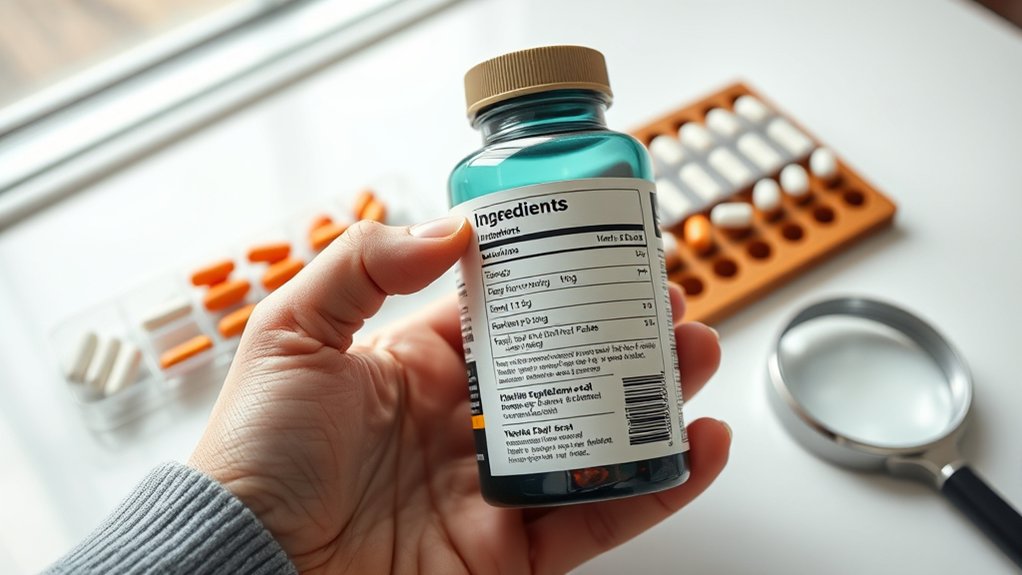
You’ll usually see active ingredients listed first on supplement labels because these are the ones that actually deliver the health benefits you’re after.
Then come the inactive ingredients, which play supporting roles like stabilizing the formula or improving the taste — but they don’t affect how well the supplement works.
Knowing the difference between active and inactive ingredients, and seeing everything clearly listed, makes it easier for you to pick supplements that suit your needs safely and with full transparency.
Active Ingredients Defined
Active ingredients in dietary supplements deliver the specific health benefits you seek.
Meanwhile, inactive ingredients like fillers and binders support the product’s structure without affecting its effectiveness.
On the Supplement Facts label, active ingredients are clearly listed with their amounts per serving. This helps you track your intake accurately.
To understand active ingredients better, consider these four key points:
- Active ingredients are responsible for the supplement’s intended health benefits.
- Their effectiveness depends on their form and dosage.
- The Supplement Facts label provides transparent information about these components.
- Knowing active ingredients helps you choose supplements aligned with your health goals.
Role of Inactive Ingredients
While active ingredients deliver the targeted health benefits, inactive ingredients play a supporting role in the supplement’s formulation. These components, such as fillers, binders, and flavorings, don’t provide direct health benefits but guarantee product stability, consistency, and ease of use.
On supplement labels, inactive ingredients are listed after active ingredients, helping you identify what’s included beyond the key nutrients. It’s important to note that inactive ingredients can affect how well active ingredients are absorbed and utilized by your body.
Moreover, some inactive ingredients like gelatin or magnesium stearate may cause allergies or sensitivities in certain individuals.
Understanding the distinction between active and inactive ingredients on supplement labels allows you to evaluate a product’s overall quality. This way, you can make more informed decisions about the supplements you take.
Importance of Ingredient Transparency
Anyone reading supplement labels benefits from clear ingredient transparency, as it guarantees you understand exactly what’s in the product.
Ingredient transparency means the label clearly separates active ingredients, which deliver the health benefits, from inactive ingredients like fillers or preservatives. This distinction helps you make informed decisions, especially if you have allergies or dietary restrictions.
When checking supplement facts, consider these key points:
- Active ingredients appear first with exact amounts per serving.
- Inactive ingredients follow and may include binders or flavorings.
- Complete ingredient lists confirm no hidden additives compromise your health.
- Transparency supports trust in product quality and effectiveness.
Why Serving Size May Differ From Your Dose
The serving size on a supplement label is set by the manufacturer, but it mightn’t be the same as the dose your healthcare provider suggests for you.
Everyone’s health needs are different, so your doctor might recommend a dosage that’s tailored just for you.
That’s why it’s important to follow professional advice to make sure you’re taking the right amount for your health.
Manufacturer Serving Size
Manufacturers typically recommend a single serving size on supplement labels, but this amount mightn’t match the dose that’s right for you. The manufacturer serving size shown in the Nutrition Facts reflects a general guideline, not a personalized recommendation.
When evaluating this serving size, consider:
- Serving sizes vary widely between supplements, so don’t assume consistency.
- The suggested amount often represents an average intake, not tailored to your needs.
- Your health conditions, age, weight, and lifestyle can affect how much you should take.
- Your daily diet and nutrient intake influence the appropriate supplement dose for you.
Always review the manufacturer serving size carefully, but remember it may not align with what your body requires for ideal health.
It’s a starting point, not a rule set in stone. So, listen to your body and adjust as needed.
Healthcare Provider Recommendations
Healthcare providers tailor supplement dosages to your unique health profile, which means the serving size on the label mightn’t match the amount they recommend.
The serving size listed on a supplement’s label is determined by the manufacturer and reflects a general use guideline, not personalized nutrition needs.
Your healthcare provider considers factors like your dietary habits, health conditions, age, and weight to recommend a dose that suits you specifically.
Because nutritional requirements vary widely, the dose you need may be higher or lower than the label’s serving size.
Always prioritize your healthcare provider’s guidance over the label to guarantee safe and effective use.
Consulting them helps you optimize dietary supplement use for your health goals and prevents under- or overdosing.
Individual Health Needs
When determining the right supplement dose for you, remember that the serving size on the label reflects a general recommendation rather than your specific needs. Your individual requirements may differ based on various factors, so it’s vital to tailor your intake accordingly.
Consider these points: Serving size is set by the manufacturer and may not match your health needs. Age, gender, activity level, and health conditions affect your nutrient requirements.
A healthcare provider can recommend an appropriate dosage different from the label. Pregnancy, nursing, or chronic illnesses can alter your ideal serving size.
Always consult with a healthcare provider to confirm you’re taking the appropriate dosage for your unique situation, rather than relying solely on the label’s serving size. It’s always better to get advice that’s personalized just for you.
How to Spot Added Vitamins and Minerals on Supplement Facts Labels
How can you quickly identify added vitamins and minerals on a Supplement Facts label? Look for a distinct section listing nutrients with their amounts per serving. Added vitamins and minerals are clearly specified, often separated from other ingredients to improve clarity.
Check the Daily Value (%DV) beside each nutrient. This tells you how much a serving contributes to your recommended daily intake based on a 2,000-calorie diet. Some labels also include notes if the product makes health claims, which helps provide transparency about nutrient content.
Also, verify certification seals from independent organizations. These confirm that the added vitamins and minerals meet safety and efficacy standards.
How to Spot Ingredients to Limit on Supplement Labels
Although supplement labels provide valuable information, you need to be vigilant about certain ingredients that can impact your health negatively. Here’s how to spot ingredients to limit on supplement labels:
- Added sugars. Look for a %DV of 5% or less; higher amounts increase health risks. It’s best to keep these low to avoid unwanted calories and blood sugar spikes.
- Sodium. A %DV of 20% or more indicates high sodium, which may contribute to hypertension. So, if you see a high number here, you might want to think twice.
- Saturated fat and trans fat. Aim for low saturated fat and avoid trans fats entirely since no safe level exists. Trans fats are especially bad for your heart health.
- Fillers and artificial additives. Minimize these as they offer no nutritional benefit and might cause adverse reactions.
They’re often added just to bulk up the product, so keep an eye out for them.
Understanding Quality Seals on Supplement Labels
Three well-known quality seals you might encounter on supplement labels come from ConsumerLab.com, NSF International, and the U.S. Pharmacopeia. These quality seals indicate that the product has undergone independent testing for purity, potency, and compliance with Good Manufacturing Practices.
While a seal doesn’t guarantee safety, it confirms the supplement meets established standards, offering you added confidence beyond the Nutrition Facts and dietary guidelines.
In a largely unregulated market, these seals help you identify supplements that accurately reflect their ingredient claims and manufacturing quality.
When you choose products with recognized quality seals, you’re more likely to select supplements produced under strict quality controls. This supports safer and more reliable use in line with your dietary goals.
Using Supplement Facts Labels to Match Your Health Goals
First, take a look at the key nutrients listed on the Supplement Facts label to see how they support your specific health goals.
Then, compare the amounts and % Daily Value to get a clear idea of whether the supplement meets your needs for muscle recovery, immune support, or whatever else you’re focusing on.
Doing this makes it easier to pick products that really match up with your nutritional requirements.
Identifying Key Nutrients
How can you guarantee that a supplement truly supports your health goals? Start by carefully examining the Supplement Facts label to identify the key nutrients relevant to your nutrition needs. Here’s how:
- Check the serving size to understand nutrient amounts per serving.
- Focus on key nutrients like dietary fiber, calcium, iron, and vitamin D that align with your health objectives.
- Review the % Daily Value (%DV) to gauge nutrient potency. Five percent DV or less is low, 20% or more is high.
- Note any disclaimers to confirm health claims comply with FDA regulations.
Taking a few extra moments to read the label can really help you choose the right supplement for your goals.
It’s all about making informed decisions that support your health in the best way.
Aligning Supplements With Needs
Why does it matter to align your supplement choices with your specific health goals? When you read a supplement’s label, checking the serving size and Percent Daily Value (%DV) helps you figure out if the nutrients meet your needs.
For example, a supplement high in dietary fiber supports digestion, while vitamin D benefits bone health. Matching your goals with the label guarantees you get the right nutrients without going overboard.
| Health Goal | Key Nutrient | %DV to Look For |
|---|---|---|
| Bone Health | Vitamin D | ≥ 20% |
| Heart Health | Omega-3 Fatty Acids | ≥ 20% |
| Digestive Health | Dietary Fiber | ≥ 20% |
| General Health | Multivitamins | Balanced %DV |
Always confirm the serving size and look for minimal added sugars. It’s a simple way to make sure your supplements really work for you.
Frequently Asked Questions
How Are Supplement Labels Regulated by Government Agencies?
You can trust that government agencies regulate supplement labels to guarantee label transparency and consumer safety. The FDA enforces regulatory compliance by requiring clear ingredient sourcing and accurate Supplement Facts panels.
They also mandate disclaimers on health claims so you’re informed about the product’s purpose.
Meanwhile, the FTC oversees advertising to prevent misleading claims. This system helps protect you by promoting honest, evidence-based information on supplements you consider using.
It’s all about making sure you get the facts before making a decision.
Can Supplement Facts Labels Be Trusted for Accuracy?
Think of supplement facts labels as a fogged window. You can glimpse inside but not see everything clearly. You can’t always fully trust label transparency or ingredient sourcing because testing standards vary widely.
That’s why consumer awareness matters. You need to seek reputable brands and look for third-party testing seals.
While labels offer useful info, they don’t guarantee accuracy.
What Do Proprietary Blends on Supplement Labels Mean?
Proprietary blends on supplement labels mean the manufacturer combines ingredients without revealing individual amounts, which limits label transparency.
While this can protect ingredient sourcing and formula secrets, it challenges your consumer awareness since you can’t verify effective dosages.
Proprietary blend benefits may be unclear, so it’s essential you research products carefully.
Also, look for third-party testing to guarantee safety and quality before trusting these supplements.
How Often Do Supplement Facts Labels Get Updated?
Label updates frequency varies but typically aligns with industry standards changes or new scientific research impact.
You shouldn’t expect constant revisions; updates happen when manufacturers reformulate or when the FDA revises Daily Values, like in 2016.
Staying alert to these changes is essential because consumer awareness importance guarantees you get accurate nutrient info.
Regularly checking labels helps you make informed decisions based on the latest evidence and regulations.
Are Supplement Facts Labels Required on All Dietary Supplements?
Yes, supplement facts labels are required on all dietary supplements to guarantee label transparency.
When you check these labels, you’ll find clear serving sizes and detailed ingredient sourcing, which boosts your consumer awareness.
This transparency helps you make informed decisions about what you’re taking and prevents potential misuse.
While manufacturers must provide accurate information, staying vigilant about these labels guarantees you get the right nutrients safely.
Conclusion
Now that you know how to read supplement facts, you can make smarter choices for your health. Did you know nearly 70% of adults take dietary supplements, but many don’t understand the labels?
By focusing on serving size, % Daily Value, and ingredient quality, you’ll better evaluate what you’re putting into your body. Use this knowledge to align supplements with your health goals.
It helps ensure safety and effectiveness every time you shop. So next time you pick up a supplement, you’ll feel more confident about what’s inside.